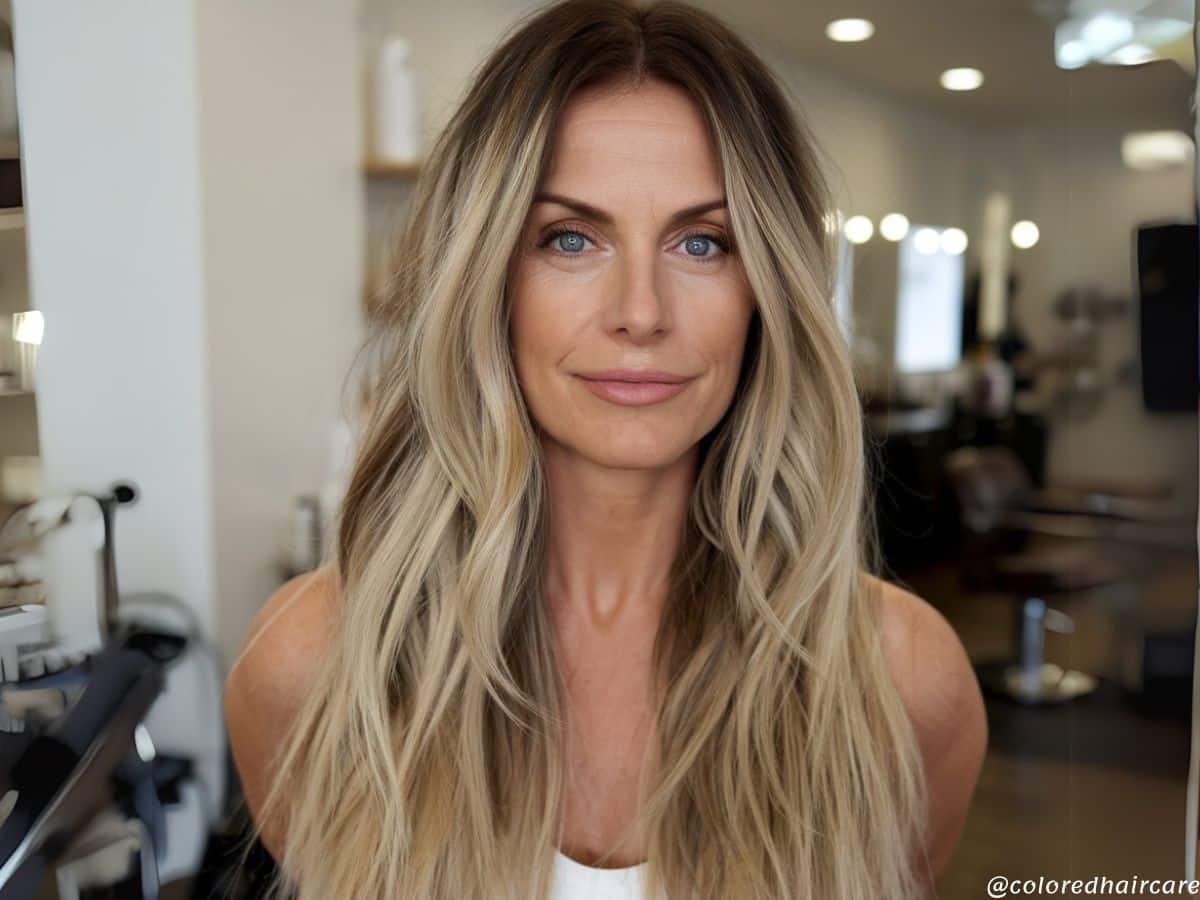
You wake up, look in the mirror, and realize the texture is... different. It isn’t just about the stray greys popping up like uninvited guests at a dinner party. It’s the dryness. The lack of "bounce." Most advice tells you to just dye it and call it a day, but achieving youthful hair over 40 is actually about biology, not just a box of color from the drugstore.
Honestly, the way we talk about aging hair is kind of broken. We treat it like a cosmetic failure instead of a physiological shift. Your scalp produces less sebum as you age. Your diameter of individual strands actually starts to shrink. It’s a whole thing.
Why Your Hair Texture Changes After 40
It’s not your imagination. Around the age of 40, the diameter of your hair follicles begins to diminish. This leads to what stylists often call "miniaturization." It means the hair coming out of your head is literally thinner than it was in your twenties. If you combine that with the hormonal fluctuations of perimenopause or menopause, you get a recipe for brittleness.
Estrogen is basically a growth hormone for your hair. When it levels off, the "growing phase" (anagen) gets shorter. You shed faster. The hair that stays doesn't have that same juicy, light-reflecting quality. It feels more like straw and less like silk. It sucks, but understanding that this is a cellular shift helps you stop buying random volumizing sprays that just coat the hair in plastic and start looking at actual scalp health.
Dr. Antonella Tosti, a renowned dermatologist specializing in hair disorders, often points out that scalp aging is just as real as skin aging. The skin on your head loses collagen too. This matters because a stiff, dehydrated scalp can't support vigorous hair growth. If the soil is dry, the plant won't thrive. It’s that simple.
The Gray Hair Myth and Why "Youthful" Doesn't Mean "No Silver"
We’ve been conditioned to think gray equals old. That’s a lie. You can have a full head of silver and still have youthful hair over 40 if the hair is hydrated and the cut is modern.
The real enemy isn't the color; it's the wiry texture. Gray hair lacks melanin, and for some reason, the sebaceous glands associated with those follicles often slow down even more. This results in that "frizzy" look that people associate with aging. If you want to keep the silver, you have to over-index on moisture. Think glosses and clear glazes. These fill in the gaps in the hair cuticle, making it reflect light again.
On the flip side, if you are coloring your hair to hide the grays, you might be accidentally making yourself look older. Hard, solid blocks of dark color against maturing skin create harsh shadows. It highlights every fine line. Experts like celebrity colorist Tracey Cunningham often suggest "babylights" or soft balayage to mimic the natural variation of a child’s hair. It’s about movement. Flat color is a youth-killer.
Stop Using Too Much Protein
This is a huge mistake. People see breakage and immediately grab a "strengthening" or "keratin" mask. Stop.
Over-fortifying aging hair with protein makes it brittle. It becomes like a dry twig—stiff and easy to snap. After 40, you usually need lipids and moisture, not more structure. You want oils that actually penetrate, like argan or jojoba, rather than heavy silicones that just sit on top and attract dust.
Scalp Care is the New Skincare
You probably spend a fortune on face serums. Do you do anything for your scalp?
The trend of "skinification" of hair is actually backed by solid science. Clinical studies have shown that oxidative stress—from pollution, UV rays, and even hard water—damages the hair bulb. If you want youthful hair over 40, you need to treat your scalp like an extension of your face.
- Exfoliation: Use a salicylic acid-based scalp scrub once a week. It removes the gunk and dead skin that clogs follicles.
- Massage: It sounds "woo-woo," but increasing blood flow to the scalp actually works. Mechanical stimulation can help keep those follicles active.
- Sun Protection: Your scalp gets sunburned. Sunburn causes inflammation. Inflammation leads to thinning. Wear a hat or use a dedicated hair SPF if you’re out in the sun for more than 20 minutes.
Honestly, most people ignore their scalp until they see a bald spot or a widening part. By then, you’re playing catch-up. Start the scalp care now. It’s way easier to preserve what you have than to try and wake up "sleeping" follicles later.
Diet, Supplements, and the Reality Check
You can’t supplement your way out of a bad diet, but there are specific things that help with youthful hair over 40. Ferritin levels (stored iron) are huge. If your iron is low, your body decides hair is a "non-essential" luxury and stops sending nutrients there.
Biotin is the one everyone talks about, but it's often overrated unless you actually have a deficiency. Instead, look at Saw Palmetto or Pumpkin Seed Oil if you’re noticing thinning; some studies suggest these help block DHT, the hormone responsible for female pattern hair loss.
And let’s talk about collagen. There’s a lot of debate, but many people find that high-quality marine collagen peptides actually improve the "tessellation" of the hair strand. It makes it feel smoother. Is it a miracle? No. Does it help? Likely, if you're consistent.
The Power of the Right Cut
If you're still rocking the same haircut you had in 2005, that’s the problem. Not your age.
Long hair can be youthful, but only if it has "internal layers." Heavy, one-length hair drags the features of the face down. It emphasizes jowls and sagging skin. A great stylist will use "ghost layers" to create volume without making it look like a 1980s shag.
Also, consider the "money piece"—those slightly lighter strands right around the face. It acts like a ring light for your skin. It’s a trick used by everyone from Jennifer Aniston to Jennifer Lopez. It’s subtle. It’s effective. It works.
Actionable Steps for Better Hair Today
Don't go out and buy ten new products. That’s a waste of money. Instead, try these specific, expert-backed shifts in your routine:
- Lower the heat. Your hair can't handle 450 degrees anymore. Crank that flat iron down to 300 or 325. It will take an extra pass, but you won't be melting the cuticle.
- Wash less often. Twice or three times a week is plenty. You need those natural oils to travel down the hair shaft.
- Swap your towel. Regular terry cloth towels are too abrasive. Use a microfiber wrap or even an old cotton T-shirt. It sounds like a small thing, but it drastically reduces micro-breakage and frizz.
- Check your meds. Some blood pressure medications and even certain antidepressants can cause hair thinning. If you noticed a massive change after starting a new script, talk to your doctor.
- Silk pillowcases. Yes, they are worth the hype. They reduce the friction that leads to the "morning nest" of tangled, breaking hair.
Maintaining youthful hair over 40 is a long game. It’s about consistency and being gentle. Your hair has been with you for a long time; it’s tired. Treat it with a bit of respect, give it the moisture it’s craving, and stop stressing about every single silver strand. The health of the hair matters infinitely more than the color of it.
Invest in a high-quality leave-in conditioner with UV protection. This acts as a daily shield against the environment. Switch to a boar-bristle brush, which helps distribute oils from your scalp all the way to those dry ends. Finally, get a blood panel done to check your Vitamin D and Ferritin levels; internal health is the foundation of external beauty.