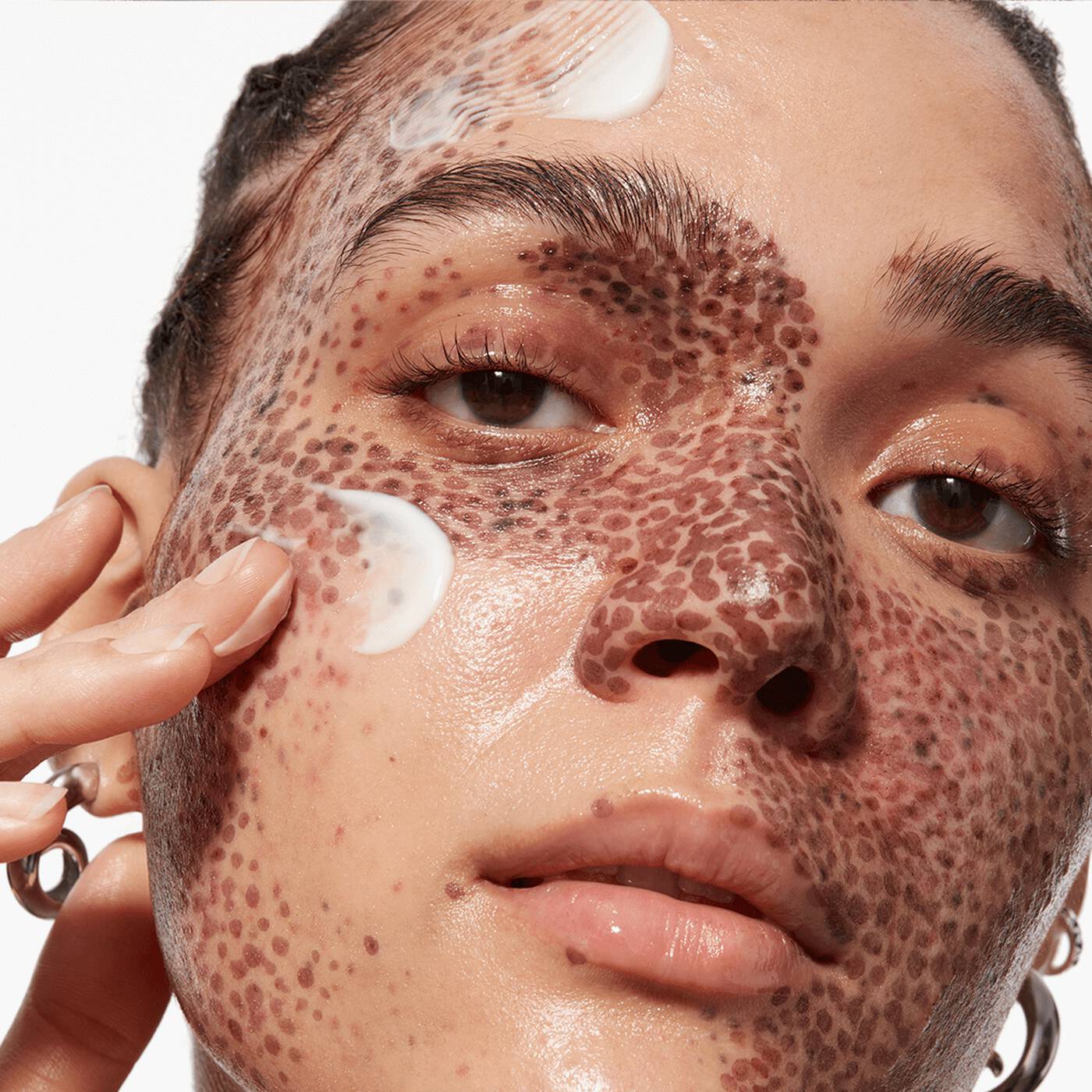
Let’s be real about the skincare industry for a second. Every few months, a "breakthrough" ingredient arrives that promises to delete your wrinkles and give you the skin of a newborn. Most of it is marketing fluff. But then you have something like the Youth to the People Polypeptide 121 Future Cream, which actually tries to do something technically difficult with formulation. It isn't just a thick cream that sits on your face. It's an attempt to bridge the gap between basic hydration and high-tech protein signaling. If you’ve been staring at that glass jar wondering if it’s worth the splurge, you aren't alone. Honestly, the "121" in the name sounds more like a flight number than a skincare ingredient, but there is some legitimate science tucked into that heavy recyclable packaging.
Most people get peptides wrong. They think a peptide is just one thing. In reality, peptides are short chains of amino acids that act as messengers. Think of them as the "project managers" of your skin cells. They tell your skin to produce more collagen, stay firm, and stop acting so tired. This specific cream uses a bio-engineered polypeptide—specifically a vegan sequence that mimics human collagen—to try and convince your face it’s time to firm up.
What Is Polypeptide 121 Anyway?
It sounds intimidating. It's not.
Basically, Youth to the People (YTTP) worked on a formula that includes a "bio-designed" vegan collagen fragment. This is Polypeptide-121. While traditional collagen molecules are often too big to actually penetrate the skin's surface—they usually just sit there acting like a humectant—these smaller polypeptide chains are designed to be more "bio-available." They get in there. They do the work. Or at least, that's the goal.
But this cream isn't a one-trick pony. It’s loaded. You’ve got plant proteins from flax, green pea, and rice. Then you have the ceramides. Everyone loves ceramides because they are the "mortar" between your skin cell "bricks." Without them, your moisture barrier is basically a sieve. YTTP included three essential ceramides here to make sure that once the hydration gets in, it stays in.
The Texture Paradox
Here is the weird thing about the Polypeptide 121 Future Cream: it feels surprisingly light. Usually, when a brand puts "Future" or "Intense" or "Repair" in a title, the cream is as thick as cold butter. This one is different. It’s a gel-cream hybrid. It sinks in fast. If you have oily skin, you won't feel like a grease trap. If you have dry skin, you might actually need to layer it with an oil in the winter. It’s a versatile texture, which is rare for a heavy-hitting anti-aging product.
I’ve seen people complain that it’s "too thin." I disagree. That thinness is intentional. It’s designed to be layered. You can put it over a serum, under sunscreen, and not feel like your face is suffocating.
The Science of the "Future" Label
Why call it "Future Cream"? It’s mostly because of the biotech aspect. We are moving away from just grinding up plants and hoping for the best. Now, we are using fermentation and lab-synthesis to create bio-identical ingredients.
- Plant Proteins: These provide the immediate "snap" or temporary firming feel.
- Ceramides: These are for the long-term health of your skin barrier.
- The Polypeptide Sequence: This is the long-term play for collagen support.
It's a multi-layered approach. You get the instant gratification of smooth skin from the proteins and the long-term insurance policy of the peptides.
Does It Actually Work for Wrinkles?
Let’s manage expectations. No cream is going to replace Botox or fillers. If someone tells you a moisturizer "erased" their deep forehead furrows, they are lying to you or they had a very good lighting setup. What Polypeptide 121 Future Cream does is improve skin elasticity.
Elasticity is that "bounce-back" quality. When you pinch your cheek, does it snap back or slowly settle? Peptides are great at improving that snap. Over a period of 4 to 8 weeks, consistent use of these signaling molecules can make the skin look more "taut." It’s subtle. It’s the difference between looking tired and looking well-rested.
I spoke with a dermatologist colleague about this recently. She noted that while peptides are fantastic, they need a "support system." You can't just throw peptides at a damaged barrier and expect a miracle. That’s why the inclusion of ceramides and fatty acids in this specific formula is so smart. It repairs the house while the peptides are trying to renovate the interior.
Who Should Probably Skip It?
Honestly, if you are 19 years old, you don't need this. Your collagen production is currently at its peak. You’re essentially buying a Ferrari to drive in a school zone.
Also, if you are extremely sensitive to certain plant extracts, check the label. YTTP is a "clean" brand, which often means they use a lot of botanical derivatives. While this cream is fragrance-free—a huge win for sensitive skin—it still contains a lot of active plant proteins.
Why the Price Point Is What It Is
It’s expensive. We know.
But you have to look at the sourcing. Lab-grown, bio-designed peptides are significantly more expensive to produce than basic petrolatum or glycerin-based moisturizers. You’re paying for the R&D. You’re also paying for the sustainability factor. The jar is glass. The brand is transparent about their supply chain. Whether that justifies the $60+ price tag is a personal financial decision, but the money isn't just going into a fancy logo. It’s going into the chemistry.
How to Integrate It Into Your Routine
Don't overcomplicate this.
You don't need a 10-step routine. In fact, if you use too many products, you risk neutralizing the actives in the Future Cream.
- Morning: Cleanse, Vitamin C (optional), Polypeptide 121 Future Cream, SPF.
- Evening: Double cleanse, Retinol (wait 10 minutes), Polypeptide 121 Future Cream.
That’s it. Because it’s fragrance-free and contains ceramides, it’s actually the perfect "buffer" for a strong retinol or Tretinoin prescription. It calms down the irritation that vitamin A usually causes while adding its own anti-aging benefits.
The Verdict on Sustainability
Youth to the People has always been the "cool kid" of sustainable skincare. They use glass because it’s infinitely recyclable. The Future Cream follows this. But sustainability isn't just about the jar. It’s about the formula. By using bio-designed collagen instead of animal-derived collagen, they are reducing the environmental footprint of the product. It’s a vegan formula that actually performs like a high-end clinical one.
Actionable Steps for Your Skin
If you’re ready to try it, don't just slather it on and hope for the best.
First, patch test. Even fragrance-free products can cause reactions if your skin doesn't like a specific plant protein. Put a little bit behind your ear for 24 hours.
Second, use it on damp skin. This is the golden rule of skincare that everyone forgets. When your skin is slightly damp, it’s more permeable. You’ll get better penetration of those expensive peptides and the hyaluronic acid will have water to "grab" onto.
Third, be patient. Skin cells take about 28 to 40 days to turn over. You won't see the "firming" effect of the Polypeptide 121 sequence in three days. Give it a full month of nightly use before you decide if it's working.
Finally, don't forget your neck. The skin on your neck is thinner and has fewer oil glands than your face. It’s usually the first place to show loss of elasticity. Since this cream is specifically designed for firming, it’s actually one of the best "neck creams" that isn't labeled as one.
The Youth to the People Polypeptide 121 Future Cream represents a shift in how we think about aging. It’s not about "fixing" skin; it’s about giving the skin the tools (the peptides) and the protection (the ceramides) to maintain itself better. It’s a solid investment for someone in their late 20s to 50s who wants a streamlined, high-tech routine without the heavy, greasy feel of traditional anti-aging products.



