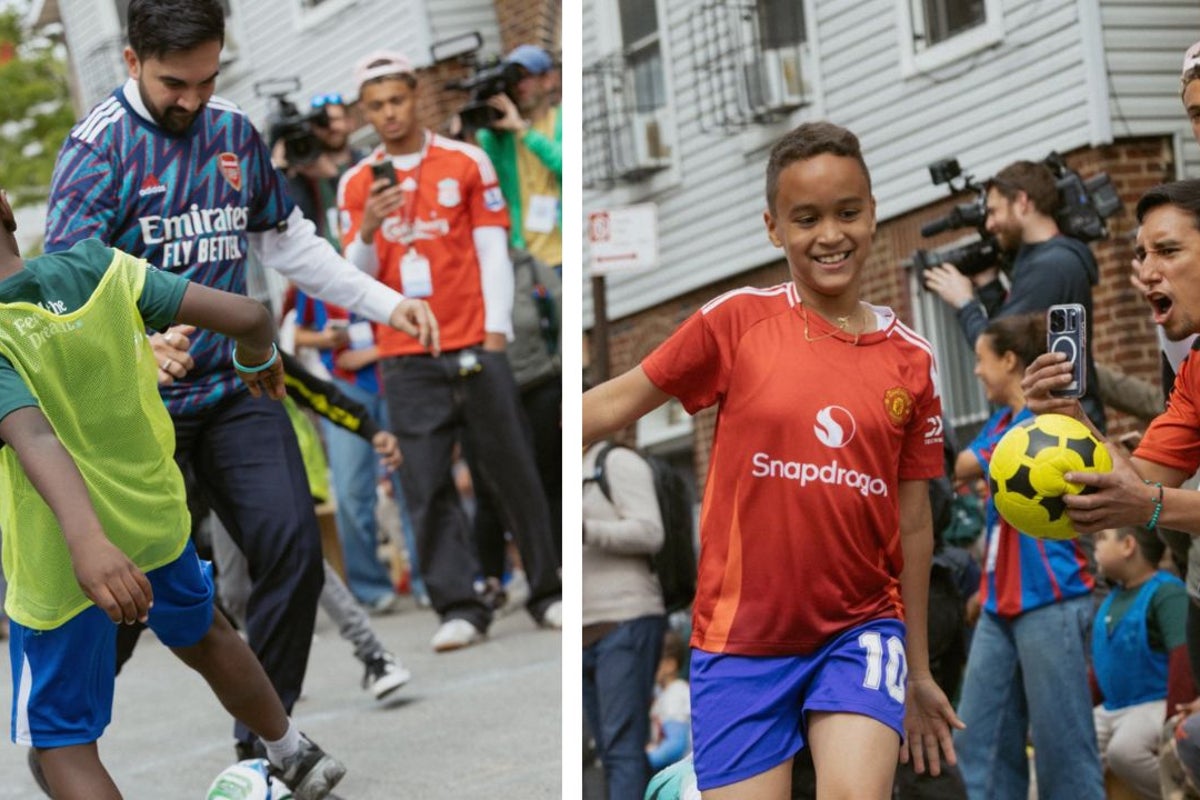
You’ve probably seen the local sidelines changing lately. It isn't just the neon pennies or the fancy GPS vests the "elite" academies are wearing. Something deeper is shifting in how we handle the millions of kids kicking a ball across North America. Honestly, if you’re still coaching like it’s 2005—think endless lines, laps, and "shouting from the touchline"—you’re basically a dinosaur according to the latest youth soccer coaching research news.
The data is pouring in. And it's telling us that the "old school" way isn't just boring; it’s actually slowing down development.
The Death of the "Drill" (And Why Your Players Are Bored)
One of the biggest bombshells in recent pedagogical research, specifically a 2025 study from the Journal of Sports Sciences, compared linear versus nonlinear pedagogy. For those who aren't into academic jargon, "linear" is your classic drill. Cone A to Cone B. No defenders. Just repetition.
Researchers found that while these drills are okay for teaching a kid how to physically kick a ball, they do almost nothing for "game intelligence." The study showed that nonlinear pedagogy—where coaches use small-sided games with constant decision-making—was 66% more effective for developing tactical skills.
Think about that.
If your practice is 80% drills, you are essentially training robots who freeze the moment a real defender shows up. The "news" here isn't just "games are fun." It's that the brain literally learns the motor skill and the decision simultaneously. You can’t separate them.
The August 1st Revolution
If you’ve been around US youth soccer for a minute, you know the "birth year" vs. "school year" debate has been a headache for a decade. Well, the big update for the 2026-27 season is finally here. US Youth Soccer, AYSO, and US Club Soccer are officially moving back to the August 1–July 31 age group cycle.
Why does this matter for research?
Because the "Relative Age Effect" (RAE) was destroying player retention. When we grouped kids strictly by birth year (Jan-Dec), the kids born in January were almost a full year more developed than the December kids. This led to "early bloomers" getting all the coaching attention while the "late bloomers" quit because they felt untalented.
By aligning soccer with the school year, research suggests we’re going to see a massive spike in "social inclusion." Kids get to play with their actual friends from class. It sounds simple, but the psychological data shows that "social mismatch" is a leading cause of burnout by age 13. We’re finally fixing it.
AI is Entering the Chat (And Your Practice)
It was bound to happen. The Aspen Institute’s Project Play reports that AI-powered video analysis and wearable sensors are becoming "operating realities" for youth clubs in 2026.
But here’s the kicker: coaches are worried.
While AI can track "time of possession" and "movement patterns" for a 9-year-old, there is a growing body of research warning about the "digital divide." Basically, wealthy clubs are using data to scout "talent" earlier than ever, while rural or lower-income programs are left in the dark.
Plus, there’s the human element. A 2025 USOPC study on "Connection Based Coaching" found that athletes don't actually care about their "biometric training load" as much as they care if their coach knows their name and asks how their math test went. The data is clear: high-tech metrics are useless if the coach-athlete relationship is toxic.
The "Equal Playing Time" Conflict
We need to talk about the bench.
Current youth soccer coaching research news highlights a massive gap between what experts recommend and what parents actually want. Project Play and Utah State University recently surveyed parents of 6-to-10-year-olds. Only 23% of those parents believed in equal playing time.
That’s wild.
Most parents—even at the youngest ages—are okay with "sorting" kids based on skill. But the science is shouting the opposite. Research shows that "benching" kids to win a plastic trophy at U9 creates toxic team cultures and drives kids out of the sport before they even hit puberty.
Practical Steps for Your Next Session
So, what do you actually do with all this?
First, ditch the lines. If kids are standing still for more than 60 seconds, you're losing them. Use "Constraints-Led" coaching. Instead of telling them where to pass, put them in a 3v3 box and tell them they get an extra point if they pass through a "gate." Let the game be the teacher.
Second, check your feedback. The Journal of Physical Education, Recreation & Dance (2025) suggests using "three or fewer cues" for novice players. Don’t give a five-minute lecture. Give one tip, let them play, and then move on.
Third, get trained in "social-emotional" skills. The free "Connection Based Coaching" courses now available are proving to be more valuable for player retention than any tactical license.
Lastly, prepare for the "World Cup Bump." With the 2026 World Cup hitting North America, your rosters are going to swell. The research says the clubs that survive won't be the ones with the most "pro" drills, but the ones with the best volunteer support systems and the most "fun" environments.
Basically, stop trying to find the next Messi at age 8. Focus on making sure every kid on your roster wants to come back next season. That’s the only metric that actually matters.
Actionable Next Steps:
- Audit your practice plan: Aim for a "Games-to-Drills" ratio of at least 2:1. If you have 60 minutes, 40 of those should involve active decision-making against opponents.
- Review the US Youth Soccer Age Grade charts: Ensure your club is preparing for the August 1st transition to avoid mid-season roster shocks.
- Prioritize "Autonomy Support": In your next huddle, ask the players "What do you think we should try differently?" instead of giving the answer. Research shows this increases "grit" and long-term engagement.