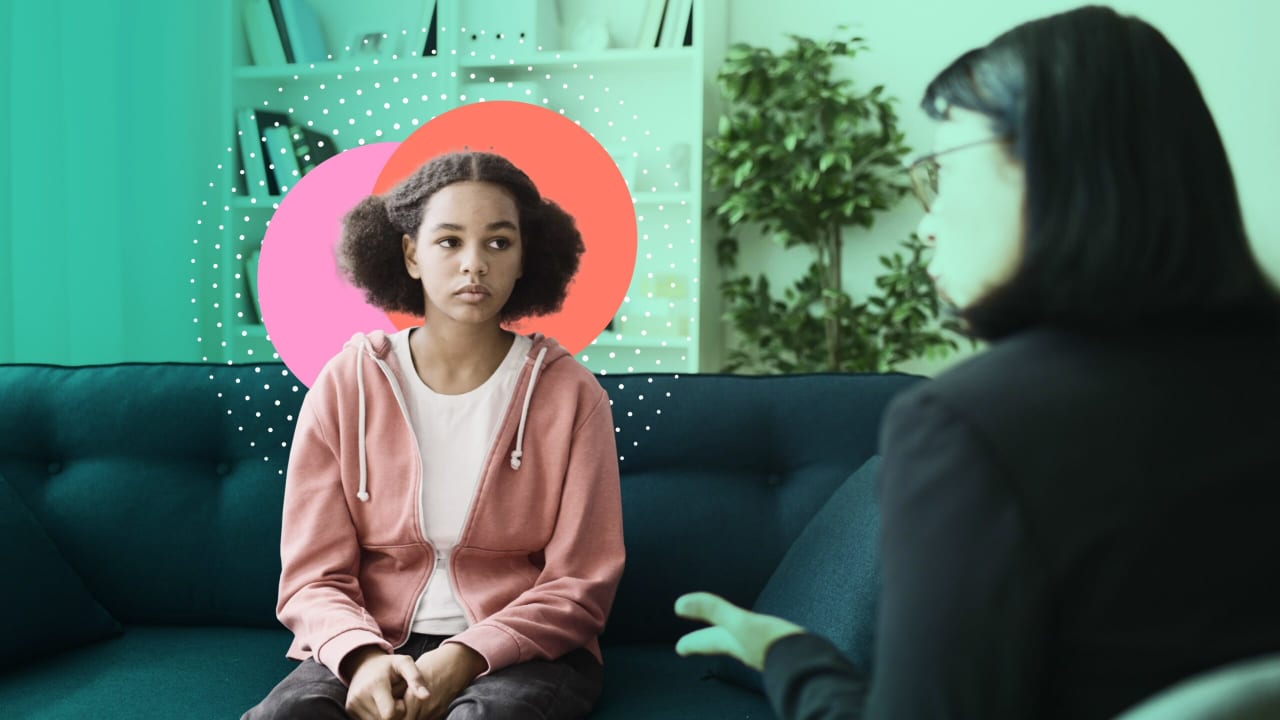
Honestly, if you've been scrolling through the headlines lately, it feels like we're just waiting for the next "breaking" report to tell us what we already know: the kids are not okay. But the youth mental health news today 2025 isn't just a repeat of the same old warnings from three years ago. Things have shifted. We aren't just talking about "awareness" anymore; we're in the middle of a massive, messy, and sometimes controversial overhaul of how we handle the brains of the next generation.
One in seven.
That’s the number the World Health Organization (WHO) keeps hitting us with. Specifically, about 14% of 10-to-19-year-olds are living with a diagnosed mental disorder right now. It's not just a "phase" or teenage angst. We’re seeing a landscape where the federal safety nets are being rewired—or in some cases, cut entirely—while states and researchers are scrambling to find something that actually works.
The Big Shakeup in Policy and Funding
You’ve probably heard about the "One Big Beautiful Bill Act" that hit the books in July 2025. It’s a mouthful of a name, but for families relying on Medicaid, it’s basically a seismic shift. The law is cutting about $1 trillion from Medicaid over the next decade. Why does that matter for a 14-year-old with depression? Because Medicaid is the largest payer for behavioral health services in the U.S.
When that money dries up, the school-based counselor or the local clinic might be the first thing to go.
On the flip side, we’re seeing some weirdly specific wins in the courts. Just this month (January 2026), New York joined Michigan and Colorado in a massive legal settlement. These states are now legally required to provide "intensive home-based care" for kids on Medicaid. The idea is to keep kids out of psychiatric hospitals and in their own beds. It’s cheaper for the state and better for the kid, but the timing is tight. Can these states build these systems fast enough to outrun the federal budget cuts? It’s a race nobody is sure we’re winning.
The Social Media "Ban" Era
If you’re a parent, you’re likely watching the "Kids Off Social Media Act" (KOSMA) with a mix of relief and skepticism. Introduced by Senators Brian Schatz and Ted Cruz—an unlikely duo, for sure—it’s moving fast.
Basically, the bill wants to:
- Hard-ban anyone under 13 from having an account.
- Kill the "addictive algorithms" for anyone under 17.
- Ban social media on school networks entirely.
It sounds great on paper. But critics are pointing out that a blanket ban might just cut off the kids who need community the most—like LGBTQ+ youth in rural areas who don't have a local support group. For them, a Discord server or a niche Instagram community isn't just "scrolling"; it's a lifeline.
What the Science is Actually Saying in 2026
We’ve moved past the "is screen time bad?" debate. The current research is way more nuanced. A new study from the University of Oregon, published just a few days ago, found something surprisingly simple: weekend catch-up sleep. They looked at people aged 16 to 24 and found that those who "slept in" on Saturdays and Sundays had a 41% lower risk of depressive symptoms. It’s not a cure, but it’s a massive buffer. It turns out that when we force teens into a 7:00 AM school start time, we’re literally biologicaly handicapping their mental health.
We’re also seeing new data from the Trevor Project’s longitudinal study. It’s a bit of a gut punch. Anxiety symptoms in LGBTQ+ youth rose from 57% to 68% over the last year. But here’s the interesting part: help-seeking is also up. The number of these kids reaching out to a professional during a crisis doubled. The stigma is dying, but the system is struggling to catch the people who are finally asking for help.
The "Neurotoxic" Debate
There’s also a growing alarm from U.S. Surgeons General about two things we didn't talk about as much in 2020: THC and gambling.
With more states legalizing or decriminalizing, the high-potency THC products hitting the market are different from what existed twenty years ago. Experts like Dr. Vivek Murthy are warning about "neurotoxic effects" on the developing adolescent brain. Pair that with the rise of "gamified" sports betting apps that kids are finding ways onto, and you’ve got a new cocktail of dopamine-chasing behaviors that we aren't equipped to treat yet.
Practical Steps: What You Can Actually Do
If you're looking at this news and feeling like everything is on fire, take a breath. The "macro" news is heavy, but the "micro" changes in a household still carry the most weight.
- Audit the Sleep: If they can't get 9 hours on a Tuesday, don't fight the noon wake-up call on Saturday. That catch-up sleep is a literal antidepressant.
- Tech-Free Zones: The Surgeons General aren't just blowing smoke. Keeping phones out of the bedroom at night isn't about "punishment"; it's about protecting the brain's ability to reset.
- Watch the Identity-Labeling: One interesting trend in 2025 news is "diagnostic over-shadowing." Kids are seeing so much mental health content online that they’re startin' to turn a "feeling" into a "permanent identity." Encourage them to talk about how they feel without always needing a clinical label attached to it.
- Check Your State's Medicaid Status: If you live in New York, Michigan, or Colorado, you now have specific legal rights to home-based mental health support that didn't exist a few years ago. Use them.
The youth mental health news today 2025 shows a world that is finally taking the "crisis" label seriously, even if the solutions are a bit clunky. We're moving from just talking about the problem to passing laws and changing how we sleep. It's not perfect, but for the first time in a long time, the data is starting to show us exactly where the levers are.
Actionable Insights for 2026
- Move the charger: Place all family phone chargers in a central kitchen basket after 9:00 PM to ensure blue light isn't sabotaging REM cycles.
- Monitor "Social Betting": Check for apps that mimic gambling mechanics, as these are becoming a primary driver for anxiety in teenage boys.
- Leverage School Resources: Despite funding cuts, many schools still have "One-Stop" grants active through the end of the 2026 school year—ask your district's administration what is still available.
/i.s3.glbimg.com/v1/AUTH_08fbf48bc0524877943fe86e43087e7a/internal_photos/bs/2025/H/e/ewwgKCQCSopdUJUwy6DA/imagem-2025-04-27-114802986.png)


