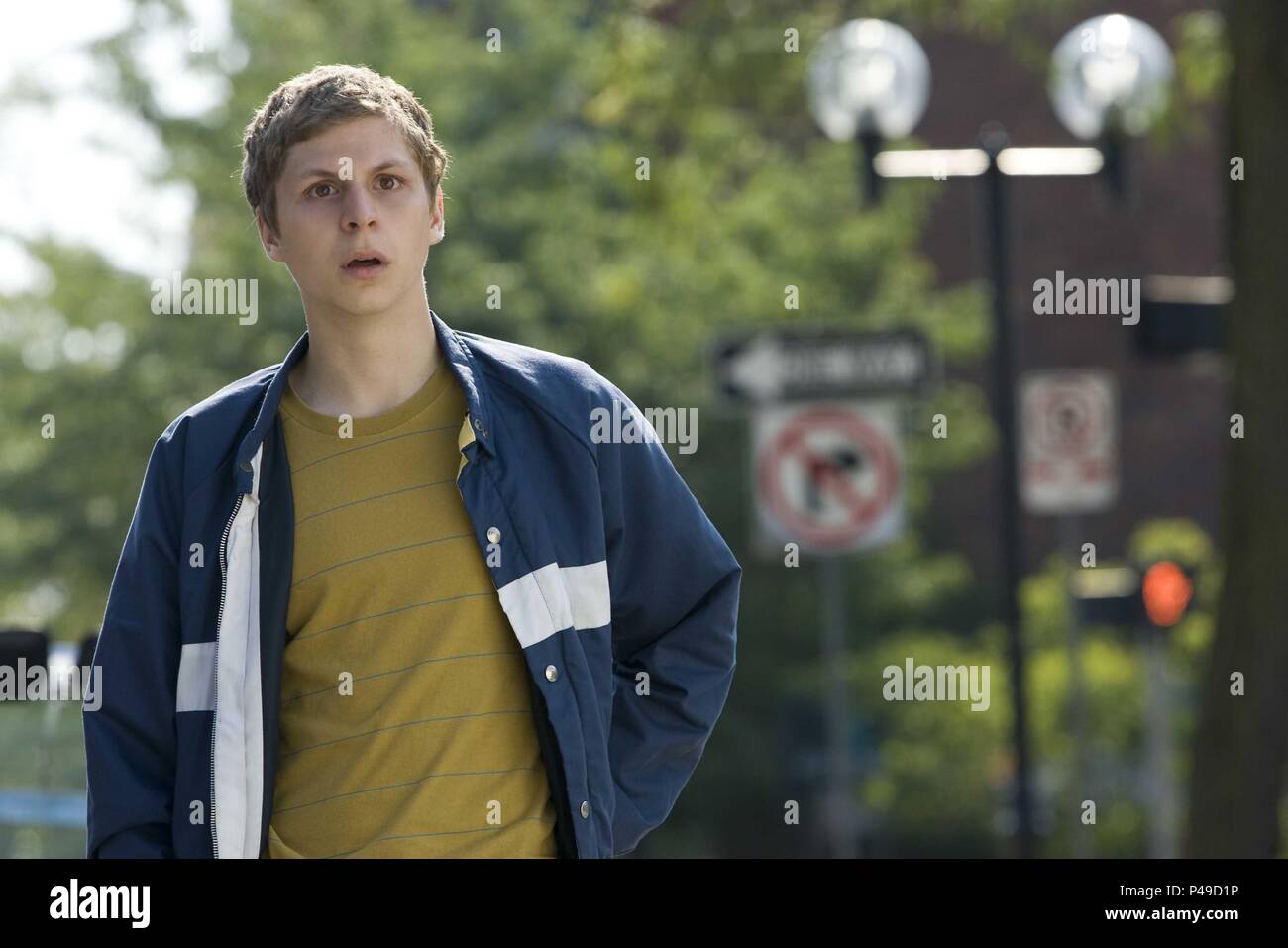
Honestly, it feels like a fever dream now. Michael Cera in a pencil-thin mustache, wearing a tucked-in shirt and smoking like a chimney while trying to burn down a suburban trailer park. That was the Youth in Revolt film. Released in early 2010, it landed at a very specific crossroads in pop culture history. We were right in the middle of the "Michael Cera playing Michael Cera" era, and this movie was supposed to be the glorious, chaotic subversion of that exact trope. It’s weird. It’s messy. It’s occasionally very uncomfortable. But 15 years later, looking back at Miguel Arteta's adaptation of the C.D. Payne epistolary novel, there is a lot more going on under the hood than just another teen sex comedy.
Nick Twisp is the hero. Or the anti-hero. Or just a very horny teenager with a penchant for Frank Sinatra and Criterion Collection movies. He's a social outcast in Oakland who gets dragged to a trailer park in Ukiah, California, where he meets Sheeni Saunders. Sheeni is played by Rooney Mara, just before she went full "Girl with the Dragon Tattoo" and became an Oscar-bound powerhouse. The chemistry is... stiff? But that’s the point. It’s a movie about the performative nature of being young and desperate for a personality that doesn't suck.
The Dual Performance that Defined the Youth in Revolt Film
The hook for the Youth in Revolt film was always the split personality. To win Sheeni’s heart—which apparently requires being a dangerous rebel—Nick creates François Dillinger. This isn't some Fight Club-style psychological breakdown; it's a conscious, desperate choice. François is everything Nick isn't. He’s mean. He’s bold. He has a jawline that seems sharper even though it’s the same actor.
Cera’s performance as François is arguably the highlight of his entire "awkward phase" career. He gets to drop the stuttering, the floor-gazing, and the "oh, geez" energy for something genuinely menacing. Watching François knock over a massive display of snacks in a gas station just because he can—that’s the visceral thrill of the movie. It tapped into that universal teenage urge to just break something because the world feels small and boring.
Critics at the time, like Roger Ebert, actually gave it a thumbs up, noting that Cera was "playing the two roles with subtle but unmistakable differences." It wasn't just a costume change. It was a vibe shift. But why didn't it become a Superbad-level classic? Well, the tone is all over the place. One minute it's a sweet indie romance, the next it’s an animated sequence (shout out to the claymation transitions), and then suddenly it’s a high-stakes felony spree involving stolen cars and explosives. It's a lot to process.
A Cast That Makes No Sense in Hindsight
If you watch this movie today, the casting is distracting in the best way possible. You’ve got:
- Zach Galifianakis as the deadbeat stepdad figure.
- Ray Liotta (rest in peace) as a corrupt, terrifying cop.
- Steve Buscemi as Nick’s father.
- Justin Long as a drug-tripping brother.
- Fred Willard doing his classic Fred Willard thing.
It is a literal rogue's gallery of "Hey, I know that guy!"
The weirdest part? None of them feel like they belong in the same movie. Buscemi is playing a grounded, cynical dad. Liotta is playing a character from a Scorsese film who wandered into a teen comedy. Galifianakis is doing physical comedy. This disjointed feeling is actually what gives the Youth in Revolt film its cult status. It doesn’t feel like it was made by a committee. It feels like a group of incredibly talented people showed up, did whatever they wanted for three weeks, and then left.
Why the Adaptation Almost Failed the Book
C.D. Payne’s original Youth in Revolt is a sprawling, multi-volume saga. It’s huge. It’s dense. It’s written in diary entries that capture a level of internal monologue that is almost impossible to film. The movie tries to cram a massive amount of plot into a 90-minute runtime.
Because of this, the pacing is breakneck. Nick goes from a virginal nerd to a wanted fugitive so fast you barely have time to breathe. Some fans of the book hated it. They felt Sheeni was flattened out—turned into a "Manic Pixie Dream Girl" before we even had a name for that trope. In the book, Sheeni is a bit more manipulative, a bit more complex. In the film, she’s a prize to be won. It's a valid criticism. The film prioritizes Nick’s internal chaos over Sheeni’s agency, which was a very 2009 way of making movies.
The Cultural Legacy of François Dillinger
Is the Youth in Revolt film still relevant? Yes, but mostly as a time capsule. It represents the peak of "Indie Sleaze" cinema. It’s the aesthetic of urban outfitters, vinyl records, and "refined" taste as a weapon of seduction.
What’s fascinating is how the movie handles the idea of masculinity. Nick feels inadequate because he isn't "manly." François is his version of what a "real man" looks like—destructive, arrogant, and French. It’s a satire of toxic masculinity before that was a buzzword. Nick realizes, eventually, that being François is exhausting and dangerous, but the movie never quite gives us the "moral of the story" moment where he goes back to being his old self. He ends up somewhere in the middle. Changed. A bit more scarred.
Technical Craft and That Claymation
We have to talk about the animation. The film uses stop-motion sequences to bridge gaps in the narrative, and they are genuinely charming. In an era where everything was starting to look like flat digital video, these segments gave the film a handmade, tactile feel. It reflected Nick’s own creative, albeit warped, mind.
The soundtrack, too, was a vibe. It featured songs like "Be Be Your Love" by Rachael Yamagata and tracks from Fruit Bats. It curated a specific "I’m 16 and I think I’m deeper than everyone else" atmosphere that resonated with the Tumblr generation.
Breaking Down the "Box Office Flop" Narrative
People call this movie a flop. It wasn't exactly a blockbuster, making about $19 million on an $18 million budget. That’s "meh" in Hollywood terms. But the Youth in Revolt film found its life on DVD and streaming. It became the movie you showed your friend who thought Michael Cera could only play one character.
It suffered from being released right after Scott Pilgrim vs. The World (technically filmed after, released around the same time-ish in terms of cultural saturation). People were getting Cera-fatigue. They wanted something different. Ironically, Youth in Revolt was something different, but it was marketed as more of the same.
Practical Takeaways for Re-watching Today
If you’re going to revisit this flick, or watch it for the first time, don’t expect Superbad. Expect something more akin to a Wes Anderson movie on a bender.
- Watch the backgrounds. The set design in Sheeni’s house and Nick’s room is packed with 2000s-era details that are pure nostalgia now.
- Focus on the dialogue. The script, written by Gustin Nash, retains a lot of Payne's heightened, intellectualized teen speak. No one actually talks like this, but it’s fun to pretend they do.
- Check out the "Nick Twisp" vs "François Dillinger" mirror scenes. These are masterclasses in physical acting. Cera changes his entire posture and eye contact.
The Youth in Revolt film is a chaotic, imperfect, and strangely daring piece of cinema. It’s about the lengths we go to for love, the personas we build to survive boredom, and the fact that sometimes, you just have to drive a car into a lake to get someone's attention. It’s not a perfect movie. It’s a messy one. And in a world of polished, safe, "designed-by-algorithm" films, that messiness is actually its greatest strength.
To get the most out of the experience, try reading the first hundred pages of the book first. It gives Nick’s internal monologue a voice that you can carry with you into the movie. Then, watch for the subtle ways Cera tries to bridge that gap. You’ll see a much more intentional performance than the "stuttering kid" label would suggest. Also, keep an eye out for the brief cameos—there are faces in this movie that went on to run Hollywood. It's a wild ride. Enjoy the mustache.



