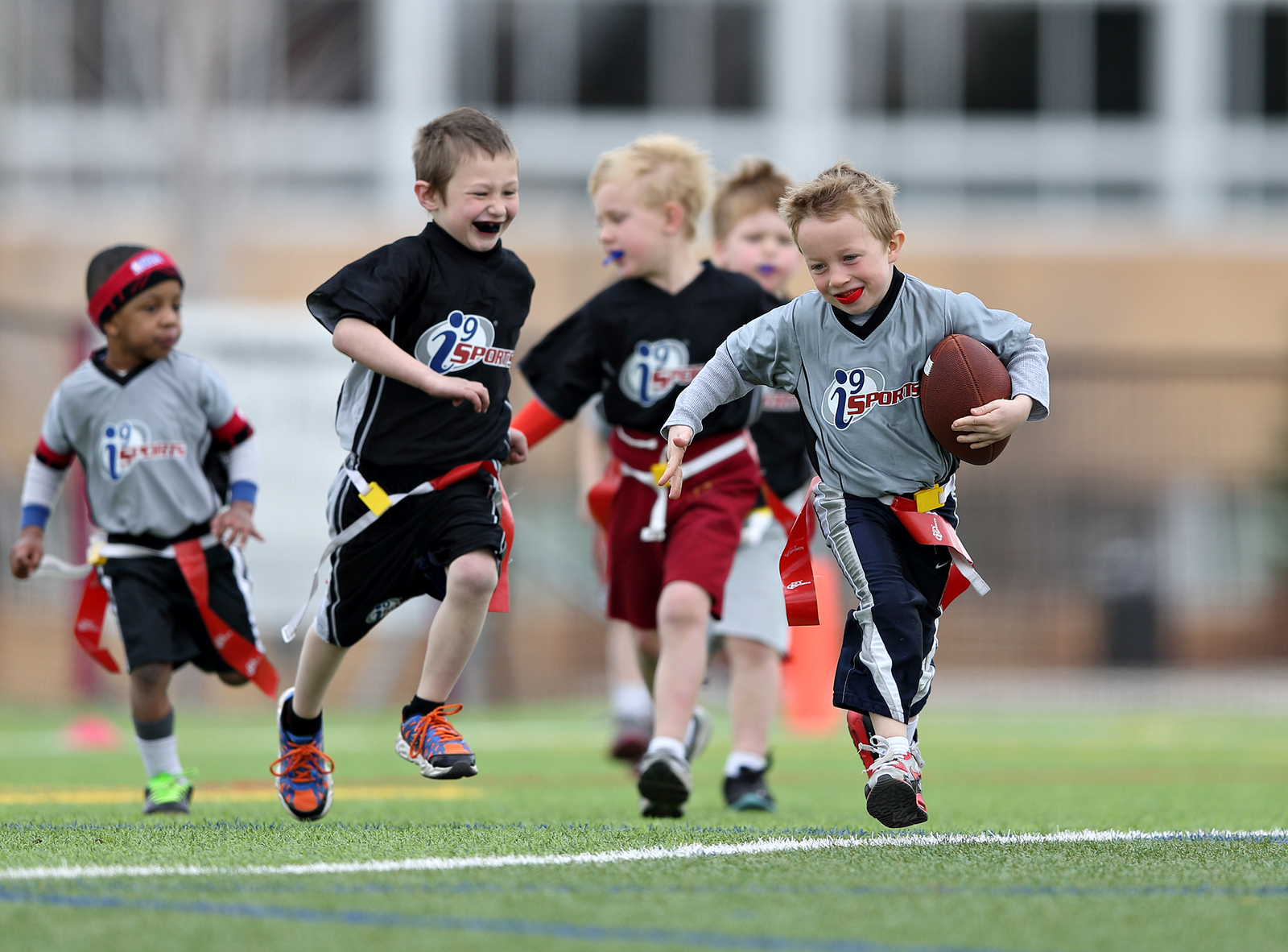
It is 8:30 AM on a Saturday. The grass is still damp. You’re holding a lukewarm coffee, watching a seven-year-old in an oversized jersey try to figure out which way the "line of scrimmage" goes. This is the reality for millions of families right now. Youth flag football leagues aren't just a secondary option for kids who aren't ready for pads anymore; they have become the primary destination.
The growth is staggering.
According to data from the Sports & Fitness Industry Association (SFIA), participation in flag football for kids aged 6 to 12 has increased by nearly 40% over the last decade. It’s outpacing tackle football. It’s outpacing baseball in some regions. Why? Because parents are worried about concussions, sure, but also because the game is just faster. It's high-scoring. It's basically a 50-minute track meet with a ball.
Honestly, the "scare factor" of tackle football started the fire, but the sheer fun of the flag game is what’s keeping it burning.
What People Get Wrong About the Competitive Level
A lot of old-school coaches think flag football is "soft." They’re wrong. If you’ve ever watched a high-level 5v5 tournament at the NFL FLAG Championships, you know it’s a chess match at 100 miles per hour.
There is no "hiding" a weak player on a flag field. In 11-on-11 tackle, you can put a kid on the line and tell them to push. In youth flag football leagues, every single player is a skill player. Everyone has to run routes. Everyone has to be able to catch. Everyone has to be able to pull a flag—which, by the way, is a much harder skill to master than just throwing a shoulder into someone's midsection.
The skill gap is widening
In leagues like Under Armour Under the Lights or i9 Sports, the focus is on the "triple threat" position. Kids are learning how to set up defenders using their eyes and hips. You see eight-year-olds running crisp post-corner routes that would make a high school coach weep with joy.
But it's not all sunshine.
The downside of this explosion in popularity is the "pro-style" pressure creeping in. You now have "travel flag" teams. Some parents are spending $2,000 a summer to fly their kids to tournaments in Florida or Nevada. It’s becoming a bit of an arms race. Is that good for a ten-year-old? Probably not. But the demand is there because the path to college is actually opening up.
The Path to College is Real (Especially for Girls)
This is the part that surprises people. We aren't just talking about a hobby.
The NAIA (National Association of Intercollegiate Athletics) officially recognized women’s flag football as a varsity sport a few years ago. There are now dozens of colleges offering actual scholarships for this. The NFL has poured millions into this pipeline. When you look at youth flag football leagues today, the fastest-growing demographic is girls.
They aren't playing "a version" of the boys' game. They are dominating their own space.
- Scholarship opportunities: Over 15 colleges now offer flag-specific scholarships.
- High School Sanctioning: States like Florida, Georgia, and California have made girls' flag football a sanctioned varsity sport.
- The Olympics: Flag football is officially on the docket for the 2028 Los Angeles Games.
Think about that. A kid starting in a local rec league this year could realistically be an Olympian in a decade. That changed the math for a lot of parents who used to view flag as "just something to do until soccer starts."
Choosing the Right League: It’s Not One Size Fits All
If you’re looking to sign your kid up, you have to realize that not all youth flag football leagues are created equal. You’ve basically got three tiers.
The "Everyone Plays" Tier (i9 Sports, YMCA) These are great for beginners. They usually practice and play on the same day. It’s low stress. The coaches are almost always dads who are just trying their best. If your kid is more interested in the post-game orange slices than the score, start here.
The "NFL Flag" Tier This is the gold standard for most. It’s a massive network. The jerseys are actual NFL team replicas, which kids love. It’s more competitive, but still accessible. They use a specific rulebook (no contact, 5v5) that is used in major tournaments.
The "Elite/Travel" Tier This is where things get intense. We are talking tryouts. We are talking about coaches who don't have kids on the team. We are talking about plays that require a literal wristband playbook. These leagues focus on "Z-zone" defense and complex motion offenses.
Expert Note: Don't rush into the elite tier. Most kids burn out by age 12 because the "fun" was coached out of them in favor of "systems."
The Safety Reality: Let's Talk About Heads
People choose flag because they want to avoid CTE. It makes sense. No helmets clashing, no big hits. But it’s not injury-free.
In my experience watching these leagues, the most common injuries are actually finger dislocations and ACL tears. Because there’s so much cutting and sudden stopping, knees take a beating. Also, "non-contact" is a bit of a lie. Kids collide. They trip. They dive for flags and knock heads.
According to a study published in The American Journal of Sports Medicine, flag football has a significantly lower rate of concussions than tackle, but the rate of lower-extremity injuries is actually quite similar. You're trading one risk for another. It’s a safer game, but it’s still an athletic endeavor. Proper cleats and a good mouthguard are non-negotiable.
The Equipment Trap
You don't need much. That’s the beauty of it. But retailers will try to sell you the world.
Basically, you need three things:
- Pocketless shorts. This is huge. If a kid wears shorts with pockets, a defender’s finger can get caught while reaching for a flag. It’s a quick way to a broken finger. Most leagues actually ban pockets.
- Soft-shell headgear. Some leagues are starting to require this (like Gamebreaker helmets). They don't prevent concussions, but they stop the "egg-on-the-head" bumps from accidental collisions.
- Cleats. Not metal. Never metal.
Coaching From the Sideline (Don't Be That Parent)
I've seen it a hundred times. A parent is screaming "Go! Go! Go!" while their kid is staring at them instead of the ball.
Youth flag football leagues move fast. The field is smaller. If a kid loses focus for a second, the play is over. The best thing a parent can do is stay quiet during the play and cheer like crazy after it. Let the coach do the coaching, even if you think you know more about the West Coast Offense than he does.
Also, understand the "No Run Zone." In most 5v5 rules, if the ball is within five yards of the end zone, you must pass. It’s designed to stop teams from just handing it to the biggest kid and letting him bulldoze everyone. It forces kids to learn how to throw and catch under pressure.
The Transition to Tackle: To Jump or Not to Jump?
A big question parents ask: "If my kid plays flag until they're 12, will they be behind in tackle?"
Actually, the evidence suggests the opposite.
Quarterbacks and Wide Receivers who grow up in flag leagues often have better "field vision." They understand spacing. They know how to find the open window in a zone. When they finally put on pads, they just have to learn the physical part of blocking and tackling. The "football IQ" is already there.
Look at guys like Tua Tagovailoa or even old-school legends; many of them didn't start tackle until middle school.
Making the Most of the Season
If you want your kid to actually enjoy their time in youth flag football leagues, focus on the footwork. Buy a $10 agility ladder. Spend 15 minutes in the backyard doing "icky shuffles."
The kids who have the most fun are the ones who feel confident in their ability to move their feet. It’s not about how far they can throw the ball. It’s about whether they can juke a defender without falling over their own shoelaces.
Also, teach them how to lose. In flag football, one bad bounce or one dropped pass usually results in a touchdown for the other team. The scores are often 35-28. There is a lot of "failure" in every game. Learning to line back up and run the next route is the most important skill they’ll get out of the league.
Actionable Steps for Parents and Players
- Check the "No-Pocket" Rule: Before your first practice, make sure your kid’s shorts don't have pockets. If they do, you'll have to duct tape them shut, which looks ridiculous and leaves sticky residue.
- Buy a Triple-Threat Flag Belt: If the league allows you to bring your own, get the "pop" flags rather than the Velcro ones. They are more consistent and teach better defensive technique.
- Film a Few Plays: Use your phone to record a series. Don't use it to critique them; use it to show them how cool they look running. It builds massive confidence.
- Hydrate More Than You Think: Because flag is constant running with no "line play" breaks, kids burn out faster than in tackle. Start the water intake on Friday night.
- Focus on the "Flag Pull": Spend five minutes in the yard just running past each other and pulling flags. It is the single most undervalued skill in the game.
Youth flag football is effectively the new "community center" of American sports. It’s where the neighborhood meets. Whether your kid is the next NFL star or just there for the social hour, the game offers a mix of speed and safety that’s hard to beat. Just remember to bring a chair. Your back will thank you by the third game of the double-header.