Parents are freaking out about concussions. It is the elephant in the room every single Saturday morning at the local park. You see the kids out there in oversized jerseys, and suddenly, the old-school mentality of "hit 'em till they drop" feels like a relic from a different century. Honestly, the shift toward flag football for youth isn't just some passing trend or a "soft" version of the real thing. It’s becoming the new standard. In 2023, the NFL reported that flag football is one of the fastest-growing sports globally, with over 20 million participants in 100 countries. It’s fast. It’s technical. And frankly, it’s a lot more fun for a kid who doesn't want to get their bell rung before they even hit puberty.
If you’re sitting on the fence about signing your kid up, you’re probably weighing the "toughness" of tackle against the safety of flag. But here is the thing: the game has changed.
What Most People Get Wrong About Flag Football for Youth
There is this annoying myth that flag is just "tackle-lite." That’s garbage.
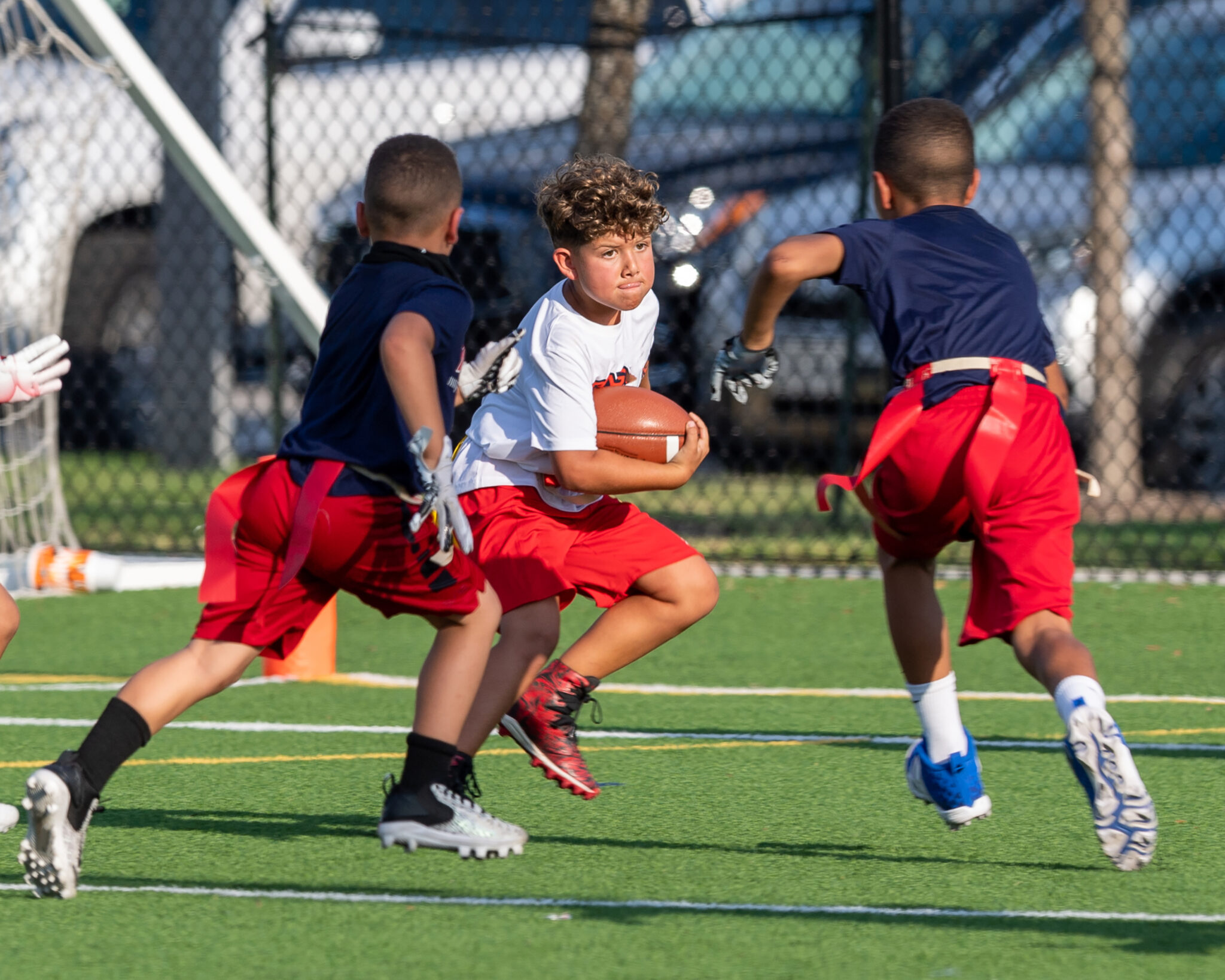
If you watch a high-level competitive flag game, you'll see a level of spatial awareness and passing precision that tackle often lacks at the youth level. In tackle, a big kid can just run over everyone. In flag? That big kid has to learn how to move their feet. They have to understand angles. Because if you can't protect your flags, you're useless, no matter how much you weigh.
I’ve seen coaches who’ve spent twenty years in the dirt-and-grass tackle world admit that flag actually develops better quarterbacks and receivers. Why? Because the play doesn't end with a pile of bodies. It ends with a catch, a sprint, and a pull. The repetition of the actual skill of football—throwing, catching, and de-flagging—happens at a much higher frequency.
The Safety Reality (It’s Not Just Concussions)
We talk about CTE and head trauma constantly. For good reason. Dr. Robert Cantu and the Concussion Legacy Foundation have been screaming from the rooftops about delaying tackle until age 14. But there is another side to the flag football for youth safety argument: overuse injuries and burnout.
Tackle football is a grind. It wears down knees, ankles, and spirits. Flag keeps the impact low while keeping the cardio high. You're basically playing a 50-minute game of high-speed tag with a pigskin. The lateral movement required to pull a flag—that "basketball-style" defensive stance—builds incredible core stability and hip mobility. It’s cross-training without even trying to be.
The NFL Flag Effect and the Olympic Dream
Did you hear? Flag football is going to the Olympics in 2028. Los Angeles. It’s official.
This isn't just a backyard hobby anymore. The NFL has poured millions into NFL FLAG, their official youth league, to ensure the pipeline of talent stays full. They know the data. They see the participation numbers in tackle dropping while flag is skyrocketing. By legitimizing the sport with an Olympic pathway, they've given kids a reason to stick with flag through high school and beyond.
There are now collegiate scholarships for women’s flag football. Let that sink in. Organizations like the NAIA have officially recognized it as a varsity sport. Your daughter could literally get her education paid for by pulling flags. That was unthinkable ten years ago.
How the Game Actually Works (The Nuance)
Most leagues run 5-on-5. No offensive or defensive lines. It’s an open-field game.
- The No-Run Zones: Usually, if you’re within five yards of the end zone or the midfield line, you have to pass. This prevents the "bull-rush" strategy where a coach just hands the ball to the biggest kid on the team three times in a row. It forces kids to learn the passing tree.
- The Rush: The defender usually has to be seven yards back to rush the quarterback. It’s a literal race. The QB has about 2.5 seconds to make a decision. That pressure builds "ice in the veins" faster than any tackle drill I’ve ever seen.
- Flag Guarding: You can't swat a defender's hands away. It’s a penalty. This forces the runner to use "juke" moves—spin, dip, and speed cuts. It’s pure athleticism.
Picking the Right League for Your Kid
Don't just sign up for the first one you see on a flyer at school. There’s a massive difference between a "rec" league and "competitive" travel flag.
If your kid is just starting, look for a league that emphasizes "touches." If the star QB only throws to his best friend, your kid is going to hate it. Good flag football for youth programs rotate positions. At age 8, everyone should try being the center. Everyone should try to catch a pass.
Check the coaches. Are they screaming like it’s the Super Bowl? Red flag. At this level, they should be teaching the "triple-threat" stance and how to square up a runner. If the coach doesn't know the difference between a "post" route and a "slant," keep looking.
Equipment: Don't Overthink It
You don't need much. That's the beauty of it.
- Cleats: Get decent ones. Soccer cleats work, but football cleats have that front toe stud for better starts.
- Mouthguard: Essential. Even without tackling, kids knock heads or take an accidental elbow to the face.
- Soft-Shell Helmets: Some leagues require these (like those made by Gamebreaker). There’s a debate on whether they actually prevent concussions or just encourage kids to play more aggressively, but many parents prefer the peace of mind.
- Pocketless Shorts: This is a big one. If your kid wears shorts with pockets, a defender’s finger can get caught while trying to pull a flag. That’s how broken fingers happen. Most leagues will ban pockets entirely.
The Social Component: Why Kids Stay
I’ve talked to dozens of parents whose kids moved from soccer to flag. The consensus? It’s the "cool factor."
Football has a culture. The music, the gloves, the celebrations. Flag football for youth captures all that "swagger" without the fear of getting flattened by a kid who hit his growth spurt early. It’s inclusive. You’ll see co-ed teams where the girls are out-running the boys, and nobody thinks twice about it.
The games are also shorter. Usually, you're in and out in an hour. No four-hour marathons in the heat. It fits the modern family's chaotic schedule.
Is It "Real" Football?
Ask Tyreek Hill. He’s one of the biggest ambassadors for the game. He’s gone on record saying the skills translate directly. If the fastest man in the NFL says flag is legit, who are we to argue?
The "physicality" argument is losing steam. We now know that sub-concussive hits—those little rattles that happen every play in tackle—add up over time. Flag removes that specific risk factor while keeping the strategic complexity. You still have to read a Cover 2 defense. You still have to execute a perfect handoff. You still have to celebrate with a backflip in the end zone (if the ref allows it).
Actionable Steps for Parents
Stop over-analyzing and just get them on the field. Here is how you start:
Locate an NFL FLAG or i9 Sports affiliate. These are the two biggest "gold standards" for organized play in the U.S. They have vetted coaches and standardized rules.
Check the flag type. Some leagues use "pop" flags (they make a loud noise when pulled), and others use "Velcro" flags. Pop flags are generally better for refs to see and call fairly.
Invest in a good football. Don't buy the cheap rubber ones. Get a "composite" leather ball (K2 or Pee Wee size depending on age) so your kid can actually learn how to grip the laces properly.
Watch a game first. Go to the park next Saturday. Observe the vibe. If the parents are yelling at the teenage refs, run the other way. You want a culture of development, not a culture of "win-at-all-costs."
Prioritize footwork over strength. If you’re practicing in the backyard, don't worry about how far they can throw. Set up some cones. Work on the "stop-and-go." The kid who can change direction the fastest is the king of the flag field.
Flag football is the future of the sport. It’s safer, it’s faster, and it’s actually teaching the skills that matter. Whether your kid wants to play in the NFL or just wants to run around with their friends, this is the way to do it. The game is evolving. It’s time to get on board.