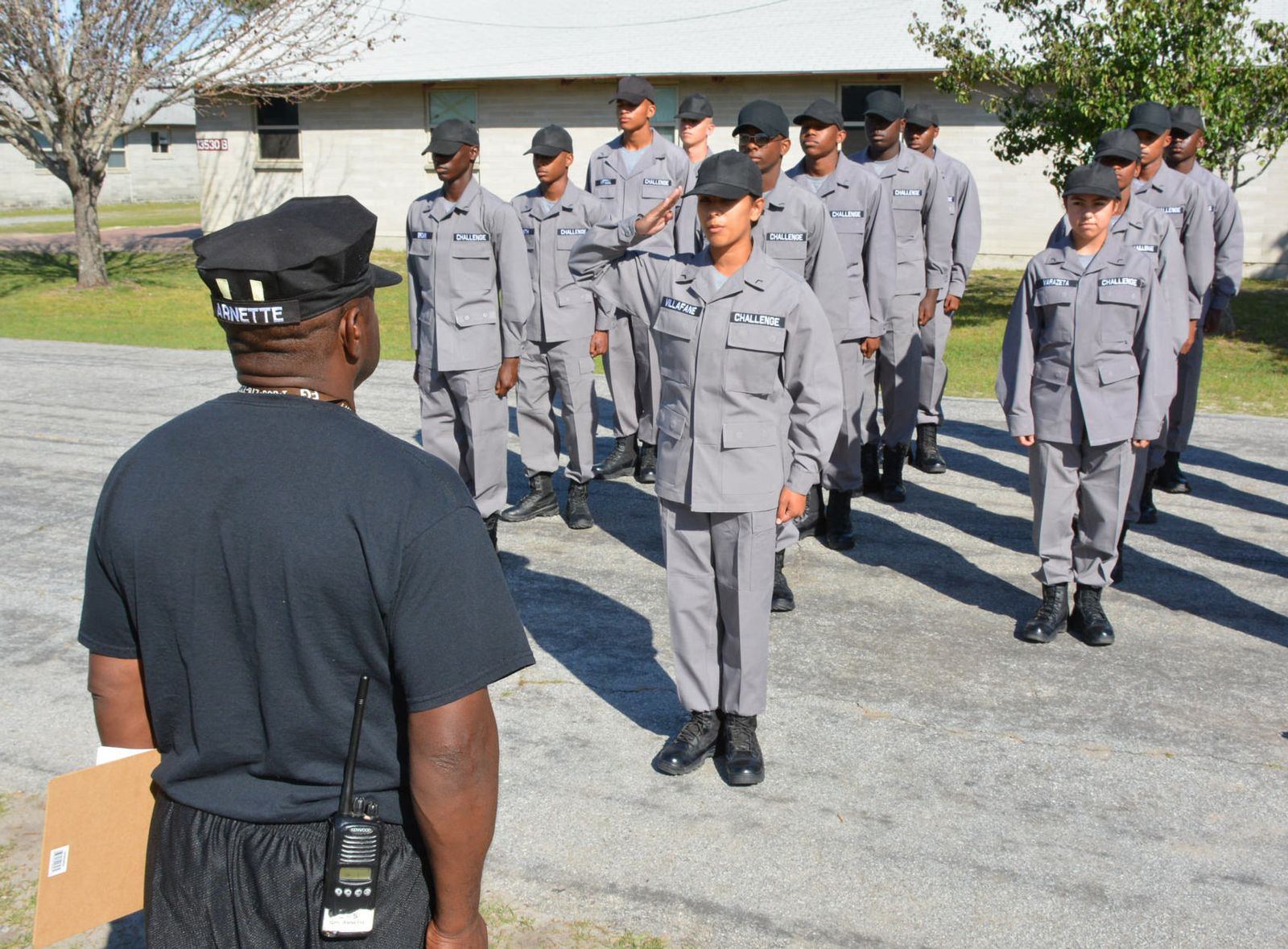
You’ve probably heard the rumors. People call it "baby boot camp" or a "place for bad kids." Honestly, that’s just lazy. If you’re looking at the Youth Challenge Academy Fort Stewart Georgia because a teenager in your life is spinning out of control, you need the truth, not the marketing fluff or the neighborhood gossip. This isn't jail. It isn't a summer camp either. It is a grueling, 22-week residential phase followed by a year of mentoring that basically aims to hot-wire a young person's brain toward productivity before they hit a dead end they can't drive out of.
It's intense.
The Georgia Youth Challenge Program (GaYCP) operates under the National Guard Bureau. It’s part of a nationwide net designed to catch high school dropouts or those severely at risk of dropping out. At Fort Stewart, near Savannah, the atmosphere is heavy with military discipline, but the goal is strictly academic and behavioral. We're talking about 16 to 18-year-olds who have, for whatever reason, disconnected from the traditional school system. Maybe it was drugs. Maybe it was just a total lack of direction. Whatever the case, Fort Stewart doesn't just ask them to "try harder"—it forces a total environmental reset.
The Reality of Life at Fort Stewart
When a kid steps onto the grounds at Fort Stewart, the first thing they lose is their phone. That alone is a traumatic event for most modern teens. Then comes the "Acclimation Phase." It’s two weeks of pure shock. They wake up at 5:00 AM. They march. They eat in silence. They follow orders without the "but why?" that defines the teenage years.
If they can survive those first fourteen days, they become "cadets."
The program focuses on eight core components. It’s not just about getting a GED, though that’s a huge part of it. They focus on leadership, physical fitness, health, and job skills. You’ll see cadets out in the Georgia heat doing community service, maybe clearing brush or helping with local events. It’s about building a sense of "I am part of something bigger than my own problems." The sheer volume of structure is what makes it work. In a world where these kids often had zero boundaries, the military environment provides a scaffold. They don't have time to get in trouble because every minute of their day is accounted for by staff who don't take "no" for an answer.
Why the GED is Only Half the Battle
Most parents look at Youth Challenge Academy Fort Stewart Georgia as a shortcut to a diploma. And yeah, the academic push is real. The teachers there are dealing with students who might be three grade levels behind. They use a compressed curriculum to get these kids ready for the GED or, in some cases, credit recovery to head back to high school.
But a piece of paper won't fix a broken attitude.
The real "secret sauce" is the residential aspect. You can't go home on the weekends. You can't hang out with the same friends who were helping you make bad choices. You are stuck with your cohort. This forced proximity creates a weird, intense brotherhood and sisterhood. They learn to rely on each other. If one cadet messes up, the whole platoon might feel the consequences. It’s peer pressure, but for once, it’s being used for something good.
The Cost (or Lack Thereof)
Here is something that confuses people: it's free.
Well, it’s "free" in the sense that you don't write a check. The program is funded by federal and state tax dollars. The National Guard covers the vast majority of the costs. This is a massive investment in human capital. The government has figured out that it is much cheaper to spend 22 weeks turning a kid around at Fort Stewart than it is to pay for their incarceration or social services for the next forty years.
However, "free" doesn't mean "easy to get into."
There are strict eligibility requirements. You have to be a US citizen or legal resident, a resident of Georgia, between 16 and 18, and—this is the big one—not currently facing felony charges or convicted of a felony. It is a voluntary program. You cannot legally force a kid to go. They have to sign the papers. If they don't want to be there, they will eventually wash out, and that’s a spot wasted that could have gone to a kid on the waiting list.
Dealing with the "Military" Stigma
Let's address the elephant in the room. Is this a recruiting tool for the Army?
Technically, no. There is no requirement to join the military after graduating from the Youth Challenge Academy Fort Stewart Georgia. In fact, the staff will tell you that the majority of graduates go on to community college, vocational schools, or straight into the workforce.
But, let's be real. Spending five months at Fort Stewart makes the military look like a viable career path. Cadets get used to the uniforms. They get used to the rank structure. For a kid who never felt like they were "good" at anything, the clear-cut progression of military life can be addictive. They find out they can actually lead. They find out they can run five miles. If they decide to enlist later, they’re usually miles ahead of other recruits in terms of discipline and physical readiness.
The Post-Residential Phase: The Part Everyone Forgets
If the story ended when the cadet marched across the stage at graduation, the program would fail. Most kids would go right back to their old neighborhoods, see their old friends, and fall right back into the same holes.
This is why the 12-month post-residential phase exists.
Each cadet has a mentor. This is someone from their home community—not a parent, but maybe a coach, a pastor, or a family friend. For a full year after leaving Fort Stewart, that mentor is supposed to keep them on track. They help with job applications. They check in when the kid is feeling overwhelmed. It’s the bridge between the hyper-structured world of the Academy and the "do whatever you want" world of real life. Honestly, this is where the real work happens. Without a solid mentor, the 22 weeks at Fort Stewart can just become a distant memory of "that one time I was in the military."
Common Misconceptions to Toss Out
- It’s a boot camp for criminals. Wrong. If a kid has serious violent offenses or sex offenses, they aren't getting in. It's for "at-risk" youth, not hardened criminals.
- They scream at you all day. They definitely yell. But there’s a purpose. It’s about breaking down the ego to build up the person. It’s not abuse; it’s high-pressure coaching.
- You can leave whenever you want. It's voluntary to start, but once you're in, there's a serious process for leaving. They want you to stick it out. Leaving early is seen as a failure of the commitment you made to yourself.
- It’s only for boys. Fort Stewart hosts both male and female cadets, though they are housed in separate barracks and have different platoons.
The Struggle is the Point
If you’re a parent reading this, you’re probably scared. You’re worried about sending your kid to a place where they’ll be pushed to their physical and emotional limits.
Good.
Growth doesn't happen in a comfort zone. The reason your kid is struggling right now might be because they haven't had to face real, sustained pressure with no escape hatch. At Fort Stewart, the humidity is oppressive, the bugs are everywhere, and the work is constant. But when a cadet realizes they can survive a 10-mile hike or pass an algebra test they thought was impossible, something shifts. Their "I can't" becomes "I did."
It isn't a miracle cure. Some kids go through the program and still end up in trouble. But the statistics usually show a massive improvement in earning potential and law-abiding behavior compared to kids who just drop out of high school and stay on the couch.
How to Actually Get Started
Don't wait until the week before a new cycle starts. The application process for the Youth Challenge Academy Fort Stewart Georgia is a mountain of paperwork. You need medical records, school transcripts, and birth certificates.
The best move is to attend an orientation. They hold these around the state. It gives the teenager a chance to see what they’re signing up for and gives the parents a chance to ask the tough questions. You’ll meet the cadre (the staff). You’ll see the facilities. It makes the whole thing feel a lot more real and a lot less like a scary black hole.
- Check the Georgia Youth Challenge website for the next "Intake" dates. They usually have two cycles a year.
- Find a mentor now. Don't wait until the end of the program. Having someone lined up who the kid already trusts makes the application stronger.
- Get a physical exam. You won't believe how many kids get delayed because of an undiagnosed minor medical issue or missing vaccinations.
- Be honest on the application. If there’s a history of drug use or minor scrapes with the law, tell them. They’ve seen it all. Lies are the fastest way to get an application rejected.
If you’re serious about this, stop thinking of it as a punishment. Start framing it as a scholarship for a second chance. Because that’s exactly what it is. It’s an opportunity to hit the "reset" button on a life that was heading toward a crash. It’s hard, it’s hot, and it’s loud, but for thousands of Georgia teenagers, it’s the only thing that actually worked.
The next step is simple but heavy: Sit down with your teen and watch a few of the graduation videos or "day in the life" clips from the Fort Stewart campus. Let the reality sink in. If they can look at that intensity and say, "I need this," then you’re already halfway to a success story. Get the application started today because those beds fill up faster than you’d think.



