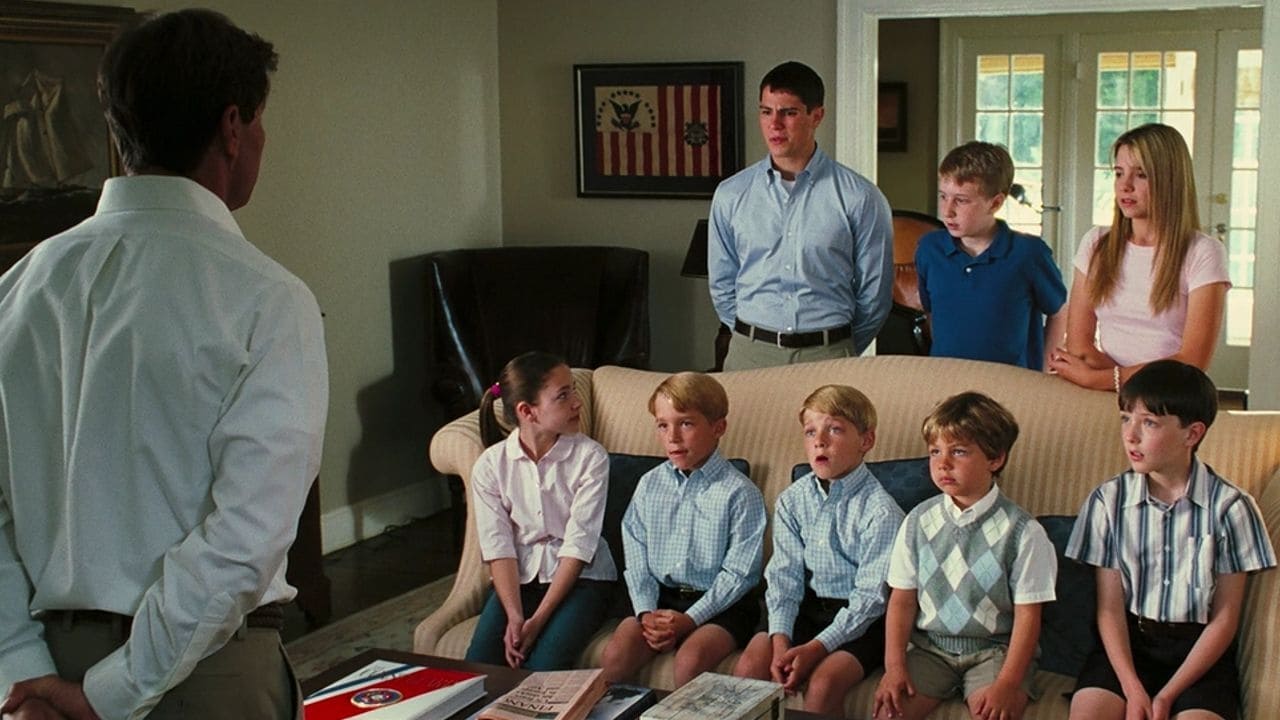
If you grew up in the mid-2000s, you probably remember Rene Russo and Dennis Quaid screaming at a pack of eighteen kids while a pig ran through a lighthouse. It was loud. It was messy. It was peak Nickelodeon Movies energy. But if you talk to your parents about the Yours Mine & Ours movie, they’re likely thinking of Lucille Ball’s iconic physical comedy and Henry Fonda’s stoic Navy grit.
The gap between these two films isn't just time. It’s a total shift in how Hollywood views the "blended family" trope.
Most people don't realize that the 1968 version was actually based on a true story. Helen Beardsley wrote a book called Who Gets the Drumstick? detailing her life with Frank Beardsley. They were real people. They had twenty children. Let that sink in for a second. Twenty. While the 2005 remake dialed it back to eighteen, the "reality" of the situation was actually more intense than the fiction.
The Real Story vs. Hollywood Magic
The original film is a time capsule. You have Lucille Ball playing Helen, a widow with eight children, and Henry Fonda as Frank, a widower with ten. It’s set against a backdrop where logistics matter. We see the military-style precision required to feed a small army. There is a genuine sense of exhaustion in the 1968 film that the remake replaces with slapstick.
Honestly, the 2005 Yours Mine & Ours movie opted for a "war" narrative. In the remake, the kids hate each other. They actively try to sabotage their parents' marriage. They use paint buckets, slime, and psychological warfare to tear the household apart. It’s funny if you’re ten years old, but it misses the heart of the source material. The original kids weren't trying to destroy the family; they were just trying to survive the sheer crowdedness of it all.
I think the biggest difference is the stakes. In the 60s, a blended family of that size was a social anomaly. It was about finding a way to make two grieving halves into a whole. In the 2000s, it was a vehicle for Drake Bell to look cool and for physical gags involving a grocery store collapse.
Why the 2005 Remake Still Holds a Weirdly Strong Legacy
Despite being panned by critics—it holds a pretty grim 6% on Rotten Tomatoes—the 2005 version is a Millennial and Gen Z staple. Why? Because the cast was stacked with every "it" kid of the era.
- Danielle Panabaker (before she was Killer Frost on The Flash).
- Drake Bell at the height of Drake & Josh fame.
- Miranda Cosgrove just before iCarly exploded.
- Sean Faris, who was the go-to teen heartthrob for about three years.
You’ve got this weird ensemble that makes it feel like a crossover episode of every 2005 TV show. It’s nostalgic candy. Even if the plot is paper-thin, seeing Dennis Quaid play a Coast Guard Admiral trying to apply military discipline to a kid who just wants to play the guitar is a specific kind of comfort food.
Logistics of the "Big Family" Genre
Movies about huge families were a massive trend for a while. You had Cheaper by the Dozen (2003) coming out just two years before the Yours Mine & Ours movie remake. Hollywood was obsessed with the "too many kids" premise.
But if you look at the 1968 production, the focus was on the adult relationship. It’s a romance first. Helen and Frank are two people who genuinely love each other but are terrified of the baggage they’re carrying. The 2005 version treats the parents more like referees. Dennis Quaid’s Frank Beardsley is obsessed with "the plan." Rene Russo’s Helen North is a free-spirited handbag designer. It’s the classic "opposites attract" trope dialed up to eleven.
Actually, the 1968 film handled the "adoption" aspect with much more weight. In the finale, Frank adopts Helen's children, and they all take the Beardsley name. It’s a tear-jerker. In the remake, the emotional payoff is there, but it’s buried under a mountain of slapstick jokes about pigs and spilled flour.
Comparing the House Dynamics
In the original, the house is a character. It’s a sprawling, slightly run-down Victorian that feels lived-in. In the remake, they live in a lighthouse. A literal lighthouse.
Logistically, a lighthouse is the worst place to raise eighteen children. There are too many stairs. The acoustics would be a nightmare. But it looks great on a movie poster. This is a perfect example of how the Yours Mine & Ours movie evolved from a grounded family drama into a high-concept "what if" comedy.
The Forgotten Middle Child: The TV Movie
Hardcore fans might remember that there was a semi-sequel or "inspired by" series called The Partridge Family, but that’s a different vibe entirely. The real "lost" piece of this puzzle is how the Beardsley family felt about the films.
The real Beardsley children have gone on record in various interviews over the years. Some found the movies charming; others felt the 2005 version was a total caricature. When you’re one of twenty siblings, your life is defined by a lack of privacy and a constant need for cooperation. The 2005 film portrays them as a coordinated strike team of pranksters. In reality, they were just kids trying to find a clean shirt in a pile of laundry the size of a Volkswagen.
How to Watch Them Today
If you’re looking to do a double feature, it’s worth noting the tonal whiplash.
- Start with the 1968 version. It’s streaming on various classic movie platforms. Watch it for Lucille Ball’s performance—she was a comedic genius, but she brings a lot of vulnerability to Helen.
- Follow with the 2005 version. Treat it as a time capsule of mid-2000s fashion and "tween" culture.
The 1968 version is a story about two people building a life. The 2005 version is a story about two houses crashing into each other at sixty miles per hour. Both are valid, but they serve different moods.
What Most People Get Wrong About the 2005 Production
There’s a common misconception that the 2005 movie was a direct response to the success of Cheaper by the Dozen. While the timing suggests that, the project had actually been in development for quite a while.
The producers wanted to capture that "modern family" chaos before Modern Family was even a show. They leaned heavily into the "North vs. Beardsley" dynamic—the creative, messy Norths vs. the rigid, disciplined Beardsleys. It’s a bit cliché, honestly. But it works because Dennis Quaid is so good at playing the "strait-laced guy losing his mind."
Actionable Insights for Fans of the Genre
If you love the Yours Mine & Ours movie and want more of that specific "blended family chaos" energy, don't just stick to the remakes.
- Read the book: Who Gets the Drumstick? by Helen Beardsley. It provides a fascinating look at the 1950s/60s logistics of a mega-family that the movies gloss over.
- Check out "The Seven Little Foys": It’s an older film starring Bob Hope about a vaudeville performer raising seven kids. It’s the spiritual ancestor to this genre.
- Look for the nuances: When watching the 2005 version, pay attention to the background kids. With eighteen actors, many of the younger ones don't get lines, but their reactions in the "war" scenes are often the funniest part of the movie.
The legacy of the Yours Mine & Ours movie isn't just about the jokes. It’s about the cultural obsession with the idea that no matter how many people are in a house, or how many different backgrounds they come from, you can eventually find a way to coexist. Even if it involves a pig in a lighthouse.
To get the most out of your rewatch, start by identifying the distinct "archetypes" each kid represents in the 2005 version. You’ll find the "leader," the "brain," the "rebel," and the "forgotten one" almost immediately. Then, compare that to the 1968 version, where the kids are treated more like a collective force of nature. It’s a fascinating study in how screenwriting changed over forty years. For a true deep dive, track down the original New York Times review from 1968 to see how critics of the era reacted to a family of twenty—it was just as shocking then as it is now.
Check your favorite streaming services like Paramount+ or MGM+, as these titles frequently rotate through their "Family" sections. If you’re a physical media collector, the 1968 version on Blu-ray often includes interesting bits about Lucille Ball’s production company, Desilu, and her influence on the film’s development.



