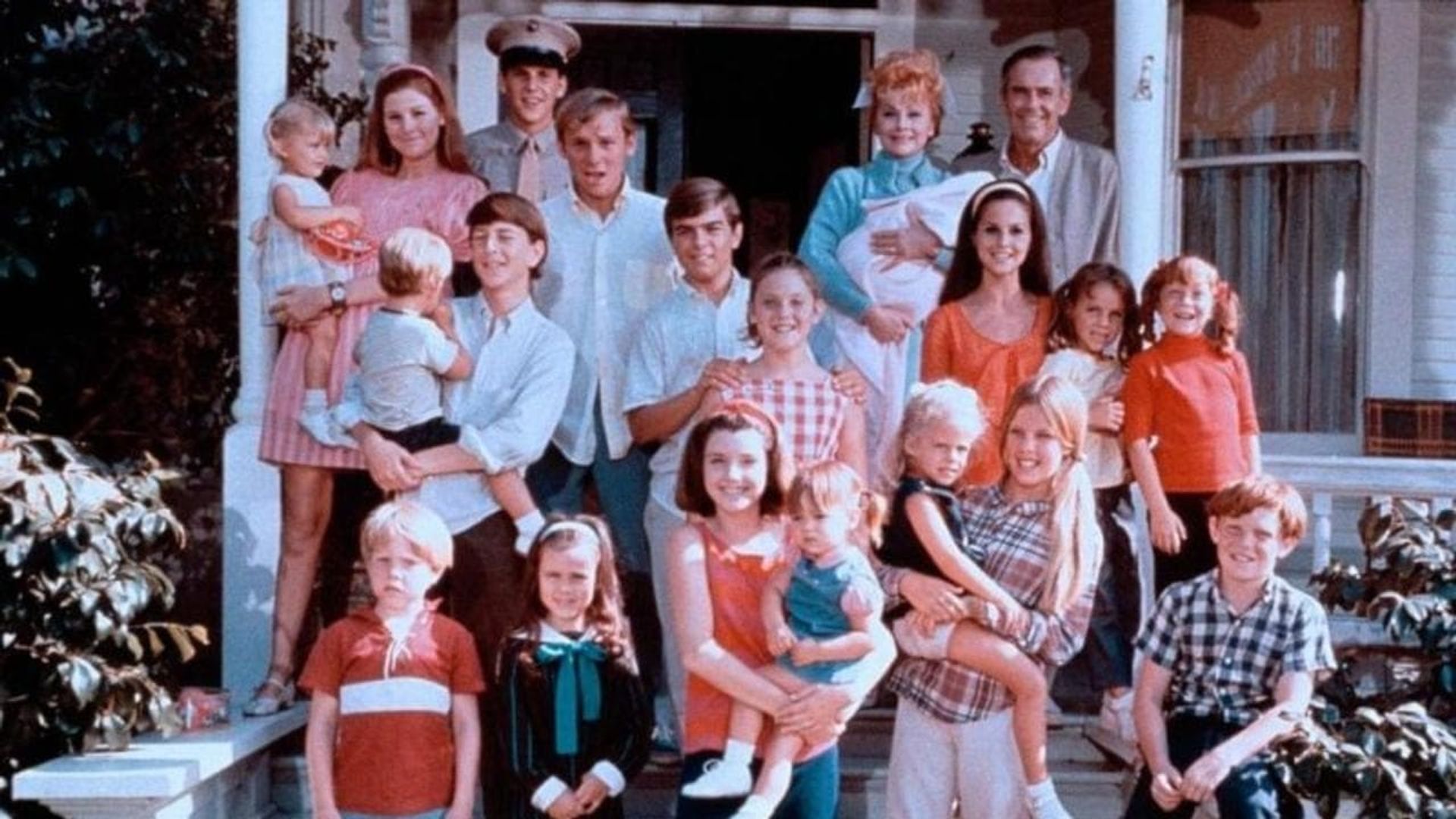
Believe it or not, there was a time when the idea of a "blended family" was considered radical, or at least, mathematically impossible for a single household. Then came Yours Mine and Ours 1968.
It’s a movie that somehow managed to turn the logistical nightmare of twenty people living under one roof into a comedic goldmine. Most people today remember the 2005 remake with Dennis Quaid and Rene Russo, but honestly? The original is where the real soul is. You've got Lucille Ball and Henry Fonda—two absolute titans of the silver screen—playing Helen North and Frank Beardsley. For another view, read: this related article.
It wasn’t just a goofy comedy.
Based on the real-life memoir Who Gets the Drumstick? by Helen Beardsley, the film captures a very specific, chaotic slice of Americana. It’s about 18 kids. Ten from his side, eight from hers. If that sounds like a lot of laundry, it’s because it is. Similar reporting on this trend has been provided by Vanity Fair.
The Real Story Behind Yours Mine and Ours 1968
We have to talk about the reality versus the Hollywood gloss. Helen Beardsley was a real person. She was a nurse and a mother of eight who lost her first husband, Dick North, in a tragic accident. Frank Beardsley was a Navy warrant officer with ten kids. When they met, it wasn't just a "meet-cute." It was a collision of two universes.
Hollywood, of course, took some liberties.
In the movie, the courtship is fast, frantic, and filled with Lucille Ball’s signature physical comedy. In real life, the logistics were even more staggering. Think about the sheer volume of milk. Or shoes. Or the psychological toll of merging two sets of grieving children into one unit.
The film chooses to lean into the humor of the "assembly line" lifestyle. There’s that famous scene where the kids are being bathed and dressed like they’re on a conveyor belt. It’s funny because it feels slightly absurd, but for the real Beardsleys, that was Tuesday.
Lucille Ball and the Pivot from Lucy Ricardo
By 1968, Lucille Ball was an institution. She was television. But Yours Mine and Ours 1968 gave her a chance to do something a bit more grounded than the increasingly wacky antics of The Lucy Show.
She plays Helen with a genuine warmth.
You can see the flicker of "Lucy" in her facial expressions when things go wrong, but she carries the weight of a widow trying to find a second chance at love. Henry Fonda, on the other hand, is the perfect foil. He’s stiff, disciplined, and very "Navy." The chemistry works because it shouldn't. They represent two different philosophies of parenting: the emotional nurturer versus the strict disciplinarian.
Why the 1968 Version Outshines the Remake
Let's get real for a second. The 2005 remake is fine. It’s loud. It’s got slapstick. It’s got a pig for some reason?
But the Yours Mine and Ours 1968 version has a texture that the modern era just can't replicate. It was filmed during a massive cultural shift in America. 1968 was a heavy year—Vietnam, protests, social upheaval. In the middle of all that, this movie offered a vision of a giant, functional, loving family that was built on top of tragedy.
It felt necessary.
The pacing is also vastly different. Modern comedies feel the need to have a gag every thirty seconds. The '68 version lets the scenes breathe. You get to see the awkwardness of the first dinner. You feel the genuine tension when the older kids realize they aren't the "only" ones anymore. It treats the children like actual characters rather than just props for a joke.
The Logistics of a 20-Person Household
How do you actually run a house like that?
The movie shows us the "Navy way." Frank Beardsley applies military precision to the chaos.
- Color-coded towels.
- Scheduled bathroom shifts.
- Bulk grocery shopping that looks like a military resupply mission.
One of the most relatable (and stressful) parts of the film is the sheer noise. If you've ever had more than three people in a kitchen, you know it's a mess. Double that. Then double it again. The sound design in the film effectively communicates that "wall of sound" that comes with a massive family. It’s constant. It’s overwhelming. And for Helen and Frank, it was home.
Dealing with the "Steps"
A major theme in Yours Mine and Ours 1968 is the friction between the different "clans." The North kids and the Beardsley kids didn't just fall into place.
There is a real sense of tribalism.
They don't want to share their parents. They don't want to share their rooms. It’s a messy, honest look at the "step-parent" dynamic before that term was as common as it is now. The movie doesn't shy away from the fact that the kids are, at times, actively rooting against the marriage.
That’s a brave choice for a family comedy.
It acknowledges that love between two adults doesn't automatically mean love between twenty people. It has to be earned. It has to be negotiated. Usually through a series of disasters and eventually, a shared sense of belonging.
The Catholic Context
You can't talk about this movie without mentioning the religious undertone. The real Beardsleys were devout Catholics. In the 1960s, having eighteen children wasn't just a "quirk"—it was a reflection of their faith and their refusal to use birth control.
The movie handles this with a light touch, but it's there.
It adds a layer of cultural history to the film. It explains the "why" behind the numbers. Today, seeing a family of twenty feels like a reality TV stunt. In 1968, it was seen as a Herculean, perhaps slightly eccentric, act of faith and commitment.
Critical Reception and Legacy
When it hit theaters, critics were... mixed. Some found it too sugary. Others thought Lucille Ball was too old for the role (she was in her late 50s playing a woman who gets pregnant).
But the audience? They loved it.
It was one of the highest-grossing films of the year. People wanted to see something that celebrated the idea that you could lose everything and still build something even bigger. It’s a "rebuilding" story.
Interestingly, the film actually influenced the creation of The Brady Bunch. While the shows were developed around the same time, the success of the Beardsley story proved there was a massive appetite for "blended family" narratives. Without Frank and Helen, we might never have had Mike and Carol.
The Cinematography of Chaos
Director Melville Shavelson had a tough job. How do you frame a shot with eighteen kids?
Watch the movie again and pay attention to the blocking. It’s masterful. He uses wide shots to emphasize the scale of the family and tight close-ups to show the individual overwhelmed faces of the parents. There’s a specific visual rhythm to the film—the quiet moments of Helen and Frank alone followed by the sudden, explosive energy of a dozen kids entering a room.
It’s almost like a dance.
A very loud, messy dance.
What Most People Get Wrong About the Movie
There’s a common misconception that Yours Mine and Ours 1968 is just a "Lucy" movie.
It’s not.
If you go in expecting I Love Lucy, you might be disappointed. This is an ensemble piece. It’s as much Henry Fonda’s movie as it is Ball’s. Fonda brings a gravitas that keeps the movie from drifting into pure slapstick. He’s the anchor. When he talks about his late wife or the responsibility of raising his children, he isn't joking. He’s a man doing his best.
Another thing: people often think the movie is purely fictional.
As mentioned, it’s based on a true story. The real Frank and Helen Beardsley actually did have a 19th child together (and then a 20th!). The movie ends with the birth of their first joint child, which serves as the "glue" for the family. In real life, that glue was tested daily for decades.
Actionable Insights for Fans and New Viewers
If you’re planning to revisit this classic or watch it for the first time, keep these things in mind to get the most out of the experience:
- Watch for the subtle acting: Look at Henry Fonda’s eyes during the scenes where he’s overwhelmed. He does a lot with very little.
- Contextualize the era: Remember that 1968 was a time of massive change. This movie was a "comfort watch" for a country in turmoil.
- Compare the versions: If you’ve seen the 2005 version, watch the '68 one immediately after. The difference in tone and heart is staggering.
- Read the book: Who Gets the Drumstick? provides a much deeper, more "real" look at the hardships the family faced, including the financial strain that the movie glosses over.
The film is currently available on various streaming platforms like Amazon Prime (depending on your region) and often pops up on Turner Classic Movies. It remains a staple of family cinema for a reason.
Yours Mine and Ours 1968 isn't just a relic of the past. It’s a testament to the idea that "family" isn't defined by blood or tradition, but by the willingness to show up every day, even when there are eighteen other people in the room and only one bathroom. It’s messy. It’s loud. It’s perfect.
To really appreciate the legacy of this film, your next step should be checking out some of the behind-the-scenes interviews with the surviving Beardsley children. Their perspective on how their "real life" was turned into a Hollywood spectacle adds a whole new dimension to the viewing experience. You can find several of these accounts in archival news features or through the Beardsley family's own published updates over the years. Understanding the human element behind the script makes the comedy even more poignant.



