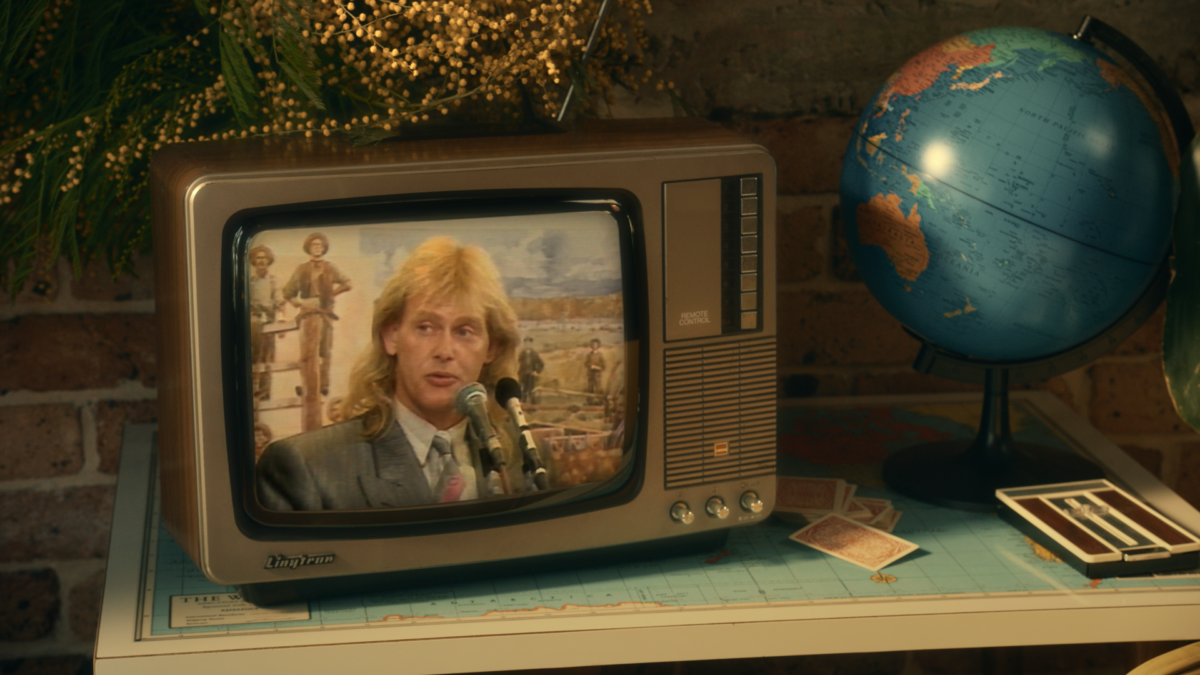
It’s hard to imagine now, but in 1986, John Farnham was basically a "has-been." That sounds harsh. It is harsh. But in the brutal landscape of the Australian music industry back then, Farnham was a former teen idol whose time had seemingly passed. He was the "Sadie (The Cleaning Lady)" guy. He’d had a stint with Little River Band that didn't exactly set the world on fire. He was broke. He was literally 18 months behind on his mortgage.
Then came You’re the Voice.
If you grew up in Australia, this song is practically a second national anthem. If you’re from anywhere else, you know it as that massive power ballad with the unexpected bagpipe solo. But the story of how this track came together—and why it almost never happened—is a masterclass in creative stubbornness. It wasn't just a hit; it was a total pivot that redefined what an adult contemporary rock song could actually say.
The Song John Farnham Didn’t Write (But Made His Own)
You’d think a song so tied to an artist’s identity was penned in a basement by the man himself. Nope. The track was actually written by a group of Brits: Andy Qunta, Keith Reid, Terry Thompson, and Maggie Thompson. Keith Reid, by the way, was the lyricist for Procol Harum—the guy behind "A Whiter Shade of Pale."
The demo had been floating around. Rumor has it that other artists passed on it. It was a bit too "protest song" for some. But when Farnham heard it, something clicked. He didn't just want a comeback; he wanted a statement.
Honestly, the lyrics are remarkably vague for a "political" song, which is probably why it works. It doesn’t tell you who to vote for. It doesn’t name a specific war. Instead, it hits that universal chord of human agency. "We’re all someone’s daughter, we’re all someone’s son." It’s simple. It’s effective. It’s the kind of line that makes 40,000 people in a stadium feel like they’re part of a single unit.
That Bagpipe Solo: A Massive Gamble
Let’s talk about the pipes. Bagpipes in a pop song are usually a recipe for disaster. It’s a loud, abrasive instrument that’s notoriously difficult to tune to modern studio equipment. When Farnham and his producer, Ross Fraser, decided to put a bagpipe bridge in You’re the Voice, people thought they were losing it.
The industry insiders were skeptical. They wanted a guitar solo. They wanted something "safe."
Farnham stood his ground. He wanted that "call to arms" feeling. The bagpipes, played by a group that included piper Mitch Zorn, provided a primitive, tribal energy that a Fender Stratocaster just couldn't replicate. It turns the song from a standard radio edit into something that feels ancient and urgent. It was a weird, bold, and ultimately genius move.
Why the Whispering Jack Album Changed Everything
You can't talk about the song without the album, Whispering Jack. At the time, no one would sign him. Record labels in Australia looked at John Farnham and saw a legacy act, not a chart-topper. So, he and manager Glenn Wheatley did something insane: they funded the album themselves.
Wheatley famously re-mortgaged his house to pay for the recording and promotion.
Think about that pressure. If You’re the Voice had flopped, Farnham wouldn't just be out of a career; his best friend would be homeless. They recorded a lot of the album in a small home studio—a converted garage, basically—belonging to producer Ross Fraser. It wasn’t a high-glamour Abbey Road production. It was grit and desperation disguised as polished pop.
The result? It stayed at number one on the Australian charts for weeks. It went 24x Platinum. It became the highest-selling album by an Australian artist in Australia for decades.
The Sound of 1986 (And Why It Still Works)
Musically, the track is a total 80s time capsule, but it’s remarkably well-constructed. You’ve got those huge, gated reverb drums. You’ve got the Fairlight CMI synthesizer—the cutting-edge tech of the day—providing those atmospheric textures.
But it’s the vocal performance that carries it.
Farnham has a range that most singers would kill for. He starts the song almost in a whisper (hence the album title). He’s intimate. He’s talking to you. Then, as the chorus hits, he opens up into that powerhouse tenor that seems to have no ceiling. There’s a specific "cleanliness" to his power; he doesn't need to scream to be heard.
Breaking Down the Structure
- The Intro: A pulsing synth beat that builds tension.
- The Verse: Low-register, conversational, building the narrative of silence and fear.
- The Pre-Chorus: The "Whoa-oh-oh" hook that prepares the listener for the explosion.
- The Chorus: Pure, unadulterated anthem territory.
- The Bridge: The bagpipe solo that shifts the key and the mood into a "battle" gear.
It’s a textbook example of dynamic tension and release. By the time the final chorus kicks in with the choir of voices behind him, the emotional payoff is massive.
The Cultural Legacy and Global Impact
While You’re the Voice is a foundational text in Australia, its international success was a bit more sporadic. It hit the top ten in the UK, Ireland, and across Europe (it was huge in Germany and Scandinavia). In the US, however, it never quite reached the same heights, peaking at 82 on the Billboard Hot 100.
Why? Maybe it was "too Australian." Maybe the bagpipes were a bridge too far for American Top 40 radio in the mid-80s.
Regardless, its longevity is staggering. It has been covered by everyone from Heart (Ann and Nancy Wilson’s version is incredibly powerful) to Coldplay and David Archuleta. It showed up in the movie Hot Rod, which introduced a whole new generation of kids to the song via a weirdly hilarious riot scene.
In recent years, the song took on a new life during the 2023 Australian Indigenous Voice referendum. Farnham, who is notoriously protective of his music and rarely licenses it for commercial or political use, gave his blessing for the song to be used in the "Yes" campaign. It was a significant moment. It showed that even 37 years later, the song’s core message about having the courage to speak up still carries weight for him.
What Most People Get Wrong About the Lyrics
There’s a common misconception that the song is purely about war. While lines like "the cannons thunder" certainly point that way, the songwriters have often noted it was more about the internal struggle to speak out.
It’s about the "silent power" we all have.
It was written during the height of the Cold War, a time when the threat of nuclear annihilation felt very real and very much out of the hands of the average person. The song was a rejection of that helplessness. It’s not a song about soldiers; it’s a song about citizens.
How to Appreciate the Song Today
If you haven't listened to it in a while, do yourself a favor: put on a pair of decent headphones and find the remastered version. Ignore the 80s cheese for a second and listen to the layering.
Listen to the way the bass guitar interacts with the synth pulses. Notice the subtle use of the "choir" in the final third—it’s not just a wall of sound; it’s carefully arranged to feel like a growing crowd.
Farnham’s performance remains one of the best "vocalist" moments in pop history. He doesn't over-sing. Every note serves the purpose of the lyrics.
Next Steps for the Deep Diver
To truly understand the impact of this era, you should watch the documentary John Farnham: Finding the Voice. It’s a raw look at the period when he was "washed up" and how close he came to never recording this song at all.
Also, check out the live version from the 1987 Jack’s Back tour. There is a specific energy in the crowd when those bagpipes start—a sort of collective catharsis that explains why, even in 2026, you can’t go to a wedding or a footy match in Australia without hearing this track at least once.
If you're a musician, try deconstructing the key change during the bagpipe solo. It’s a clever bit of theory that shouldn't work as well as it does in a pop context. It shifts the energy upward just when you think the song has peaked, a technique that songwriters like Max Martin would later perfect, but Farnham and Fraser were doing it in a garage in Melbourne decades ago.



