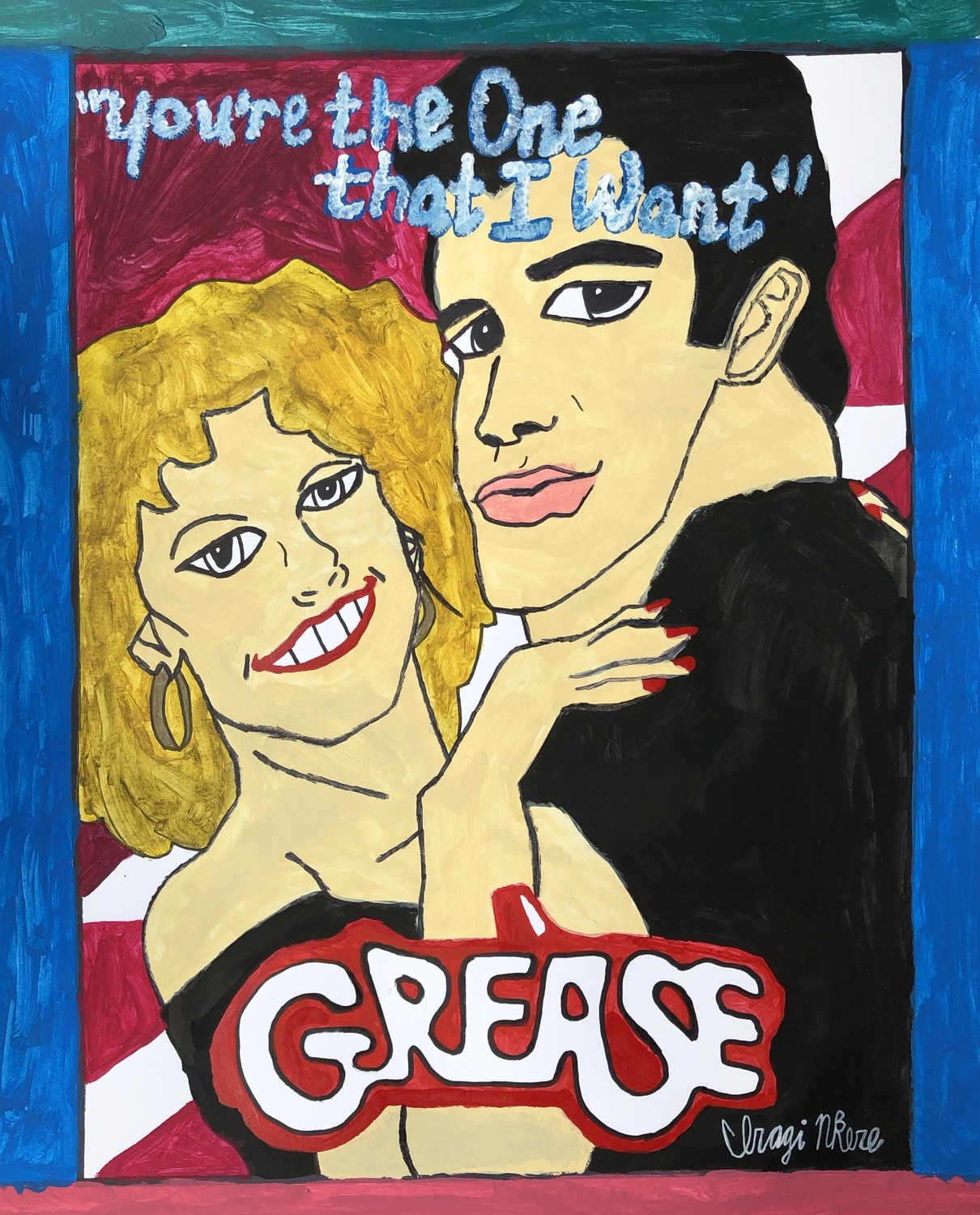
It starts with a fairground, a leather jacket, and a cigarette crushed under a red heel. You've seen it. Even if you weren't alive in 1978, you know that specific electric guitar riff that kicks in right before John Travolta lets out that first "I got chills." Honestly, You're the One That I Want is probably the most successful bait-and-switch in musical history.
Sandy, the "good girl," shows up in skin-tight spandex and suddenly Danny Zuko—the guy who spent the whole movie trying to be a track star to impress her—is the one left speechless. It’s iconic. It’s also kinda weird when you think about it. For years, people have debated whether the ending of Grease is a feminist nightmare or a story about mutual compromise. But let’s be real: at the end of the day, it’s just a massive, multi-platinum pop song that saved a movie from a potentially boring ending.
Originally, the stage version of Grease didn’t even have this song. Can you imagine? Instead of the high-energy carnival finale, they had a song called "All Choked Up," which was more of a standard 50s parody. It wasn’t working for the film. Producer Robert Stigwood needed a hit. He turned to John Farrar, who was Olivia Newton-John’s long-time songwriter and producer. The result was a track that sounded absolutely nothing like 1959 and everything like 1978. And yet, it fit perfectly.
The Secret Sauce of You're the One That I Want
Most people don't realize how much of a risk this song was. The director of Grease, Randal Kleiser, actually didn't like the song at first. He thought it clashed with the rest of the Jim Jacobs and Warren Casey score. He wasn't entirely wrong. The rest of the movie feels like a Broadway tribute to the 1950s, but You're the One That I Want has a bassline that screams disco era.
It worked because of the chemistry. You can’t fake that. Travolta was already a star from Saturday Night Fever, and Olivia was a country-pop sweetheart. When they got together on that carnival set, something clicked. They filmed the entire sequence in just one afternoon at a traveling carnival that was actually set up near the studio. Those aren't Hollywood extras in the background for the most part; it was a functioning fair.
The vocals are also tighter than people give them credit for. Farrar produced the track with a lot of compression, making it pop on AM radio. When Olivia hits those high notes and Travolta does his "it's electrifying" growl, it creates a dynamic contrast. It’s a call-and-response song. That’s why it’s the king of karaoke. It’s built for two people to flirt through a microphone.
That Spandex Suit and the "Bad Sandy" Transformation
We have to talk about the pants.
The black sharkskin trousers Olivia Newton-John wore were actually vintage from the 1950s. They were so old that the zipper was broken. Every morning before filming the You're the One That I Want sequence, Olivia had to be literally sewn into them. She couldn't eat or drink much because going to the bathroom meant cutting her out of the outfit and sewing her back in.
It's a huge moment. Sandy spends the whole movie being the "Sandra Dee" archetype—pure, blonde, and a bit naive. Then, in the final five minutes, she decides to meet Danny halfway.
Critics often argue that Sandy "changed for a man." That’s a valid take. But look at Danny. He’s wearing a letterman sweater. He tried to change for her too. The song is the moment they both realize they’ve been trying too hard to be people they aren't, so they just decide to be whatever the other person wants. Is it healthy? Maybe not. Is it a great pop song? Absolutely.
Impact on the Charts and Pop Culture
When the song was released, it didn't just climb the charts; it sat on them like it owned the place.
- It hit number one in the US, the UK, Australia, and basically everywhere else.
- It sold over 15 million copies worldwide.
- It remains one of the best-selling singles of all time.
What's wild is that Grease wasn't expected to be this massive. Paramount thought it would be a decent summer movie, but the soundtrack turned it into a cultural phenomenon. You had "Grease" by Frankie Valli, "Hopelessly Devoted to You," and then the big one. You're the One That I Want was the lead single, and it set the stage for the film's $395 million box office run.
Why We Still Sing It in 2026
If you go to a wedding tonight, the DJ is going to play this. It’s a scientific certainty.
There's a specific nostalgia attached to the song that transcends the 50s and the 70s. It’s about that feeling of finally "winning" at love. It’s high energy. It’s easy to dance to. The choreography in the film—the "shaking" across the floor—is simple enough for anyone to mimic but iconic enough to be recognizable.
Also, the song is surprisingly short. It’s just under three minutes. In the age of TikTok and short-form content, it fits perfectly. It gets straight to the point. No long intros. Just a beat and a hook.
The John Farrar Influence
John Farrar is the unsung hero here. He knew Olivia’s voice better than anyone. He knew she had this "girl next door" quality, but he also knew she could growl if she had to. By pushing her into a more rock-influenced sound for You're the One That I Want, he helped her transition from a country singer into a global pop icon.
Without this song, Olivia Newton-John might have stayed in the country lane. Without this song, John Travolta might have been stuck as just "the disco guy." Instead, they became the ultimate movie couple.
Common Misconceptions About the Song
A lot of people think the song was written by the guys who wrote the original Grease musical. Nope. Jim Jacobs and Warren Casey actually weren't thrilled that new songs were being added to the movie. They felt the original score was being diluted.
There's also a rumor that the "zapped" sound effects in the song were added to cover up vocal mistakes. That’s total nonsense. Those sounds were intentional, designed to lean into the "it's electrifying" lyric. It was the 70s—everyone was obsessed with spacey, synthesized sounds.
Another weird fact? The carnival set was actually quite dangerous. Some of the cast members got sick from the heat and the motion of the rides. If you look closely at the "Shake Shack" sequence, you can see some of the actors looking genuinely dizzy. It adds to the chaos of the scene, honestly.
How to Capture that Grease Energy Today
If you’re a performer or just someone who wants to understand why this track works, look at the "push and pull" of the lyrics.
- The Tension: Danny starts with "I got chills, they're multiplying." He's vulnerable.
- The Command: Sandy responds with "You better shape up." She's taking control.
- The Resolution: The chorus is a unison explosion of "You're the one that I want."
It’s a classic narrative arc compressed into a pop song.
To really appreciate the impact, you have to watch the scene without the sound once. Look at the movement. The way they circle each other like predators. Then turn the sound back on. The music mirrors the movement perfectly. That’s rare in movie musicals. Usually, the song is just something that happens; here, the song is the plot.
Actionable Takeaways for Fans and Creators
If you're looking to dive deeper into the world of Grease or use its success as a blueprint for your own creative work, keep these points in mind:
- Study the John Farrar Production: Listen to the isolated vocal tracks if you can find them. Notice how much layering is happening in the chorus to make two voices sound like a stadium-sized anthem.
- Embrace the Genre Blend: Don't be afraid to mix eras. Grease is a 70s take on the 50s. That "double-nostalgia" is exactly why it feels timeless. It’s not a period piece; it’s a fantasy.
- Watch the "Bad Sandy" Evolution: Observe how costume design changed the way Olivia Newton-John moved. Her body language shifts entirely once she’s in that leather jacket. It’s a masterclass in how wardrobe informs performance.
- Check Out the Live Versions: Olivia and John performed this live together several times over the decades. Seeing them do it in their 50s and 60s shows that the chemistry wasn't just movie magic—it was a genuine professional bond.
The song isn't just a relic of the 70s. It’s a blueprint for how to create a "moment." Whether you love the movie or think it’s a bit dated, you can’t deny the power of that opening riff. It’s the sound of a movie becoming a legend.
Next time you hear You're the One That I Want, don't just listen to the lyrics. Listen to the way the bass drives the song forward. Pay attention to how Danny’s "ooh-ooh-ooh" becomes the most recognizable part of the track. It’s a perfectly engineered piece of pop history that, frankly, will probably still be playing at weddings in 2078.
The best way to experience it is still on a big screen with the volume cranked up. If there’s a local "Sing-A-Long Grease" event near you, go. Even if you're a cynic, by the time that final chorus hits, you'll be singing along. It's inevitable. It's electrifying.



