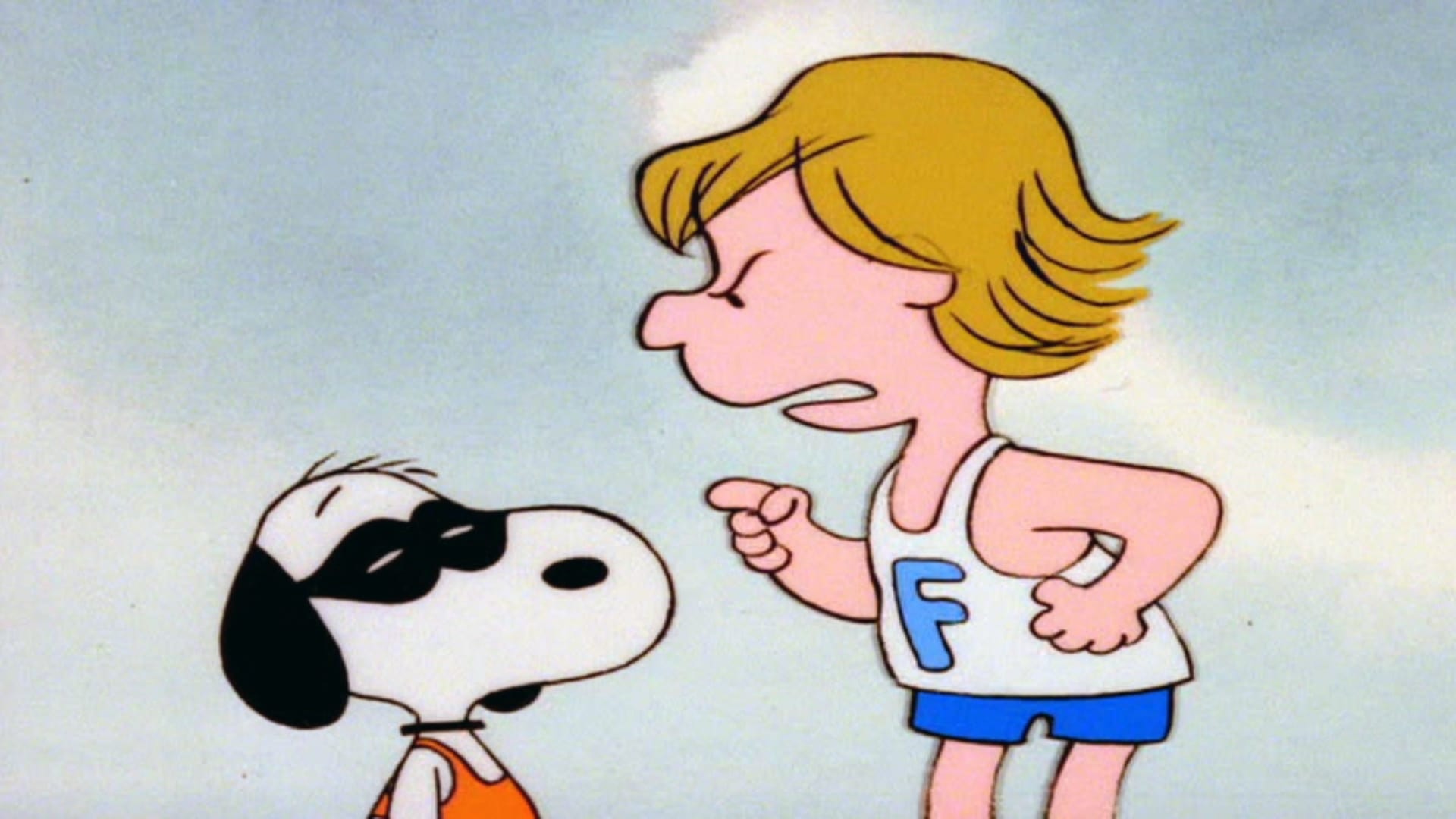
If you grew up watching the Peanuts gang, you probably have the heavy hitters memorized. The Great Pumpkin. The Christmas tree with one needle. The Thanksgiving toast. But then there’s You’re the Greatest, Charlie Brown. It’s a weird one. It doesn’t have the holiday nostalgia of the others, and it definitely doesn't have the same philosophical weight as the early specials. Yet, for a certain generation of fans, it’s the one that sticks in the brain because it feels so different from everything else Charles Schulz put on screen.
It’s 1979. Disco is dying. The Olympics are a massive deal. And suddenly, Charlie Brown—the kid who can’t even fly a kite—decides he’s going to win a Junior Olympics decathlon. It sounds like a setup for a joke, doesn’t it? But honestly, this special is one of the most grounded, strangely competitive entries in the entire Peanuts catalog. For a deeper dive into similar topics, we suggest: this related article.
Why You’re the Greatest, Charlie Brown Stands Out from the Pack
Most Peanuts specials are about internal struggles. Charlie Brown is lonely, or he’s depressed about commercialism, or he’s pining after the Little Red-Haired Girl. You’re the Greatest, Charlie Brown shifts the gears toward external pressure. It’s about sports. Pure, unadulterated, 1970s schoolyard sports.
The plot is straightforward. Charlie Brown signs up for the decathlon because he’s tired of being a loser. He wants to prove he’s the "greatest." But the competition isn't just Lucy being mean. He's up against Peppermint Patty (the natural athlete), Marcie (the reluctant genius), and a kid named the Masked Marvel—who is obviously Snoopy in a mask, though no one seems to care. For additional information on this issue, detailed reporting can also be found at GQ.
What makes this special fascinating to watch today is the animation style. By the late 70s, Bill Melendez and the team at Lee Mendelson Film Productions had refined their look. It's cleaner than the 1965 Christmas special, but it still has that hand-drawn, slightly jittery charm. The way Snoopy moves during the high jump or the hurdles is a masterclass in squash-and-stretch animation. It’s funny because it’s physics-defying, but the stakes feel weirdly real for a cartoon about a bald kid in a zig-zag shirt.
The Decathlon of Despair
Let's talk about the events. We see Charlie Brown actually succeeding. This is a rarity in the Schulz universe. Usually, the football gets pulled away. But here? He holds his own. He’s running. He’s jumping. He’s actually in the lead going into the final event: the 1500-meter run.
This is where the psychological complexity of Peanuts kicks in. Most kids' shows would have the hero win the gold medal to teach a lesson about "believing in yourself." Schulz didn't play that way. He knew that even when you do your best, life has a way of tripping you up. Literally.
In the final race, Charlie Brown is leading. He’s going to do it. He’s going to be the greatest. And then... he falls asleep. Well, he closes his eyes out of exhaustion, drifts off the track, and ends up in the middle of a field while everyone else finishes. It’s heartbreaking. It’s hilarious. It’s perfectly Charlie Brown.
The Characters: Marcie, Peppermint Patty, and the Masked Marvel
One of the best things about You’re the Greatest, Charlie Brown is the dynamic between the girls. Peppermint Patty is at her most intense here. She’s the coach, the athlete, and the ego all rolled into one. Marcie, on the other hand, is the breakout star. She doesn’t want to be there. She hates the track. She doesn't even know what a decathlon is.
- Peppermint Patty: "You've got to have the 'will to win,' Chuck!"
- Marcie: Just trying to survive the day without losing her glasses.
- Charlie Brown: Caught in the middle, trying to satisfy everyone.
And then there’s the Masked Marvel. Snoopy’s alter ego is a fan favorite for a reason. He’s a jerk. He’s arrogant. He’s incredibly good at everything. Watching a beagle compete in the pole vault against human children is the kind of surrealism that Peanuts excelled at. It grounds the story in the "kid world" where animals can be professional athletes and nobody thinks it’s worth calling the authorities.
A Forgotten Soundtrack?
Vince Guaraldi is the name everyone associates with Peanuts music. Sadly, Guaraldi passed away in 1976. This special, released in '79, features music by Ed Bogas and Judy Munsen. It’s different. It’s got a funky, late-70s vibe. It’s not the "Linus and Lucy" jazz we all know. It’s synth-heavy and upbeat. Some fans hate it because it feels "too modern" for the characters, but honestly, it fits the athletic theme. It feels like an episode of The Superstars or an old ABC Wide World of Sports broadcast.
The Cultural Impact and Why It Vanished
For years, You’re the Greatest, Charlie Brown was hard to find. It didn't get the annual prime-time reruns that the holiday specials got. It lived on VHS tapes recorded off the TV or in pricey DVD box sets.
Why? Maybe because it’s "dated." The Junior Olympics craze of the 70s isn't exactly a hot topic today. Or maybe it’s because it lacks the "warm and fuzzies" of the other specials. It’s a bit cynical. It’s about failure in a very public way.
But that’s exactly why it matters.
In a world where every kid gets a participation trophy, Charlie Brown losing the decathlon because he took a wrong turn is a vital lesson. He did the work. He was the best athlete that day. And he still lost. That is the core of the Charlie Brown experience. The "greatest" isn't the person with the medal; it's the person who gets back up the next day and tries to fly the kite again.
Rare Trivia and Behind-the-Scenes Facts
If you're a die-hard fan, you might know some of these, but they're worth revisiting:
- The Comic Strip Origins: Unlike some specials that were written purely for TV, this was heavily based on a series of comic strips from 1976 where Charlie Brown actually competed in a decathlon.
- The Voice of Charlie Brown: Arrin Skelley provided the voice for Chuck in this one. He had a slightly older, more weary tone than the early 60s voice actors, which fits the exhausted athlete vibe perfectly.
- The Masked Marvel's History: This wasn't the first time Snoopy used this persona. He first appeared as the Masked Marvel in the comic strips back in 1967, usually to challenge Peppermint Patty at arm wrestling.
- The "Greatest" Title: The title is actually a bit of a meta-joke. It’s a nod to Muhammad Ali’s "I am the greatest" catchphrase, which was ubiquitous in the 70s.
The Enduring Legacy of the "Loser"
There’s a specific scene at the end of the special that people always forget. After Charlie Brown fails, he’s devastated. He feels like he let everyone down. But Peppermint Patty—the one who pushed him the hardest—actually gives him a break. She tells him that at least he had the guts to try.
It’s a rare moment of genuine tenderness between them. It reminds the audience that the Peanuts gang, despite all their bickering and the "blockhead" insults, are a tribe. They’re all just kids trying to figure out a world that doesn't make a whole lot of sense.
How to Watch It Today
If you’re looking to revisit this 1979 gem, your best bet is Apple TV+. They’ve become the modern home for all things Peanuts. It’s often bundled under the "classics" section.
Is it worth a rewatch? Absolutely. It’s a 24-minute time capsule. It captures a specific moment in American history where we were obsessed with physical fitness and international competition. But more than that, it’s a funny, slightly mean, and ultimately human story about a kid who just wanted to be something more than average for fifteen minutes.
Actionable Takeaways for Peanuts Fans
If you want to dive deeper into this era of the franchise, here is how to get the most out of your "Greatest" experience:
- Compare the Comic to the Special: Track down the 1976 Sunday strips. You’ll see how Charles Schulz’s original ink drawings compare to the animated movements. It's a great lesson in how to translate static art into motion.
- Listen to the Score: Seriously, go find the Ed Bogas soundtrack on YouTube. It’s a fascinating departure from the Guaraldi era and showcases how the brand tried to evolve with the times.
- Watch for the Backgrounds: The late 70s specials have some of the best painted backgrounds in the series. The colors are vibrant, and the "schoolyard" setting feels lived-in and authentic.
- Host a "Non-Holiday" Peanuts Night: Pair You’re the Greatest, Charlie Brown with She's a Good Skate, Charlie Brown. Both focus on sports and competition rather than holidays, showing a different side of the characters' lives.
Charlie Brown might have lost the race, but he won the long game. Decades later, we're still talking about his failure. That’s because his failure feels a lot more like real life than anyone else's victory. He’s the greatest because he’s us. He’s the kid who tries too hard, cares too much, and ends up in a field of tall grass while the world passes him by—and he still wakes up the next morning ready to go.



