Carly Simon did something in 1972 that most songwriters only dream of. She didn't just write a hit; she created a permanent cultural mystery. You know the melody. You definitely know the biting chorus. But the real genius of You're So Vain isn't just the catchy hook—it’s the fact that for over fifty years, we’ve been obsessed with who, exactly, was so full of themselves that they thought the song was about them.
It’s kind of hilarious when you think about it. The song is a paradox. If the person thinks the song is about them, they are proving Carly's point. But if they're right, then they aren't just being vain—they're being accurate.
The A-List Suspects
For a long time, the public had a short list. Mick Jagger was a huge contender, mostly because he actually sang backing vocals on the track (uncredited, but that distinctive voice is impossible to miss). Then there was Cat Stevens, Kris Kristofferson, and even David Bowie.
But the name that always sat at the top of the heap was Warren Beatty.
Honestly, Beatty’s reputation in the 70s made him the perfect target. He was the quintessential Hollywood playboy. Carly herself has admitted in various interviews—most notably to People magazine in 2015—that the second verse is definitely about him. She said, "I have confirmed that the second verse is Warren." But in typical Carly fashion, she followed it up by saying the rest of the song refers to two other men. So, the mystery isn't even fully solved; it’s just 33% solved.
The Secret Auction and the "E"
In 2003, things got weirdly high-stakes. Dick Ebersol, the former president of NBC Sports and a friend of Simon, won a charity auction. The prize? The truth. He paid $50,000 at a Martha’s Vineyard fundraiser to finally know who the song was about.
The catch? He had to sign a confidentiality agreement.
He was allowed to release one hint to the public: the name contains the letter "E." That... didn't help much. Do you know how many men in Hollywood have an "E" in their name? Warren Beatty, Mick Jagger, James Taylor (her ex-husband, though she’s denied it’s him), and even David Geffen. For a while, people were convinced it was Geffen because he was the head of her label, Elektra, and the "apricot scarf" mention felt like a specific jab at his style. Carly eventually shot that down, too.
Why the Song Still Hits
Musically, the track is a masterclass. That opening bass line by Klaus Voormann? Iconic. It’s dark, moody, and sets the stage for a takedown.
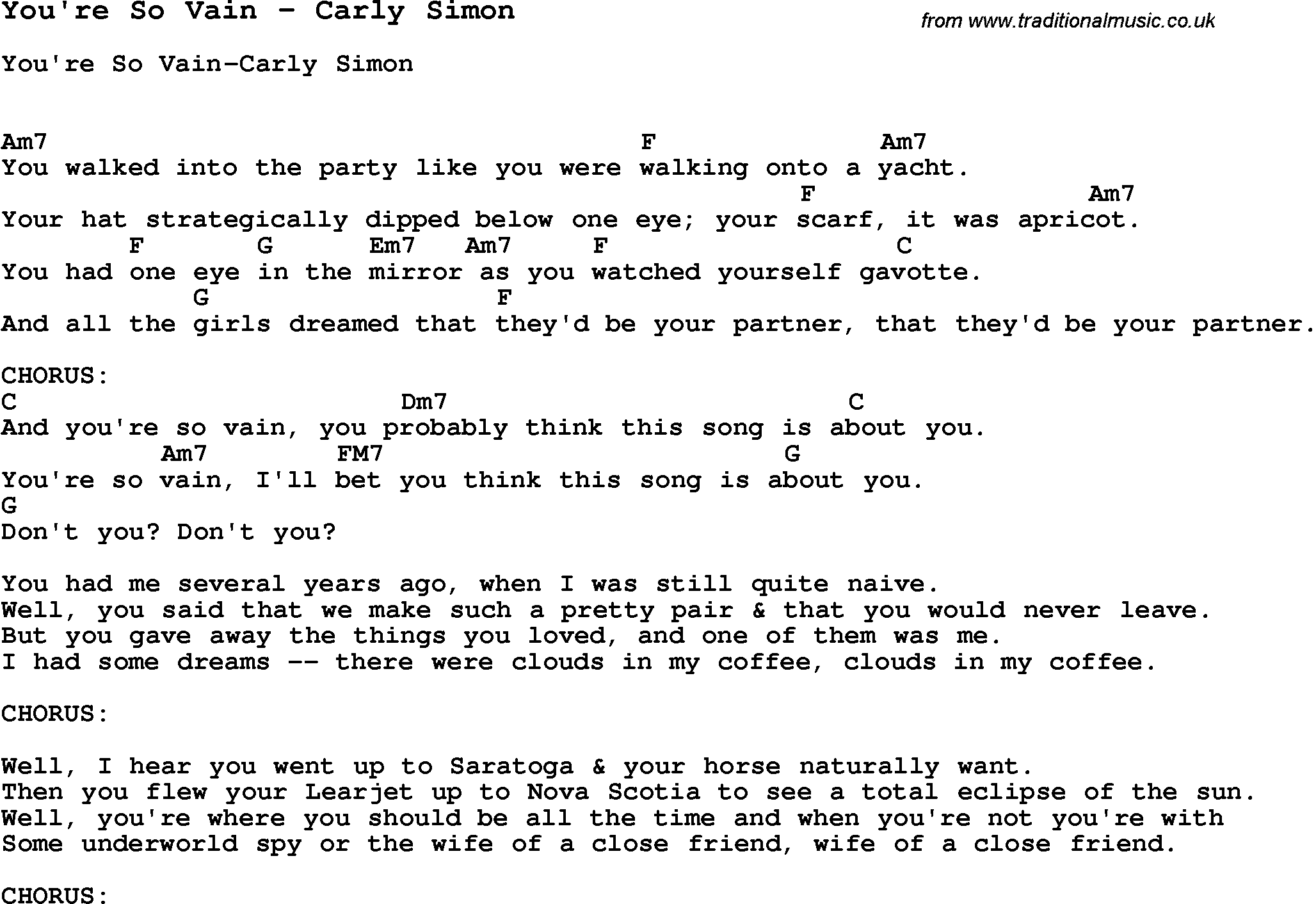
The lyrics are incredibly specific, which is why people are so certain it has to be a real person. You don't just invent a line like "You had one eye in the mirror as you watched yourself gavotte." Who even says "gavotte" anymore? It refers to a French folk dance, basically suggesting the guy was performing even when he was just walking into a party. It’s a level of pretension that feels lived-in.
It’s also worth noting the production. Richard Perry produced the album No Secrets, and he captured a specific kind of 70s Los Angeles sophisticated folk-rock sound. It sounds expensive. It sounds like the world Carly was living in—a world of private jets, polo matches, and "yachts" (or at least the aspiration of them).
The Warren Beatty Component
Beatty apparently loved the attention. Carly has joked that he called her after the song came out to thank her for writing it about him.
That is the peak of vanity.
Whether the other two verses are about one man each or a composite of several men she knew in the Laurel Canyon scene, we might never know. She once told Harpers Bazaar that she might eventually leak the other names in a psychic reading or something equally cryptic. She enjoys the game. And why shouldn't she? It’s kept her masterpiece in the rotation for half a century.
The Technical Brilliance of the Lyrics
Let's look at the "apricot" line.
"You tipped your hat to the mirror / And as you moved, your scarf, it was apricot."
It’s such a visual, tactile piece of songwriting. Most songs of that era were focused on "peace" or "love" or "war." Simon was focused on a specific guy's wardrobe. It made the song feel like a diary entry that the whole world was allowed to read, but only if they could decode the handwriting.
There's also the "clouds in my coffee" line. For years, people looked for a deep, metaphorical meaning. Was it about drugs? Was it about a stormy relationship?
Carly cleared this up in an interview with Microsoft Music Central. She was on a plane with her friend Billy Mernit. He noticed the reflection of the clouds in her coffee cup and said it looked like "clouds in my coffee." She thought it was a beautiful metaphor for things that look pretty but are actually just confusing or fleeting. It’s a lucky bit of observation that became one of the most famous lyrics in pop history.
Misconceptions and Rumors
One of the biggest rumors that won't die is that the song is about James Taylor.
They were the "it" couple of the 70s. Both were brilliant, both were beautiful, and both were struggling with their own demons. But the timeline doesn't actually fit. She wrote the song before they were married, and she has repeatedly stated it wasn't about him. It’s too mean-spirited for what their relationship was at that time.
Another theory suggests it’s about David Bowie. While they moved in similar circles, there’s very little evidence to support this other than the fact that Bowie was, well, someone who might "gavotte."
The Power of the "You"
The brilliance of the "You" in You're So Vain is that it’s universal.
Everyone has that one person in their life. The person who sucks all the air out of the room. The person who looks at their own reflection in a shop window while you’re trying to tell them something important. By not naming names, Simon allowed every listener to cast their own villain in the role.
It shifted from a song about a Hollywood star to a song about your ex-boyfriend who thought he was a gift to humanity.
What You Can Learn from Carly's Strategy
If you're a creator or just someone interested in the staying power of art, there's a huge lesson here about mystery.
- Specific details beat generalities. The "apricot scarf" is more memorable than saying "you looked fancy."
- Leave a gap for the audience. By not revealing the subject, she turned a three-minute song into a fifty-year conversation.
- Confidence is key. She didn't blink. Even when pressed by the biggest interviewers in the world, she kept her secrets (mostly).
Taking the Next Steps with This Classic
To truly appreciate the song, you have to go beyond the radio edit.
Listen to the isolated vocal tracks if you can find them. You can hear Mick Jagger's gravelly harmony much clearer toward the end of the song. It’s a fascinating look at how two superstars can collaborate without one overshadowing the other.
Check out the 2015 memoir Boys in the Trees by Carly Simon. She dives deep into her upbringing and her relationships, and while she doesn't give a "list of names," she provides the context of the world that birthed the song. It was a time of immense transition in music and gender roles, and she was right at the center of it.
Finally, look at her live performances from the 1980s. She often changes the inflection of certain lines based on how she’s feeling about the "mystery" that year. It’s a living piece of music.
You don't need to know the name of the man in the third verse to feel the sting of the lyrics. That’s the point. The song isn't about him—it’s about her reaction to him. It’s an anthem of reclaimed power. And honestly, that’s way more interesting than a name on a birth certificate.
Actionable Insights:
- Listen for the "E": Re-listen to the track and see if you can hear where she might be dropping subtle phonetic hints.
- Read the Memoir: Get Boys in the Trees for the full 1970s atmospheric backdrop.
- Study the Songwriting: Notice how she uses "show, don't tell." She doesn't say he's vain; she describes him watching himself in a mirror. Use that in your own writing or storytelling.



