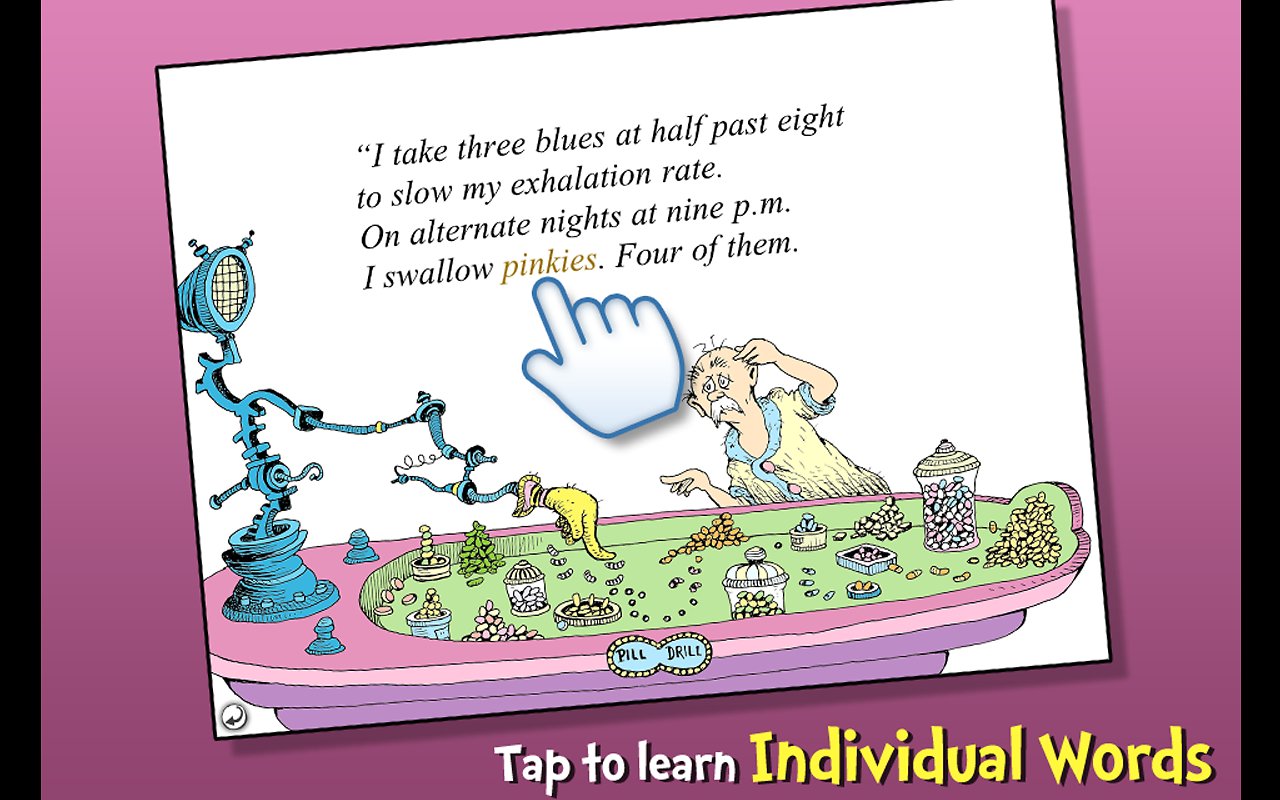
Growing up, we all knew Theodor Geisel—better known as Dr. Seuss—as the guy who taught us about cats in hats and green eggs. But in 1986, right around his 82nd birthday, he dropped something radically different. He called it You're Only Old Once! and subtitled it A Book for Obsolete Children.
It’s hilarious. It’s biting. Honestly, it’s a bit of a gut punch if you’ve spent any time lately sitting in a sterile waiting room holding a plastic clipboard.
Most people think of Seuss as a children's author, but this book was his first real foray into adult territory since his 1939 flop The Seven Lady Godivas. And boy, did he have a lot to say about the indignities of the medical profession. He didn't just write this for the "elderly." He wrote it for anyone who has ever felt like a piece of machinery being poked, prodded, and over-billed by a system that sees patients as a series of parts rather than a person.
The Reality Behind the Golden Years Medical Gauntlet
We’re told that getting older is about cruises and sunsets. Seuss knew better. He spent a massive chunk of his later years dealing with his own health issues, including jaw cancer and heart problems. That frustration bled onto every page of You're Only Old Once! with a sort of manic energy that only a man who’s been through the "Golden Years Clinic" could conjure.
The book follows an unnamed protagonist through a series of increasingly absurd medical tests. You've got the Spleen Read-Out and the Stethoscope Shotgun. It sounds whimsical until you realize he’s mocking the very real feeling of losing your autonomy.
Think about it.
One day you're a functioning adult with a career and a mortgage, and the next, some specialist is asking you to cough while a machine that looks like a Victorian torture device hums in the background. Seuss captures the specific, crushing boredom of the waiting room. He describes the "Ogling Room" where doctors stare at you through glass. It’s funny because it’s relatable, and it’s relatable because the healthcare system hasn't actually changed that much since 1986. If anything, the paperwork has just gone digital and the bills have gotten bigger.
Why "You're Only Old Once!" Hits Differently Today
Back in the 80s, the book was a massive hit. It stayed on the New York Times Best Seller list for over 60 weeks. People bought it for their parents as a joke, but they ended up reading it themselves and feeling a weird sense of relief.
Why? Because it validates the annoyance.
There's a specific scene where the protagonist is forced to see the "Dietary Guidance Guild." They tell him what he can't eat. No more pickles. No more fun. It’s a commentary on how "health" often becomes a series of subtractions as we age. We lose our favorite foods, our mobility, and sometimes our dignity. Seuss uses his signature anapestic tetrameter—that bouncy rhythm we love—to soften the blow, but the message is sharp. He’s basically saying, "Yeah, this sucks, but at least we can laugh at the absurdity of it."
It's about the loss of identity. When you're at the clinic, you aren't "Bill the Architect" or "Sarah the Teacher." You’re the guy with the bad hip in Room 4.
The Medical Industrial Complex (Seuss Style)
He introduces us to the "Golden Years Clinic on Century Square." It's a sprawling, nonsensical place. The doctors have names like Dr. Pollen and Dr. Gaze. They represent the hyper-specialization of modern medicine. You can’t just have a doctor; you need a guy for your left ear and a different guy for your right big toe.
This fragmentation is something experts today call "uncoordinated care." A 2023 study published in The Journal of General Internal Medicine noted that elderly patients see an average of seven different physicians across four different practices every year. Seuss saw this coming. He depicted the protagonist being shuffled from one specialist to another like a baton in a relay race.
- The paperwork is endless.
- The tests are repetitive.
- The costs are astronomical.
- The chairs are always uncomfortable.
He mocks the "Standardized Test for Older Folks," which is basically a series of physical humiliations. It’s a critique of how we quantify aging. We treat it like a failing grade on a test rather than a natural progression of life.
Dealing With the "Obsolete" Label
That subtitle—A Book for Obsolete Children—is probably the most important part of the whole thing. Seuss is leaning into the idea that we never really stop being kids; we just get older and our "toys" get replaced by pill organizers and blood pressure monitors.
There is a psychological weight to feeling "obsolete." In a society that worships youth and productivity, being "old" is often treated as being "broken." Seuss rejects that. By using the same art style and rhyme scheme he used for The Lorax or Horton Hears a Who, he’s bridging the gap. He’s saying that the person inside the aging body is still the same person who wondered if they should eat green eggs and ham.
It’s a form of rebellion.
If you can laugh at the "Internal Organs Organs," you’re maintaining some level of control. Humor is a coping mechanism. Gerontologists have long argued that a sense of humor is a key indicator of "successful aging." A study from the University of Missouri found that seniors who used humor to cope with physical decline reported higher life satisfaction. Seuss was essentially providing a toolkit for that survival.
The Lasting Legacy of the Golden Years Clinic
The book doesn't end with a miracle cure. There’s no magic fountain of youth. Instead, the protagonist gets his clothes back and leaves. He’s "passed" the tests, but he’s basically just been given a temporary reprieve until the next check-up.
It’s honest.
Most health books for seniors are full of toxic positivity. They tell you that "age is just a number" and you can run a marathon at 90. Seuss tells you that you're going to have to wait three hours for a doctor who will spend five minutes with you and then bill you for a fortune. That honesty is why the book still sells. It doesn't lie to you.
Actionable Insights for Navigating Your Own "Golden Years Clinic"
If you're finding yourself feeling a bit like the protagonist in You're Only Old Once!, there are ways to manage the medical gauntlet without losing your mind.
Consolidate your specialists. The "shuffle" Seuss describes is real. Try to find a geriatrician who can act as a "quarterback" for your care. Instead of seeing five disconnected doctors, have one who oversees the whole picture. This reduces the risk of drug interactions and redundant testing.
Bring a "Scribe" to your appointments. Just like the protagonist is overwhelmed by the "Ogling Room," real-life appointments are fast and confusing. Bring a friend or family member to take notes. When the doctor starts talking about "Spleen Read-Outs" (or the modern equivalent), you need a second pair of ears.
Demand the "Why." Seuss’s character never asks why he’s being poked. Don't be that guy. If a test is ordered, ask what the result will change. If the answer is "nothing," you might not need the test. This is part of the "Choosing Wisely" campaign—an initiative by medical societies to reduce unnecessary procedures.
Maintain the "Child" inside. The subtitle is the key. Don't let the medicalization of your life become your whole identity. Keep the hobbies, the jokes, and the "whimsy" that Seuss championed. Your health is a part of your life, but it shouldn't be the boss of it.
Audit your medications. "The Pill-Stuffer" is a real thing in modern medicine. Polypharmacy—taking five or more medications—is a massive issue for older adults. Periodically ask your primary doctor to do a "medication reconciliation" to see if you can stop taking anything.
The truth is, we are all "obsolete children" in training. Seuss just had the guts to draw pictures of it. By acknowledging the absurdity of the process, we take the power back from the clinic and put it back where it belongs: in our own hands.
Whether you're 30 or 80, the message remains the same. The system is weird, the waiting rooms are boring, and the paperwork is a nightmare. But as long as you can still see the humor in the "Stethoscope Shotgun," you're doing just fine.
Final Practical Step
Go find a copy of the book. Read it not as a joke for your grandpa, but as a roadmap for what to expect. Then, take a look at your own medical calendar. If it’s looking a bit too much like the "Golden Years Clinic on Century Square," it might be time to simplify. Focus on quality of life over the quantity of tests. That’s the most Seussian thing you can do.