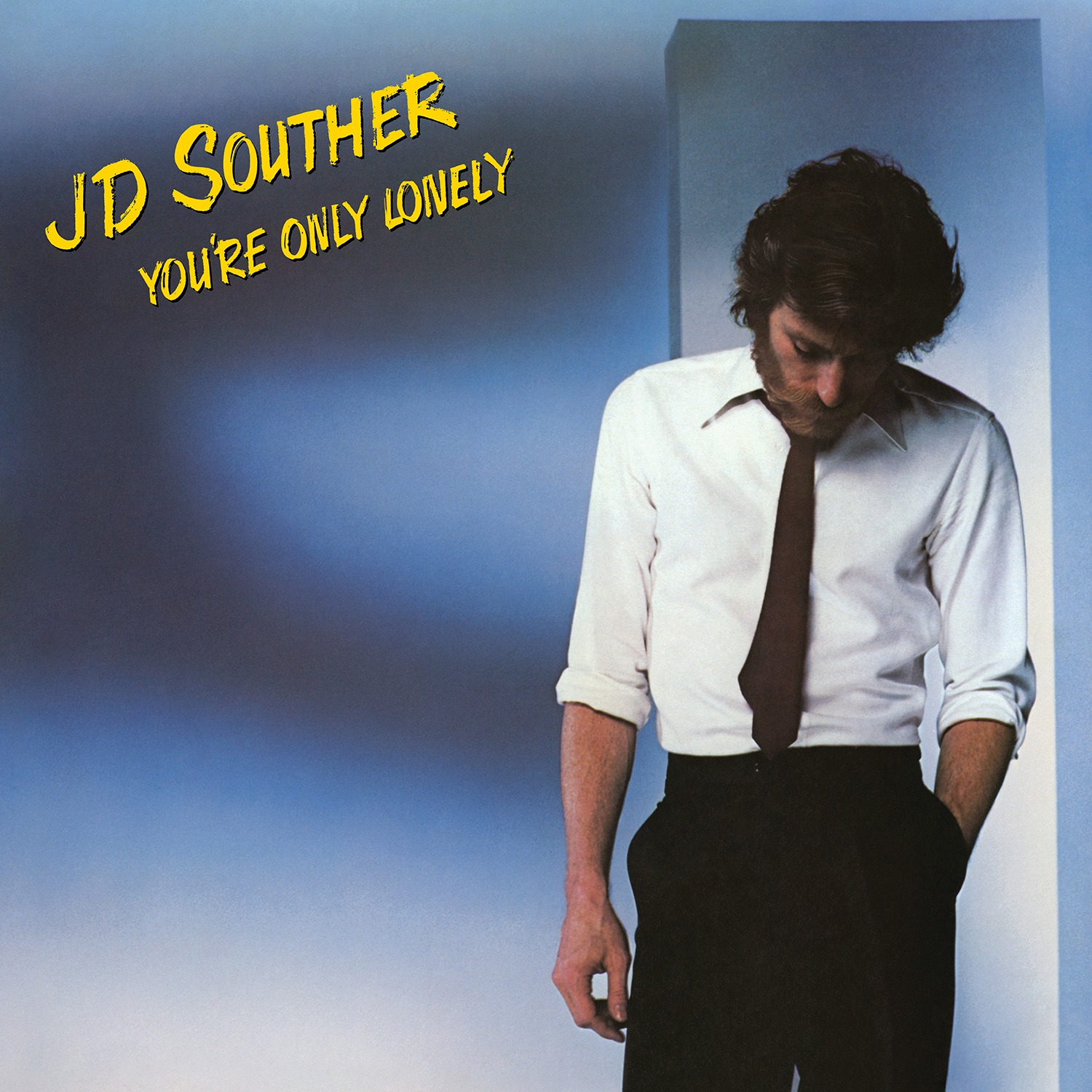
JD Souther was the guy who wrote the songs everybody else got rich singing. If you’ve ever screamed along to "Heartache Tonight" or "New Kid in Town" in a dive bar, you’ve been living in Souther’s head. But for a long time, the man himself was a bit of a ghost in the machine of the 1970s Southern California rock scene. He was the roommate of Glenn Frey, the ex-boyfriend of Linda Ronstadt, and the "fifth Eagle" who never actually joined the nest because he liked his autonomy just a little too much.
Then came 1979.
Specifically, then came You’re Only Lonely.
It’s a song that sounds like it was pulled directly out of a 1950s time capsule, dipped in Roy Orbison’s tears, and polished with the high-gloss production of a late-seventies L.A. studio. Honestly, it’s a weird song to become a massive hit in the era of disco and punk. It’s too slow for the clubs and too earnest for the CBGB crowd. Yet, it climbed to #7 on the Billboard Hot 100 and sat at the top of the Adult Contemporary charts for five weeks.
Most people hear that shimmering opening and think it’s just a clever Roy Orbison tribute. They’re not wrong. But they’re missing the real story of why JD Souther finally stepped into the light—and why he almost didn't.
The Song That Didn’t Have a Chorus
Success is funny. Sometimes you spend years trying to engineer a hit, and then the one that actually sticks is something you almost threw away. Souther had been sitting on "You’re Only Lonely" for years. He didn’t think it was finished.
He played it for Waddy Wachtel, the legendary session guitarist and producer. Waddy was looking for something with a bit more "up" for the 1979 sessions. Souther played him the track and basically apologized for it.
"It doesn’t have a bridge," Souther told him. "It doesn’t really have a chorus. It doesn’t even have a third verse."
Waddy looked at him and said, "Sing the first verse again."
That was it. That was the magic. No over-thinking. No complicated bridge to nowhere. Just a simple, catchy, rockabilly-adjacent beat and a melody that felt like a warm blanket. It turns out that when the world is falling on your shoulders—a literal line from the song—you don't need a complex musical structure. You just need a guy with a great falsetto telling you it’s okay to be sad.
That "California Sound" Was Mostly Texan
We talk about the "Southern California Sound" like it grew out of the sand at Malibu. It didn't. It grew out of Amarillo, Texas.
JD Souther was born in Detroit but raised in Amarillo. He grew up on a diet of Buddy Holly and jazz. When he moved to Los Angeles in 1969, he met Glenn Frey. They weren't rock stars then; they were just two kids in a folk duo called Longbranch Pennywhistle, living in a cheap apartment where Jackson Browne lived downstairs.
Think about that for a second. The DNA of 70s rock was all in one building.
Souther was the one who helped the Eagles form as a backing band for Linda Ronstadt. He could have been in the band. He rehearsed with them for exactly one day before realizing they were a perfect unit without him. He was a solo artist at heart, even if his solo albums didn't always set the charts on fire.
The 1979 album You’re Only Lonely changed the narrative. He stopped being just the "songwriter for hire" and became the guy on the cover. He brought in the heavy hitters for the record:
- Don Henley and Glenn Frey on backing vocals.
- Phil Everly (yes, of the Everly Brothers) providing that haunting harmony.
- David Sanborn on the sax.
- Danny Kortchmar and Waddy Wachtel on guitars.
It was an A-list party, but Souther was the host.
Why It Still Matters (And Why It’s Not Just Nostalgia)
It’s easy to dismiss soft rock as dental-office music. But if you listen to "You’re Only Lonely" today, it feels surprisingly modern in its emotional honesty. Souther wasn't singing about partying or fast cars. He was singing about that specific, quiet desperation of being "only lonely."
There’s a nuance there. You aren't just lonely; you are "only" lonely. It’s temporary. It’s a state of being, not a death sentence.
The song had a weird second life in Japan, too. Every twelve minutes on TV, someone would open a car door in a commercial and Souther’s voice would drift out. He once joked that he couldn't figure out why he was so famous in Tokyo until he realized Sony was using the track to sell sound systems.
Tragically, we lost JD Souther in September 2024. He died peacefully at his home in New Mexico at the age of 78. He was actually supposed to start a tour with Karla Bonoff just a few days later. He never stopped working, and he never stopped being that guy who cared more about the song than the celebrity.
The Real Genius of the You’re Only Lonely Album
If you only know the title track, you’re missing out on the "no filler" policy Souther lived by. The album is a masterclass in songwriting economy.
Take "White Rhythm and Blues." It’s probably the best song Linda Ronstadt ever covered, but hearing JD’s version with Phil Everly on the harmony? It’s soul-crushing in the best way possible. Then you have "The Last in Love," a ballad he co-wrote with Glenn Frey that Nicolette Larson had already made a hit.
Souther wasn't just recycling his old hits; he was reclaiming them. He was showing the world how they were supposed to sound.
He didn't use big, flashy metaphors. He used plain language. "I was there when you were a queen / And I'll be the last one there beside you." That’s not a pop lyric; that’s a vow.
How to Appreciate JD Souther Today
If you want to actually "get" why this guy was the secret architect of an entire decade of music, don't just put on a "70s Hits" playlist. Do this instead:
- Listen to the Roy Orbison Connection: Play Orbison’s "Only the Lonely" and then Souther’s "You’re Only Lonely" back-to-back. Notice the "shoo-wop" backing vocals. Souther isn't stealing; he’s participating in a tradition.
- Check the Credits: Look at your favorite Eagles or Ronstadt albums. Every time you see "J.D. Souther" in the credits, pay attention to the lyrics. You'll start to see his fingerprints—the emotional vulnerability, the slightly cynical edge.
- The 2024 Reissue: Omnivore Recordings recently put out an expanded version of the You’re Only Lonely album. It has bonus tracks like "Ever Faithful Woman" that were previously unreleased. It sounds incredible on a modern system.
- Watch the Live Clips: There’s a 2013 clip of him performing the song. He’s older, his voice has more gravel, but the "cool" is still there. He was always the coolest guy in the room, mostly because he didn't care if you knew it.
JD Souther was a songwriter's songwriter. He was the guy who stayed behind to make sure the words were right while everyone else went to the after-party. "You’re Only Lonely" remains his greatest solo achievement because it captures exactly what he was: a bridge between the rock 'n' roll of the past and the polished storytelling of the future.
He didn't need a third verse. He didn't need a bridge. He just needed to tell the truth for three minutes and forty-eight seconds.
For a guy who spent his career helping others find their voice, it’s only right that his biggest hit was the one where he finally used his own.
Actionable Insight for Music Lovers: To truly understand the "Souther Sound," listen to his 1976 album Black Rose immediately after the You're Only Lonely LP. While the latter gave him the hits, Black Rose is widely considered by critics and his peers to be his magnum opus of songwriting complexity. Compare the stripped-back rockabilly of his 1979 hit to the lush, intricate arrangements of "If You Have Crying Eyes" to see the full range of a man who could do it all but chose to keep it simple when it mattered most.



