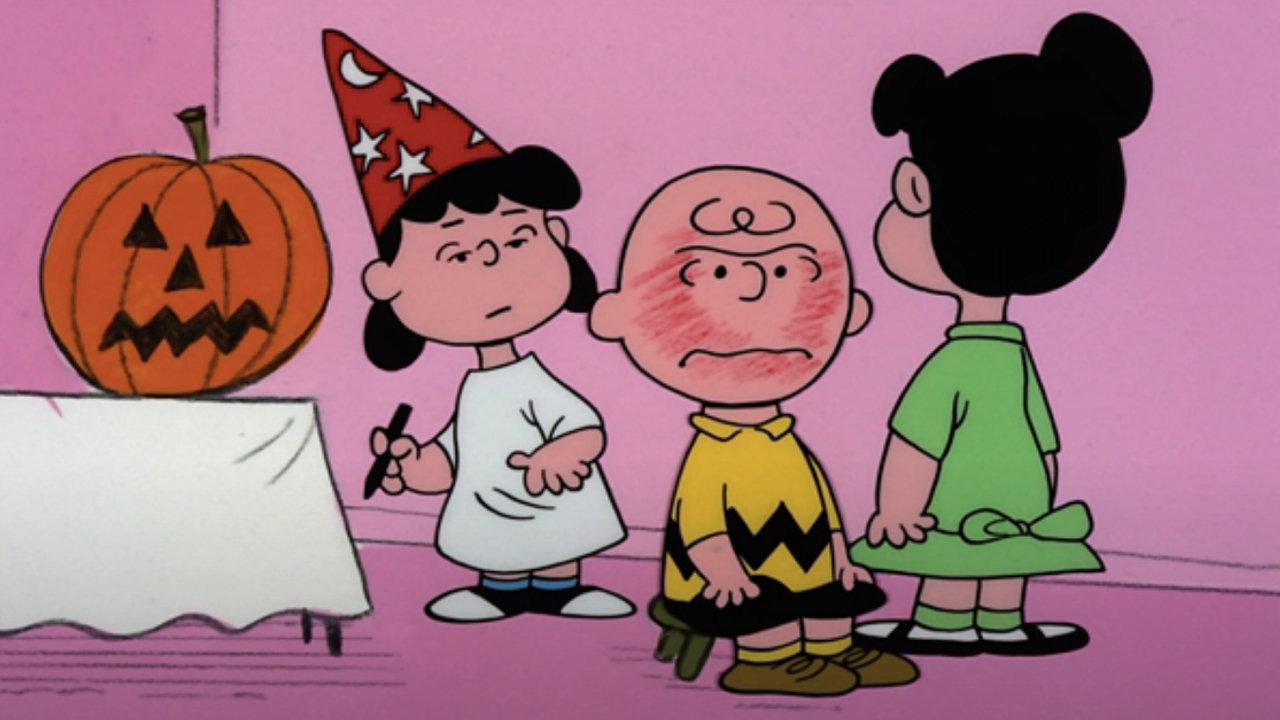
You probably remember the holiday specials on CBS or ABC. Big, primetime events. But for a specific generation of kids, the way they watched the Peanuts gang was a lot more casual. It was basically background noise while eating cereal. If you grew up in the late 1990s or early 2000s, you might remember the "You’re on Nickelodeon, Charlie Brown" branding. It wasn't just a catchy phrase; it was a massive programming block that fundamentally changed how Charles Schulz’s characters lived on television.
Honestly, it’s a bit weird to think about now.
Peanuts always felt "prestige." It felt like something your parents made you watch once a year because it was "classic." But Nickelodeon did something different. They took this high-art comic strip and turned it into everyday cable fodder. It worked.
The Deal That Brought Sparky to Cable
Before the mid-90s, seeing Charlie Brown was a rare treat. You had to wait for Halloween, Thanksgiving, or Christmas. If you missed it, you were out of luck for twelve months. Then, Nickelodeon stepped in. In a massive syndication deal, the network acquired the rights to air the library of Peanuts specials and the short-lived Saturday morning series The Charlie Brown and Snoopy Show.
This wasn't just about reruns.
Nickelodeon packaged these under the umbrella title You’re on Nickelodeon, Charlie Brown. They treated it like a flagship show. They even went as far as creating original interstitial content—little bumpers and animated segments—to make it feel like Peanuts belonged to the "Orange Splat" era of the 90s.
It was a brilliant move for the brand's survival.
Kids who had never read a newspaper comic strip were suddenly exposed to Linus’s philosophy and Lucy’s ego every single afternoon. This wasn't the "event" television of the 1960s; it was the "after-school" television of the 90s. The pacing felt different. The context changed.
Why the Branding Mattered
The title You’re on Nickelodeon, Charlie Brown followed the naming convention of the specials themselves. You know the ones: You’re a Good Man, Charlie Brown or It’s the Great Pumpkin, Charlie Brown. By naming the block this way, Nickelodeon made the network itself a character in the Peanuts universe.
It felt meta. It felt smart.
The block usually ran for a half-hour or an hour. Because many of the original specials were only 25 minutes long (to account for commercials), Nickelodeon had to get creative with the remaining time. They filled the gaps with "Peanuts Vignettes." These were shorter clips often taken from The Charlie Brown and Snoopy Show, which originally aired on CBS in the early 80s.
What Most People Get Wrong About the Nick Era
A lot of people think Nickelodeon owned Peanuts. They didn't. They were just the most visible landlord for a while. There’s a common misconception that Nick produced new specials during this time.
They didn't.
Every bit of animation you saw during the You’re on Nickelodeon, Charlie Brown era was archival material. However, because the remastering and the framing were so high-quality, it looked "new" to a six-year-old in 1998. The network used a specific voice-over style and bright, colorful graphics that bridged the gap between the 1950s aesthetic of Schulz and the "extreme" aesthetic of 90s cable.
It’s actually fascinating how well it held up.
While other 60s cartoons felt dated or "slow," the existential dread of Charlie Brown felt right at home next to Doug or Hey Arnold!. Charlie Brown was the original "anxious kid" protagonist. Nickelodeon recognized that. They leaned into it.
The Content of the Block
If you tuned in at 4:00 PM, you weren't always getting the "hits." You weren't seeing the Christmas special in July. Instead, you got the deeper cuts.
- It's Flashbeagle, Charlie Brown (The 1984 special that tried to capitalize on Flashdance).
- What Have We Learned, Charlie Brown? (The surprisingly somber sequel to the European vacation movie).
- Why, Charlie Brown, Why? (The heavy episode about a character with cancer).
These specials were aired with surprising frequency. It gave the Peanuts world a sense of depth that the once-a-year holiday specials couldn't provide. You saw the characters in different outfits, in different countries, and dealing with real-world issues.
The Shift to Apple TV+ and the End of an Era
Things are different now.
In the late 2010s and early 2020s, the landscape of Peanuts media shifted dramatically. WildBrain and Apple entered into a partnership that essentially moved the Peanuts library to Apple TV+. This was a seismic shift for fans of the "Free TV" era.
The days of catching You’re on Nickelodeon, Charlie Brown are long gone.
Now, if you want to see the specials, you usually need a subscription. While Apple has done an incredible job producing new content like The Snoopy Show and Camp Snoopy, there’s a certain nostalgia for the "randomness" of the Nickelodeon years. You didn't have to choose what to watch. You just turned on the TV and there he was—that round-headed kid, failing to kick a football for the thousandth time.
Some purists argue that cable syndication "diluted" the brand. They think Peanuts should be a rare, seasonal treat. I disagree. I think the Nickelodeon era is exactly why the brand is still a multi-billion dollar powerhouse today. It stayed relevant. It didn't become a museum piece.
The Legacy of the Nick Bumpers
We have to talk about the bumpers. Those little 10-second clips between the show and the commercials.
Nickelodeon used a jazz-fusion version of "Linus and Lucy." It was peppier. It had a bit of a backbeat. For many kids, this was their introduction to Vince Guaraldi’s music, even if they didn't know his name. The network also used a lot of bright yellow and "Schulz-style" squiggly lines in their promos.
It was a masterclass in brand integration.
Finding the Vibe Today
If you’re looking to recreate that You’re on Nickelodeon, Charlie Brown feeling, it’s actually pretty difficult. Streaming services are designed for "binging," not "grazing." When you choose a specific special to watch on Apple TV+, you lose the element of surprise that the Nickelodeon block provided.
But you can still find remnants of this era.
Collectors often trade old VHS recordings of Nickelodeon from the 90s. These tapes are highly sought after because they contain the original commercials and those specific Peanuts bumpers. They are time capsules. They capture a moment when Charlie Brown wasn't a "legacy IP"—he was just another kid on the most popular channel for children.
Actionable Steps for Peanuts Fans
If you want to dive back into this world without just waiting for December, here is how you do it properly:
- Check the "Classics" section on Apple TV+: They have a category for the "holiday" specials, but look deeper for the "Peanuts Anthology." This is where the weird, non-holiday specials live—the stuff Nick used to play.
- Search for 90s bumpers on YouTube: Look for "Nickelodeon Peanuts promos 1997." It’s an instant hit of nostalgia and shows exactly how the network marketed the show to a younger audience.
- Read the "Peanuts Every Sunday" collections: If you want the source material, these books by Fantagraphics are the gold standard. They show the Sunday strips in their original colors, which look strikingly similar to the vibrant palettes Nickelodeon used for their broadcasts.
The "You’re on Nickelodeon, Charlie Brown" era was a bridge. It connected the newspaper-reading generation with the cable-surfing generation. It proved that Charlie Brown's brand of quiet melancholy and "good grief" wasn't just for 1965—it was for forever.
Whether you’re watching on a cracked smartphone screen or a giant 4K television, the core of the show remains. Charlie Brown still loses. Snoopy still flies a doghouse. Lucy still pulls the ball away. And honestly? We wouldn't have it any other way.
To relive the specific curation of that era, look for the "Peanuts Vignettes" specifically. These are the short, 2-to-3 minute animated segments that often aired between the longer specials. They capture the pacing of the Nickelodeon block perfectly. Many of these are available to stream or buy digitally as part of the "Charlie Brown and Snoopy Show" collections. This is the closest you'll get to that 4:00 PM after-school feeling.


