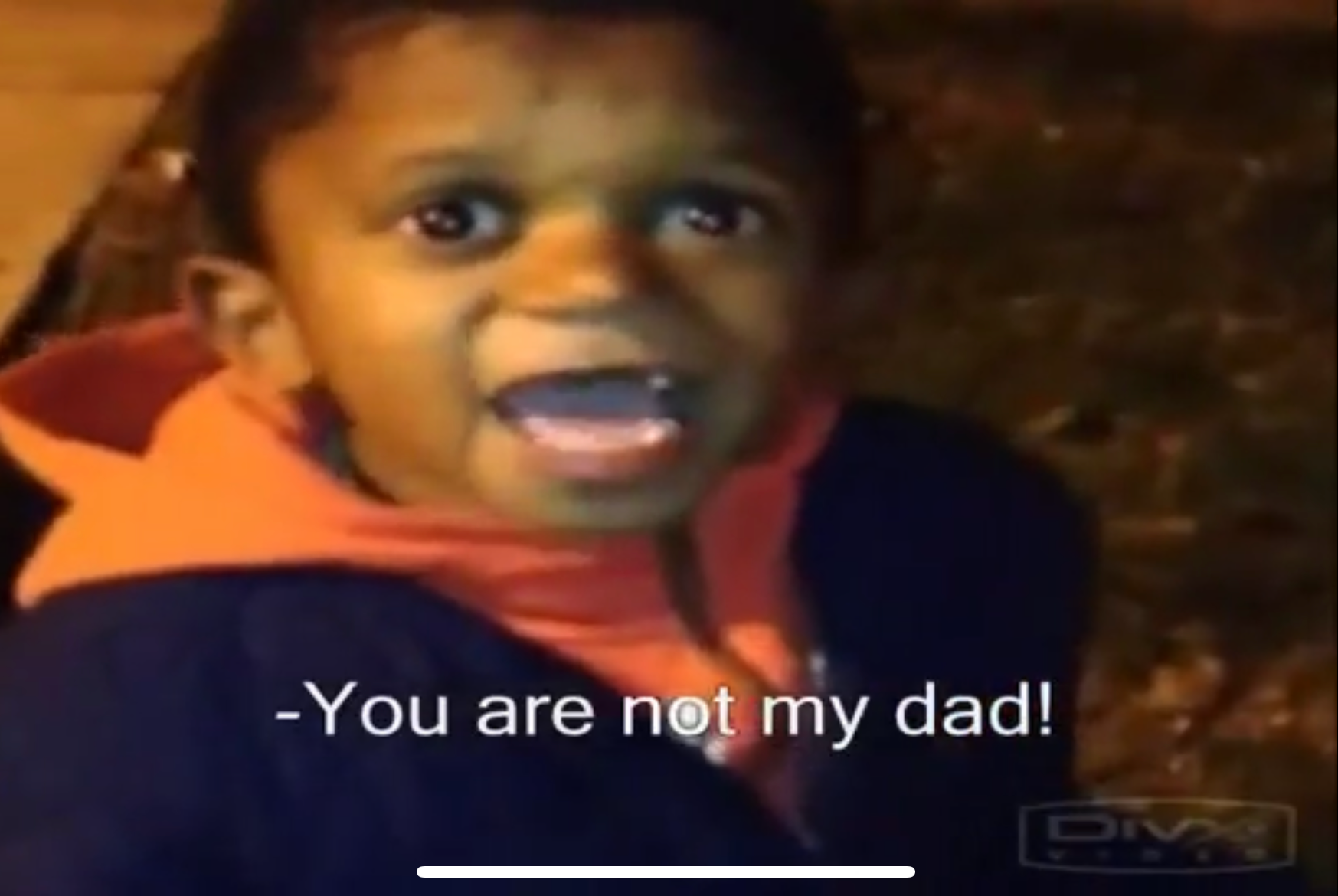
It’s the phrase every step-parent dreads hearing. You're making dinner or maybe just asking someone to pick up their socks, and then it happens. "You're not my dad." It’s a verbal hand grenade. It levels the room. Honestly, it’s one of the most painful things a person trying to build a blended family can experience, but it’s also one of the most misunderstood sentences in the English language.
Most people think it’s an act of defiance. They see it as a power struggle. It isn't. Not really. When a child or a teenager yells you're not my dad, they aren't usually making a factual observation about biology. You already know you isn't their biological father. They know it too. What’s actually happening is a complex emotional defense mechanism triggered by a perceived threat to their identity or their loyalty to their "real" parent.
Why the "You're Not My Dad" Moment Happens
Blended families are everywhere now. According to the Pew Research Center, about 16% of children in the U.S. live in blended families. That's millions of households dealing with this exact dynamic. The friction usually starts because of something psychologists call "loyalty binds."
Imagine being ten years old. You love your biological father, even if he isn't around much. Now, here is this new guy. He’s nice. He buys pizza. But when he tries to enforce a bedtime, your brain short-circuits. If you obey him, are you betraying your real dad? It’s a heavy burden for a kid. They use the phrase you're not my dad as a shield to protect that original bond. It’s a way of saying, "I’m not ready to let you take that space yet."
It’s also about control. Divorce and remarriage are things that happen to children. They didn't choose the split. They didn't choose the new spouse. In a world where they feel they have zero agency, asserting that you lack parental authority is one of the few ways they can reclaim a sense of self. It’s messy. It’s loud. And it’s totally normal.
The Role of Biological Parents in the Conflict
We have to talk about the "gatekeeping" aspect. Sometimes, the biological mother—unintentionally or otherwise—sets the stage for this. If the biological mom hasn't fully integrated the step-parent into a position of authority, the kids pick up on that vibe instantly. They are like little emotional sponges. If they sense mom doesn't quite back you up, "you're not my dad" becomes their go-to weapon.
On the flip side, the biological father might be casting a long shadow. Even an absent father can be "canonized" by a child. They turn the missing parent into a superhero. Compared to a superhero, the guy actually standing in the kitchen asking about homework doesn't stand a chance. It’s an unfair fight. You’re competing with a ghost, and the ghost always wins because it doesn't have to enforce rules or deal with the daily grind of parenting.
Navigating the Emotional Minefield
So, what do you do when the words are hanging in the air? First, don't argue the facts.
"I know I'm not your father, but I am an adult in this house" is a decent response, but even that can be too confrontational. You've got to de-escalate. Dr. Patricia Papernow, a leading expert on blended families and author of Surviving and Thriving in Stepfamily Relationships, often points out that step-parents should focus on building a "middle ground" relationship before jumping into heavy-duty discipline.
Think of it like this: You are a coach, not the owner of the team.
- Acknowledge the truth. Validate their feeling. "You’re right, I’m not. And I’m not trying to replace him."
- Focus on the house rules. Shift the focus from your authority to the collective rules of the household.
- Back off on discipline early on. Let the biological parent be the "bad guy" for the first year or two.
Building a bond takes time. A lot of it. We’re talking years, not months. The "Brady Bunch" myth ruined our expectations. Real life involves a lot of awkward silences and "you're not my dad" outbursts before you ever get to the part where everyone hugs in the backyard.
The Developmental Timeline
Toddlers and teenagers handle this differently. A four-year-old might say it because they’re grumpy. They’ll probably forget they said it ten minutes later when you give them a juice box. But a thirteen-year-old? They mean it. For a teen, identity is everything. They are already trying to figure out who they are. Having a "new dad" figure feels like an intrusion on their developing soul.
If you're dealing with a teenager, the best move is often to be the "cool uncle" type. Be interested in their lives without being intrusive. Show up to the games. Be a steady, calm presence. Eventually, the you're not my dad comments will fade, not because you became their dad, but because you became a trusted adult they actually like.
The Stepmom vs. Stepdad Dynamic
Interestingly, the "you're not my mom" equivalent is often seen as more vitriolic. Society puts a lot of pressure on mothers to be the emotional core of the family. When a stepmother steps in, it’s often seen as a direct replacement. Stepfathers, however, often fall into the "provider" or "protector" role, which can sometimes—though not always—be easier for kids to digest, provided the stepfather doesn't lead with an iron fist.
The struggle is real for everyone. Honestly, being a step-parent is a thankless job for a long time. You're doing the work of a parent without the biological "credit" that comes with it. You don't get the "I love you" stickers in kindergarten. You get the "you're not my dad" when the Xbox gets taken away.
Communication Strategies That Actually Work
Stop trying to force the "dad" label. If the kids want to call you by your first name, let them. If they want to call you "Step-B" or some weird nickname, go with it. Forcing a title is the fastest way to hear the phrase you're trying to avoid.
When a conflict arises, try using "I" statements. Instead of "You need to listen to me because I'm the adult," try "I feel frustrated when the kitchen is left messy because I worked hard to clean it." It’s harder to rebel against a person sharing their feelings than it is to rebel against an authority figure. It sounds kinda "touchy-feely," but in a blended family, it’s a survival tactic.
Actionable Steps for Step-Parents
If you're currently in the thick of it, feeling like an outsider in your own home, take a breath. It gets better, but only if you change your strategy.
1. The "Two-Year Rule" Accept that the first two years are basically an integration phase. Don't expect "family" vibes. Expect "roommate who likes each other" vibes. If you aim lower, you’ll be less disappointed and more patient.
2. Relinquish the Role of Enforcer Talk to your partner. If the kids are acting out, your partner needs to be the one to deliver the consequences. You can be the "reporter"—telling your partner what happened—but they should be the one to handle the fallout. This prevents you from becoming the villain in the child's narrative.
3. Find Your Own Outlets Don't make your entire identity "The Step-Dad." If you're constantly seeking validation from kids who aren't ready to give it, you'll burn out. Keep your hobbies. Go to the gym. Hang out with your friends. You need a life outside the blended family bubble to maintain your sanity.
4. Create "Low-Stakes" Bonding Find something you and the child can do that has nothing to do with parenting. Maybe it’s working on a car, playing a specific video game, or watching a certain show. No "deep talks." No "how was school." Just shared activity. These micro-moments build the foundation that eventually makes the you're not my dad comments stop happening.
5. Professional Help is Not a Failure Family therapy isn't just for families in crisis. It’s for families in transition. A neutral third party can help a child express why they feel the need to lash out without it turning into a screaming match in the living room.
Building a family is an architectural project, not a movie montage. It’s about laying one brick at a time, often in the rain, and sometimes having the wall fall down. When you hear "you're not my dad," just remember: it's not a rejection of you. It's a reflection of their own internal confusion. Stay the course, stay calm, and keep showing up. That’s what a real parent does anyway, regardless of what they're called.