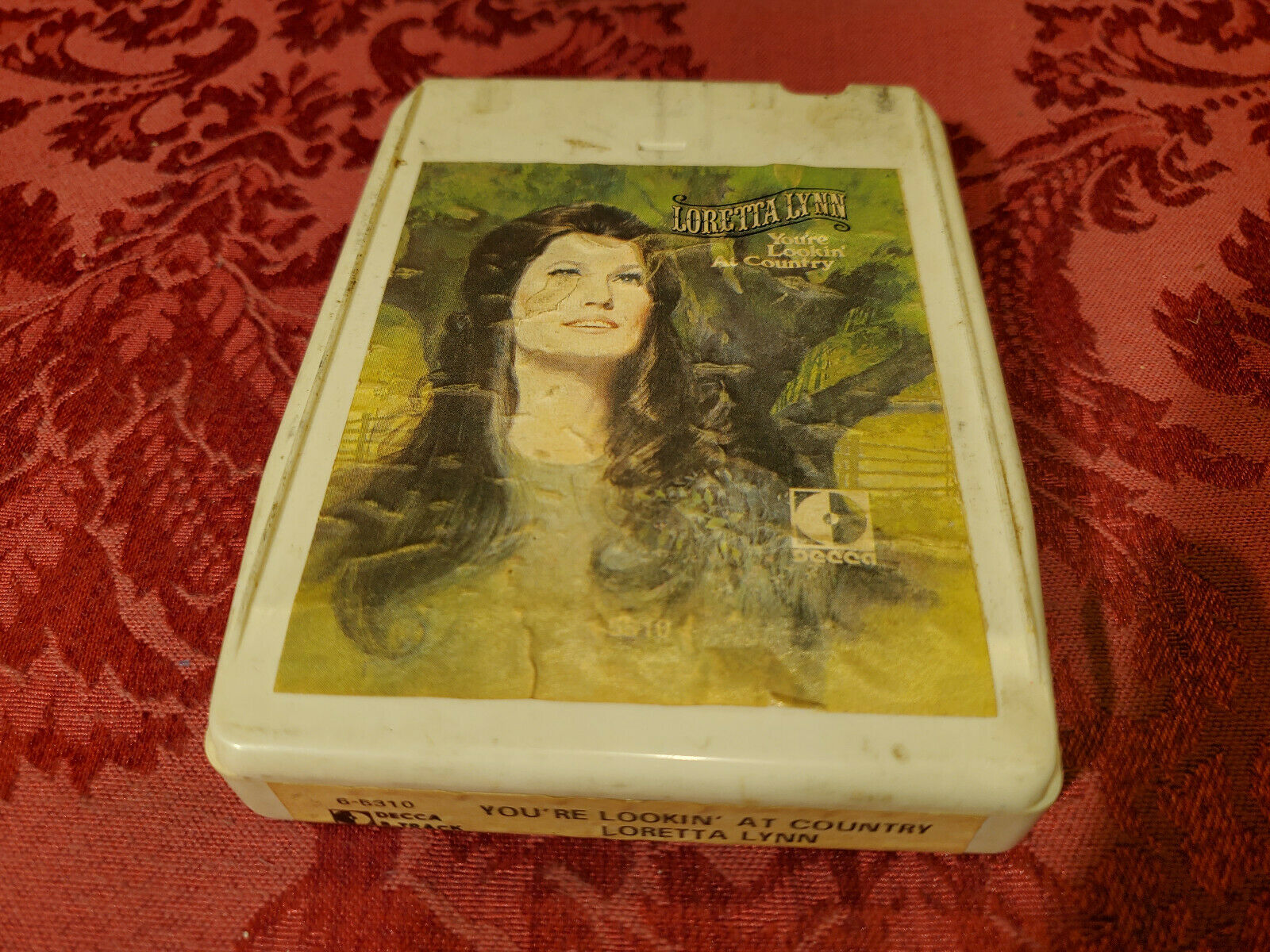
If you ask a casual fan about Loretta Lynn, they’ll probably point to Coal Miner’s Daughter or maybe that feisty anthem The Pill. But there’s a specific era—a specific vibe, really—that defines who she was as an artist and a woman better than anything else. I’m talking about You're Lookin' at Country.
It’s not just a song. It’s not just her eighteenth studio album. Honestly, it was a whole statement of intent. When she released that title track in 1971, Loretta wasn't just singing about hills and hollers; she was drawing a line in the Tennessee dirt. She was telling the world that despite the fame and the fancy dresses, she hadn't changed a bit. People today sometimes mistake it for just another "rural pride" song, but it was actually a pretty radical act of branding before anyone called it that.
The Story Behind You're Lookin' at Country
Loretta wrote the song herself. That’s the first thing you’ve gotta realize. Back then, a lot of female singers were handed songs by male songwriters in Nashville who thought they knew what a "country girl" sounded like. Loretta didn't play that game. She wrote from her own life in Butcher Hollow, Kentucky.
The song actually came to her while she was looking out a bus window. She saw the rolling hills and realized that her fans didn't just see a singer—they saw the landscape they grew up in. They saw themselves. When she went into Bradley’s Barn in Mount Juliet to record it with producer Owen Bradley, she wasn't trying to make a pop crossover. She was doubling down.
Why the 1971 Album Was a Turning Point
The album itself, released in September '71, is a fascinating time capsule. It hit number 7 on the Billboard Hot Country LPs chart, which was huge. But look at the tracklist. It’s a mix of her own grit and some surprising covers.
- You're Lookin' at Country: The powerhouse opener.
- Take Me Home, Country Roads: Yeah, she covered John Denver. And she made it sound like she owned it.
- I'd Rather Be Sorry: A Kris Kristofferson gem.
- Country Girl (Just Home from Town): A song that leaned into the tension between city life and rural roots.
Most people don't realize how much work went into this record. It was recorded over a long stretch—from 1969 all the way to August 1971. That’s a lifetime in the old Nashville system. Usually, you’d go in, cut ten tracks in two days, and be out. The fact that this project simmered for two years shows that Loretta and Owen Bradley were looking for a specific sound. They wanted something that felt authentic but moved the needle.
That Iconic Muppet Show Appearance
If you’re a certain age, or if you just spend too much time on YouTube, you’ve probably seen the clip. Episode 308. 1978. Loretta Lynn on The Muppet Show.
It is, quite frankly, one of the best guest spots in the show's history. She sings You're Lookin' at Country while the Muppets are basically trying to turn the theater into a literal barnyard. There are chickens everywhere. It’s chaotic. It’s funny.
But watch Loretta.
She doesn't blink. She’s leaning into the joke because she knows exactly who she is. She isn't offended by the "hick" stereotypes being played for laughs because she’s the one in control of the narrative. It’s a masterclass in staying true to your roots while being part of the cultural mainstream. That performance alone probably did more to cement the song in the public consciousness than a dozen radio spins ever could.
The "Syndicated Show" Confusion
There’s a bit of a Mandela Effect thing happening with Loretta Lynn Lookin' at Country. Some folks swear there was a standalone TV variety show with this exact title.
Let's clear that up.
There wasn't a long-running series called Lookin' at Country. What happened was that Loretta was a constant fixture on the Wilburn Brothers Show. The Wilburns basically discovered her, and she appeared on dozens of their episodes. Later, she had various specials and "Legends in Concert" recordings—some of which are titled You're Lookin' at Country on streaming platforms like Apple TV today.
So, when you see a DVD or a streaming title with that name, you're usually looking at a compilation of her live performances from her prime in the late 70s. It’s easy to see why people get confused. She was on TV so much—Hee Haw, The Johnny Cash Show, The Ed Sullivan Show—that it feels like she must have had her own show. In a way, she did; the whole world of country music was her stage.
Why This Song Still Hits Hard in 2026
Country music has changed. A lot. We’re in an era where "country" can mean anything from stadium rock with a fiddle to trap beats with a drawl.
Loretta’s 1971 anthem is a reminder of what the genre's DNA actually looks like. It’s not about the hat or the truck. It’s about the "barnyard shovel" fitting your hands. It’s about being "made just to fit your plans" but staying "barefooted through the cornfields."
The Legacy of Authenticity
Think about artists today like Carly Pearce or Ashley McBryde. They cite Loretta constantly. Why? Because You're Lookin' at Country gave them permission to be specific. It proved that the more local and "hillbilly" you were, the more universal your message became.
When Loretta sang about "knowing about that country folks," she was talking to people who felt overlooked by the "city" world. That feeling hasn't gone away. If anything, it’s stronger now. That’s why the song still gets covered at the Opry every other week. Even in 2025, we saw Loretta's granddaughter, Tayla Lynn, performing it with Abby Cadabby (yes, the Sesame Street Muppet) at the Opry. The song is immortal.
What You Should Do Next
If you want to really understand the "Loretta sound," don't just stick to the Greatest Hits. Go back and listen to the full 1971 album.
Here is how to dive in properly:
- Listen to the vinyl (if you can): The production by Owen Bradley was meant for warm speakers. You can hear the Nashville Sound transition into something grittier.
- Watch the Muppet Show clip: Seriously. It’s on Disney+ or various archives. It shows her personality better than any interview.
- Compare her version of "Country Roads" to John Denver’s: It’s a lesson in how a performer’s biography changes the meaning of a lyric. When Denver sings it, it’s a postcard. When Loretta sings it, it’s a homecoming.
- Look up her 1971 outfits: The fashion of this era was peak Loretta—hand-made looking gowns that were actually incredibly intricate. It was "Country" with a capital C.
Loretta Lynn wasn't just a singer; she was a songwriter who forced the world to look at her world. And when you look at her, you’re lookin’ at country. Period.



