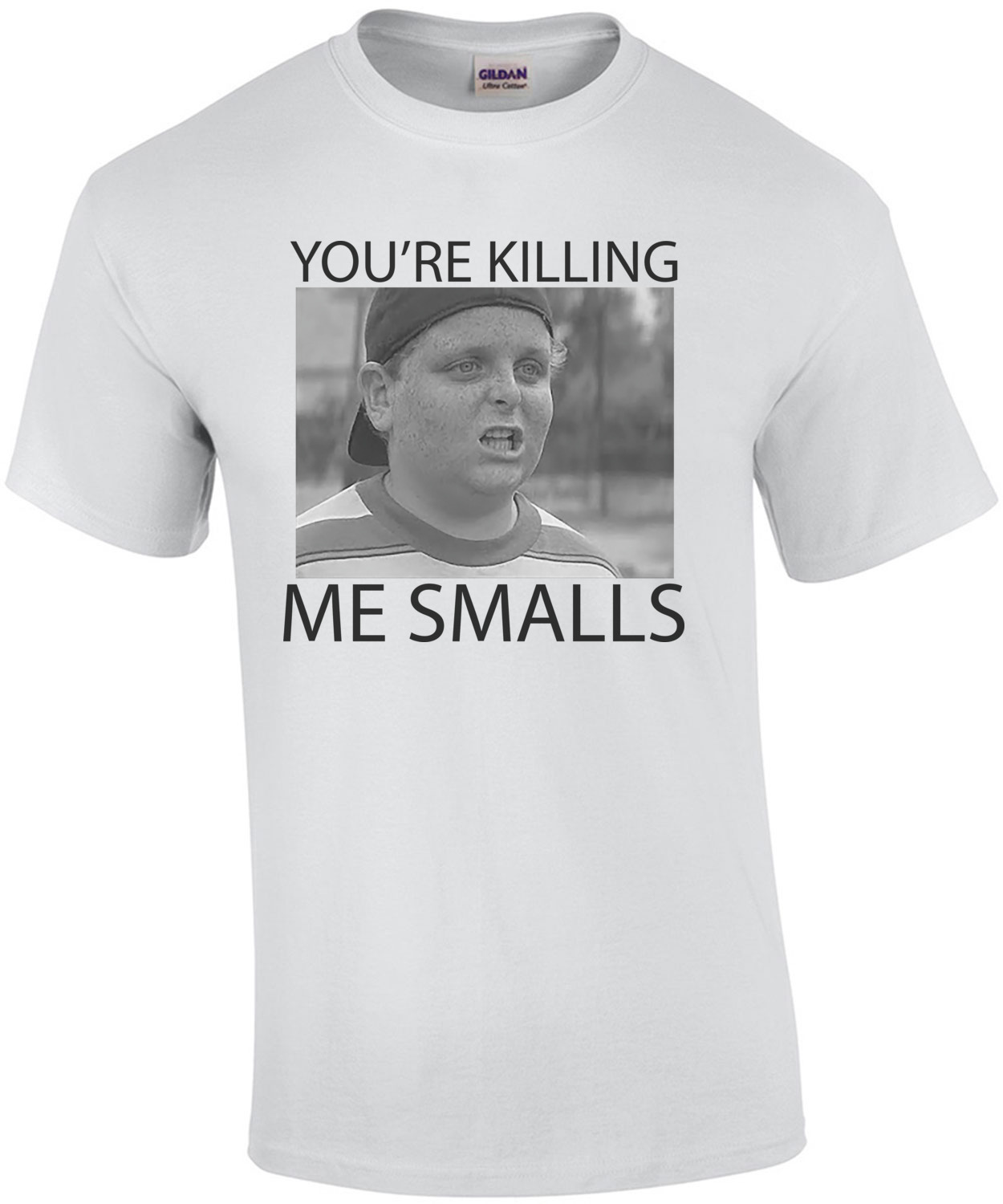
If you’ve spent more than five minutes on the internet or around anyone born between 1980 and 2005, you've heard it. It’s the ultimate verbal eye-roll. It’s the sound of pure, unadulterated frustration mixed with a weird kind of affection. Honestly, the you're killing me smalls meaning is less about literal death and more about that specific brand of exasperation you feel when a friend just doesn't get the obvious.
It started in a dusty baseball diamond in 1993. Most movies from that era have faded into the "oh yeah, I remember that" category, but The Sandlot stayed. It stuck because of Hamilton "Ham" Porter and his iconic delivery of that one line to the new kid, Scotty Smalls.
Where Did the Phrase Actually Come From?
Context is everything. In the movie, Smalls is the quintessential outsider. He’s the kid who doesn't know who Babe Ruth is—referring to him as "The Colossus of Clout" or "The Great Bambino" with total confusion. When Ham Porter tries to teach Smalls how to make a s'more, the cultural gap becomes a canyon. Smalls doesn't know what a s'more is. Ham loses his mind.
"You're killing me, Smalls!"
It wasn't scripted to be a revolution. Patrick Renna, the actor who played Ham, has mentioned in various interviews over the years that he didn't even think it was the funniest line in the movie at the time. He was just a kid acting. But the line resonated because it captured a universal feeling. We’ve all been the person explaining something incredibly simple to someone who is looking at us with blank eyes.
The Evolution of the Meaning
Initially, the you're killing me smalls meaning was tied strictly to the movie's plot. You said it when someone didn't know a pop culture reference. Over time, it morphed. It became a Swiss Army knife of slang.
Now, people use it when:
- A coworker asks a question that was answered in the email they’re replying to.
- Your partner forgets the one thing you asked them to get at the grocery store.
- A sports team misses a wide-open shot.
- Life just feels generally inconvenient.
It’s a "soft" insult. It’s a way to tell someone they’re being an idiot without actually calling them an idiot. There’s a level of brotherhood or friendship baked into it. You don't say "you're killing me, Smalls" to someone you actually hate. You say it to someone you're stuck with, someone you care about, or someone who is part of your "team."
Why Does It Still Work in 2026?
Nostalgia is a hell of a drug. But it’s more than that. The phrase has a rhythm to it. The dactylic meter—DUM-da-da DUM-da—makes it incredibly catchy. It’s fun to say. It feels good in the mouth.
More importantly, the movie The Sandlot represents a version of childhood that feels increasingly rare. It was a time of "low stakes" drama where the biggest problem was a giant dog behind a fence or a kid who didn't know how to roast a marshmallow. When we use the phrase today, we’re tapping into that simpler energy.
Misconceptions and Overuse
Some people think "Smalls" is just a generic nickname for someone short. While Scotty Smalls was the smallest kid on the team, the name in the phrase is a specific reference to his character. Using it for a tall person is actually a pretty common way to use irony in the joke.
There's also a misconception that the line was an ad-lib. According to David Mickey Evans, the writer and director of The Sandlot, the bones of the dialogue were in the script, but the chemistry between the kids gave it the life it needed.
The Pop Culture Ripple Effect
You see it on T-shirts at Target. It’s on coffee mugs in every office in America. It’s been referenced in everything from The Big Bang Theory to various rap lyrics. Even professional athletes use it.
In 2018, the cast of The Sandlot reunited for the 25th anniversary, and the phrase was the centerpiece of the entire celebration. It’s one of those rare bits of dialogue that escaped the screen and became part of the actual English lexicon. It’s right up there with "I'll be back" or "May the Force be with you," but it’s more functional for daily life.
The Psychology of the Phrase
Why do we reach for this specific quote instead of just saying "You're annoying me"?
Because it diffuses tension.
If I say "You're annoying me," the mood gets heavy. If I say "You're killing me, Smalls," I'm acknowledging the frustration while also signaling that we're still cool. It’s a linguistic olive branch wrapped in a joke. It reminds both parties that the current mistake—no matter how dumb—isn't the end of the world.
How to Use It Properly (The Etiquette)
Don't overdo it. Like any slang, if you use it every five minutes, you become the person who is actually killing everyone else.
- Timing: Use it immediately after a "facepalm" moment.
- Tone: Keep it light. If you sound genuinely angry, the quote loses its charm and just sounds weird.
- Audience: It works best with Millennials and Gen X, but Gen Z has adopted it through TikTok and meme culture.
Actionable Takeaways
If you're looking to integrate the you're killing me smalls meaning into your communication or just want to understand the vibe, here’s the breakdown:
- Recognize the intent: It’s about shared frustration, not genuine malice.
- Watch the source material: If you haven't seen The Sandlot, watch it. It’s a masterclass in ensemble acting for kids and provides the necessary context for about 40% of American small talk.
- Observe the nuance: Notice how the phrase is often used as a "filler" when someone doesn't know how to react to a minor setback.
- Keep it authentic: Use it when someone misses a clear social cue or a basic piece of information.
Ultimately, "You're killing me, Smalls" is about the patience we have for the people we love, even when they’re driving us crazy. It’s a testament to the fact that sometimes, the best way to handle a frustrating moment is with a quote from a 90s kids' movie. It keeps things grounded. It keeps us human. And it reminds us that we were all the "Smalls" in some situation at some point in our lives.



