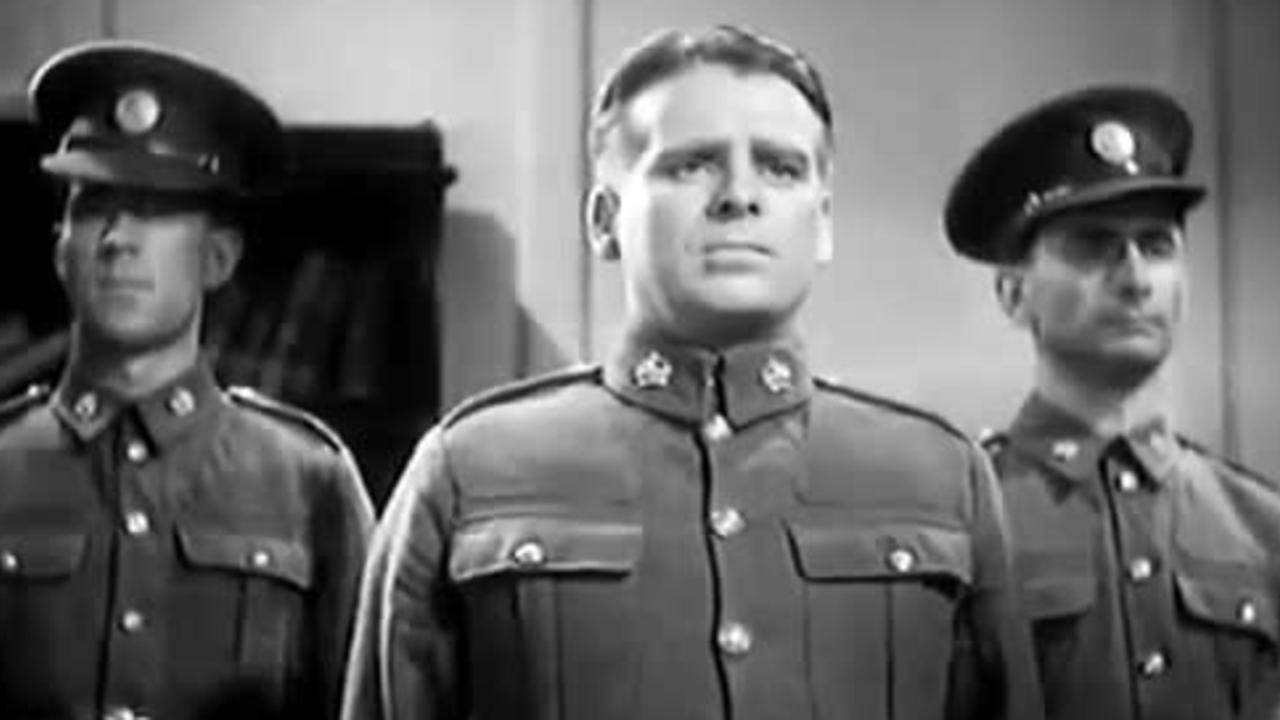
You know that feeling when a song starts and you immediately smell diesel fumes and hear the faint sound of a drill sergeant screaming? That's the power of You’re In the Army Now.
It’s weird. Most people think of the Status Quo version from 1986. You can probably picture the music video right now: the denim, the synchronized guitar swaying, the desert fatigues. But the song’s history is actually a lot weirder and more international than a British boogie-rock band making a hit. It’s a track that has been adopted by soldiers, protesters, and radio DJs across dozens of countries, becoming a sort of unofficial anthem for the grind of military life.
The Bolland & Bolland Origin Story
Before Francis Rossi and Rick Parfitt got their hands on it, You’re In the Army Now was a synth-heavy production by two Dutch brothers, Rob and Ferdi Bolland. Released in 1981, the original version wasn't a rock anthem. It was moody. It was electronic. It felt a lot more like a warning than a recruitment poster.
The Bolland brothers are fascinating because they didn't just write this; they were the masterminds behind Falco’s "Rock Me Amadeus." They had this knack for creating songs that felt cinematic. When they wrote You’re In the Army Now, they weren't necessarily trying to make a pro-war song. Honestly, it feels pretty cynical. "A vacation in a foreign land / Uncle Sam does the best he can." That's not exactly "thank you for your service" material. It’s biting.
Status Quo heard it and stripped away the cold Dutch synthesizers. They replaced them with that heavy, chugging guitar riff that everyone recognizes today. It’s one of the few times a cover version completely eclipsed the original to the point where the original feels like a demo.
Why the Song Blew Up Internationally
It hit Number 2 in the UK. It topped charts in Germany, Austria, and Switzerland. But why?
It wasn't just the catchy hook. In the mid-80s, the Cold War was still very much a thing. Conscription—the draft—was a reality in many European countries. Young men were actually being told they were in the army now, whether they liked it or not. The song captured that specific mix of boredom, fear, and "what did I get myself into?" energy.
I talked to a veteran who served in the British Army of the Rhine during the late 80s. He told me they used to play the cassette until the tape literally stretched and the pitch dropped. For them, it wasn't a protest song. It was a "we're all in this mess together" song. It’s funny how context changes everything. To a civilian, "You'll be the hero of the neighborhood" sounds sarcastic. To a guy sitting in a cold barracks in West Germany, it was just the reality of the social pressure back home.
The Soviet Connection
Here is a piece of trivia most people miss: the song was massive in the Soviet Union.
Think about that for a second. A Western rock song about the army becoming a hit behind the Iron Curtain while the Soviets were bogged down in Afghanistan. There was even a Russian version by a band called Kaskad. The lyrics were changed to be about the Soviet-Afghan war. It’s a grim reminder that the experience of being a young man sent to a desert you don't understand is universal. The melody resonated because the feeling was the same, regardless of what flag was on the shoulder patch.
The Production Magic (or Lack Thereof)
Musically, the song is dead simple. It’s a three-chord loop for the most part. But the production on the Status Quo version has these specific elements that make it "sticky" for the human brain:
- The Snare Drum: It’s huge. It sounds like a gunshot or a marching step.
- The "Hup-Two-Three-Four" Chant: It grounds the song in reality. It moves it from "art" to "atmosphere."
- The Echo: There’s a lot of space in the mix, which makes the vocals feel lonely, even when they’re shouting.
Status Quo was often mocked by critics for only knowing three chords. Status Quo didn't care. They knew that if you have the right three chords, you can fill a stadium. They took a quirky synth-pop track and turned it into a heavy-duty anthem that sounded like it belonged on a tank's loudspeaker.
The Lyrics: Sarcasm or Sincerity?
Take a look at the second verse. "Smiling faces as you wait to land / But once you get there no one gives a damn."
That’s dark.
If you analyze the lyrics of You’re In the Army Now, it’s a story of disillusionment. It starts with the promise of adventure and ends with the realization that "you're the hero of the neighborhood" is a hollow title when you're stuck in the mud. It’s a protest song disguised as a campfire singalong.
This is likely why it has survived so long. It’s ambiguous enough that anyone can project their own feelings onto it. If you’re a proud soldier, it’s about your life. If you’re an anti-war activist, it’s about the lies told to recruits. It’s a Rorschach test set to a 4/4 beat.
Cultural Impact and Modern Use
Even now, decades after the peak of Status Quo-mania, the song pops up. It’s in movies, it’s in TV shows about the military, and it’s still a staple on "Dad Rock" radio stations across Europe.
Interestingly, the song saw a massive resurgence during the early 2000s in Eastern Europe. Various remixes—some of them pretty terrible Euro-dance versions—started appearing in clubs. It’s bizarre to think of people dancing to a song about being shot at in the night, but that’s the power of a good melody. It detaches from the meaning.
What Most People Get Wrong
People often assume this was a British song written by Status Quo about the Falklands War.
Nope.
- Dutch Origins: As mentioned, it's a Bolland & Bolland creation.
- No Specific War: The lyrics are intentionally vague. They mention "Uncle Sam," which implies the US military, but the songwriters were Dutch and the most famous performers were British. It’s a globalized view of the military-industrial complex.
- The Genre Shift: Many people don't realize how much of a departure this was for Status Quo. They were a blues-rock band. This song was much more "produced" and atmospheric than their usual 12-bar blues stuff. It actually polarized their hardcore fans at the time.
Real-World Actionable Insights for Music Lovers and History Buffs
If you actually want to appreciate the depth of this track, don't just listen to the radio edit.
- Listen to the 1981 Bolland version first. You’ll hear the "Ghost in the Machine" vibe they were going for. It’s much more "Blade Runner" than "Top Gun."
- Compare the lyrics to 1980s recruitment ads. If you look at US or UK army commercials from 1986, they focus on "Be All You Can Be." Then listen to the song’s line: "You've got your orders better shoot on sight / Your finger's on the trigger but it don't seem right." The contrast tells the whole story of 80s counter-culture.
- Check out the Sabaton cover. The Swedish power metal band Sabaton did a version that brings the song into the 21st century. It’s much heavier and emphasizes the "warrior" aspect, proving the song’s structure can handle almost any genre.
Basically, You’re In the Army Now isn't just a catchy tune to hum while you're washing the car. It’s a historical artifact. It captures a moment in time when the world was bracing for a war that never quite happened in Europe, but was happening everywhere else. It's about the loss of innocence that comes with a uniform.
Next time it comes on the radio, listen past the "Hup-two-three-four." Listen to the cynicism in the vocals. It’s a much deeper song than the denim jackets would lead you to believe.
To get the full experience of how this song evolved, track down the music video for the Status Quo version. Pay attention to the use of real military equipment and the way the band members—who were definitely not soldiers—look slightly out of place in the mud. It perfectly encapsulates the tension between the "glamour" of rock and roll and the gritty reality of the subject matter they were singing about.
Check your local vinyl shop for the In the Army Now album. Often, the B-sides from this era of Status Quo give a lot of context into how they were trying to modernize their sound to compete with the synth-pop takeover of the mid-80s. Understanding that pivot is key to understanding why this specific song became their biggest global hit.



