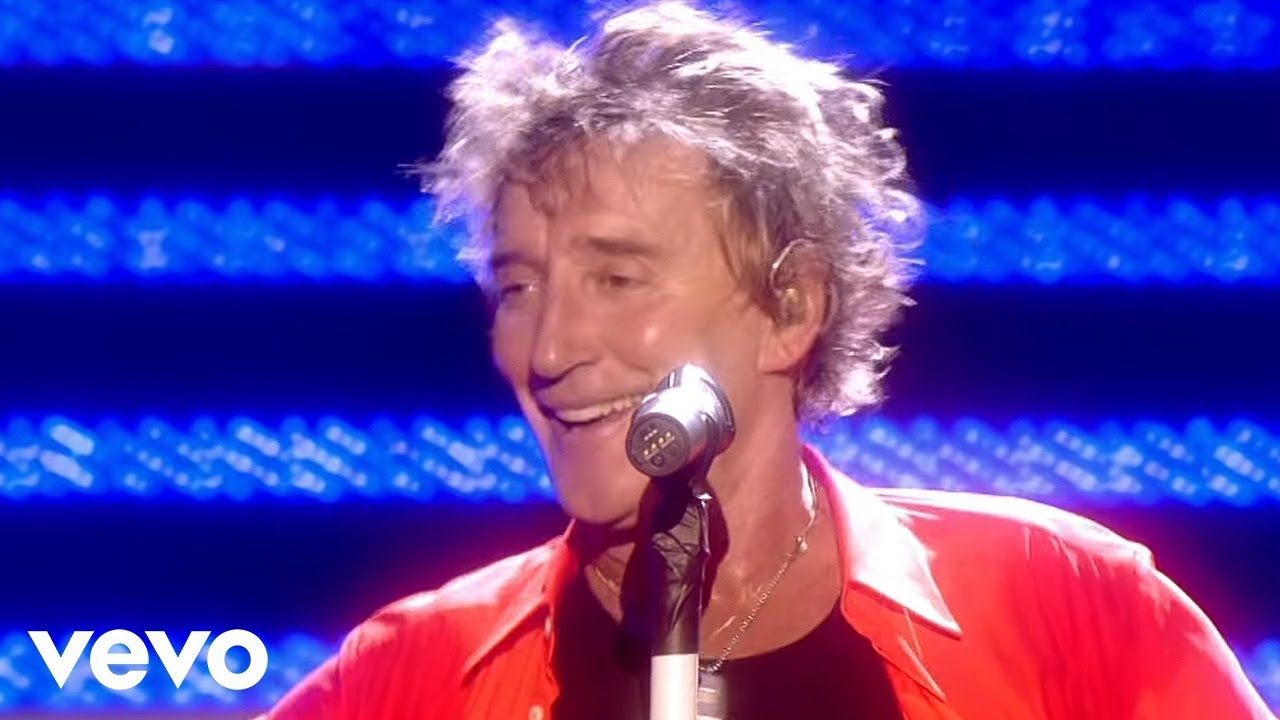
Rod Stewart’s voice has always sounded like it’s been dragged through a gravel pit and then soaked in fine Scotch. It’s that raspy, lived-in quality that makes a song like You’re In My Heart (The Final Acclaim) feel less like a chart-topping single and more like a late-night confession over a pint. Released in 1977 on the Foot Loose & Fancy Free album, the track didn’t just climb the charts; it basically parked itself there. People usually think of Rod as the "Da Ya Think I'm Sexy?" guy, the flamboyant rocker in spandex. But this song? This is the real Rod. It’s a messy, romantic, slightly sports-obsessed tribute to a woman who was clearly his world at the time.
Honestly, the track is a bit of a weird one if you actually look at the lyrics. It’s not your standard "I love you" ballad. It’s specific. It’s quirky. It references European football teams. Most pop stars in 1977 were trying to be universal, but Stewart went the other way. He went granular. For an alternative view, read: this related article.
The Britt Ekland Connection
You can’t talk about You’re In My Heart without talking about Britt Ekland. The Swedish actress and Bond girl was Stewart's partner for over two years, and she is widely cited as the muse for this particular set of lyrics. Their relationship was the definition of 1970s celebrity glamour. They were "The Couple" of the London and LA scenes.
Stewart has admitted in various interviews, including his 2012 autobiography Rod: The Autobiography, that the song was a tribute to her, though he also acknowledged that it was a bit of a composite of feelings. The song captures that transition from being a "ramblin' man" to someone who actually wants to stay put. When he sings about her being "an ancient fashion," he’s not insulting her. He’s saying she has a timeless, classic soul that stands out against the plastic, disco-obsessed world he was living in. Similar coverage on this trend has been provided by Vanity Fair.
It’s interesting to note that by the time the album was a massive success, the relationship was already hitting the rocks. That’s the irony of great love songs. They immortalize a moment that often expires before the record even stops spinning.
Decoding the Lyrics: From Celtic to Gershwin
The song is famous—or perhaps infamous—for its bridge. Most American listeners back then had no idea what he was talking about when he mentioned "Celtic, United." He’s talking about football. Specifically, Glasgow Celtic and Manchester United. For a guy like Rod, who once famously said he could have been a professional footballer if music hadn't got in the way, putting his favorite teams in a love song is the highest form of flattery.
It’s basically him saying: "I love you as much as I love my team." If you know anything about die-hard football fans, you know that’s a massive statement.
Then there’s the line about George Gershwin and Rhapsody in Blue. It shows the range of his influences. Stewart wasn't just a mod or a rocker; he was a student of the Great American Songbook. This influence would eventually lead to his massive success with the Stardust series decades later, but you can hear the seeds of it right here in 1977.
Why the "Final Acclaim" Subtitle?
The parenthetical title (The Final Acclaim) has always baffled casual fans. It sounds so heavy. So definitive.
In reality, it’s a nod to the song’s structure. It’s the "final acclaim" because the narrator has looked at all his options, traveled the world, seen the "fashions," and decided this woman is the winner. It’s the closing argument in a trial about where his heart belongs. It’s a bit theatrical, which fits Rod perfectly. He’s always been a bit of a ham, but the sincerity in his vocal delivery keeps it from feeling cheesy.
The Production: A Masterclass in 70s Warmth
The song was produced by Tom Dowd. If that name doesn't ring a bell, his resume should. Dowd worked with everyone from Aretha Franklin to Eric Clapton. He was the guy who knew how to make a record sound "expensive" without losing the grit.
The acoustic guitar work on the track is incredibly crisp. It provides this steady, rhythmic heartbeat that allows the strings to swell without becoming overbearing. 1977 was a year of transition. Punk was exploding in London. Disco was king in New York. Amidst all that noise, a mid-tempo acoustic ballad about being in love with a girl and a football team should have been DOA. Instead, it hit Number 4 on the Billboard Hot 100 and Number 3 in the UK.
It worked because it felt human. In a year of synthesizers and three-chord political rants, Rod gave people a melody they could hum and a sentiment they could relate to.
Misconceptions and Forgotten Facts
A lot of people think this was a Number 1 hit in the US. It actually wasn't. It got stuck behind some heavy hitters. But its longevity has far outlasted the songs that beat it that week.
Another common misconception is that the song is purely acoustic. If you listen closely to the later verses, the orchestration is actually quite complex. There’s a subtle layering of keyboards and strings that builds the emotional stakes. It’s a slow burn. It starts as a folk song and ends as a mini-anthem.
- The "Big House" Line: When he mentions being in a "big house," he's referring to his newfound wealth and the isolation that comes with it. He’s a guy who has everything but realizes he needs a partner to make it mean something.
- The Football Reference: He’s been criticized by some fans for mentioning Manchester United alongside Celtic, given he’s such a staunch Celtic supporter. But hey, rhyme schemes happen.
The 2019 Orchestral Reimagining
Fast forward to 2019. Stewart released an album also titled You’re In My Heart, which featured his classic vocals overdubbed with new arrangements by the Royal Philharmonic Orchestra.
Usually, these projects feel like cheap cash-ins. This one was different. Hearing that 1977 vocal track—the one where Rod is at the absolute peak of his powers—surrounded by a full orchestra was a revelation. It highlighted just how good the original vocal take was. He wasn't just singing; he was phrasing. He was using silence. He was leaning into the "cracks" in his voice. The 2019 version went to Number 1 in the UK, making Rod the oldest male solo artist to top the UK album charts.
It proved that the song isn't just a nostalgia trip. It’s a standard.
The Legacy of the Song Today
Why do we still hear this in grocery stores, at weddings, and on classic rock radio?
Because it’s a "safe" song that doesn't feel "safe." It’s edgy enough because of that raspy voice, but sweet enough for your grandmother to enjoy. It’s one of those rare tracks that bridges the gap between the rock-and-roll Rod of the Faces and the Vegas-crooner Rod of the 2000s.
It’s also an incredibly popular wedding song, despite the fact that the relationship it was written about ended in a pretty public breakup. People don't care about the history; they care about how the song makes them feel. It makes them feel like they are "the final acclaim."
Actionable Insights for the Music Fan
If you want to truly appreciate You’re In My Heart (The Final Acclaim), don't just listen to the radio edit. There are layers here that most people miss on a casual listen.
Listen for the Phrasing: Pay attention to how Stewart hangs back on the beat in the second verse. He’s almost talking, not singing. It’s a technique he learned from Sam Cooke, and he executes it perfectly here.
Compare the Versions: Put on the 1977 original and then the 2019 Royal Philharmonic version. Look for how the lack of drums in the early part of the original creates a sense of intimacy that the orchestral version struggles to replicate.
Check Out the Live Versions: Rod often changes the football teams in the lyrics when he performs live, depending on where he is in the world. It’s a fun bit of fan service that shows he doesn't take the "sanctity" of the recorded lyrics too seriously.
Explore the Album: Foot Loose & Fancy Free is often overshadowed by A Night on the Town, but it’s a solid rock record. Tracks like "Hot Legs" provide the high-energy counterpoint to the vulnerability of "You’re In My Heart."
To get the full experience, find a high-quality vinyl pressing or a lossless digital stream. The 70s analog warmth is a huge part of why this song feels so "huggable." When you strip away the celebrity gossip and the tabloid headlines of the era, you’re left with a brilliantly constructed pop song that captures the universal feeling of finally finding where you belong. Even if you don't care about Celtic or Manchester United, you can feel the passion. That’s the magic of Rod Stewart. He makes his specific life feel like yours.



