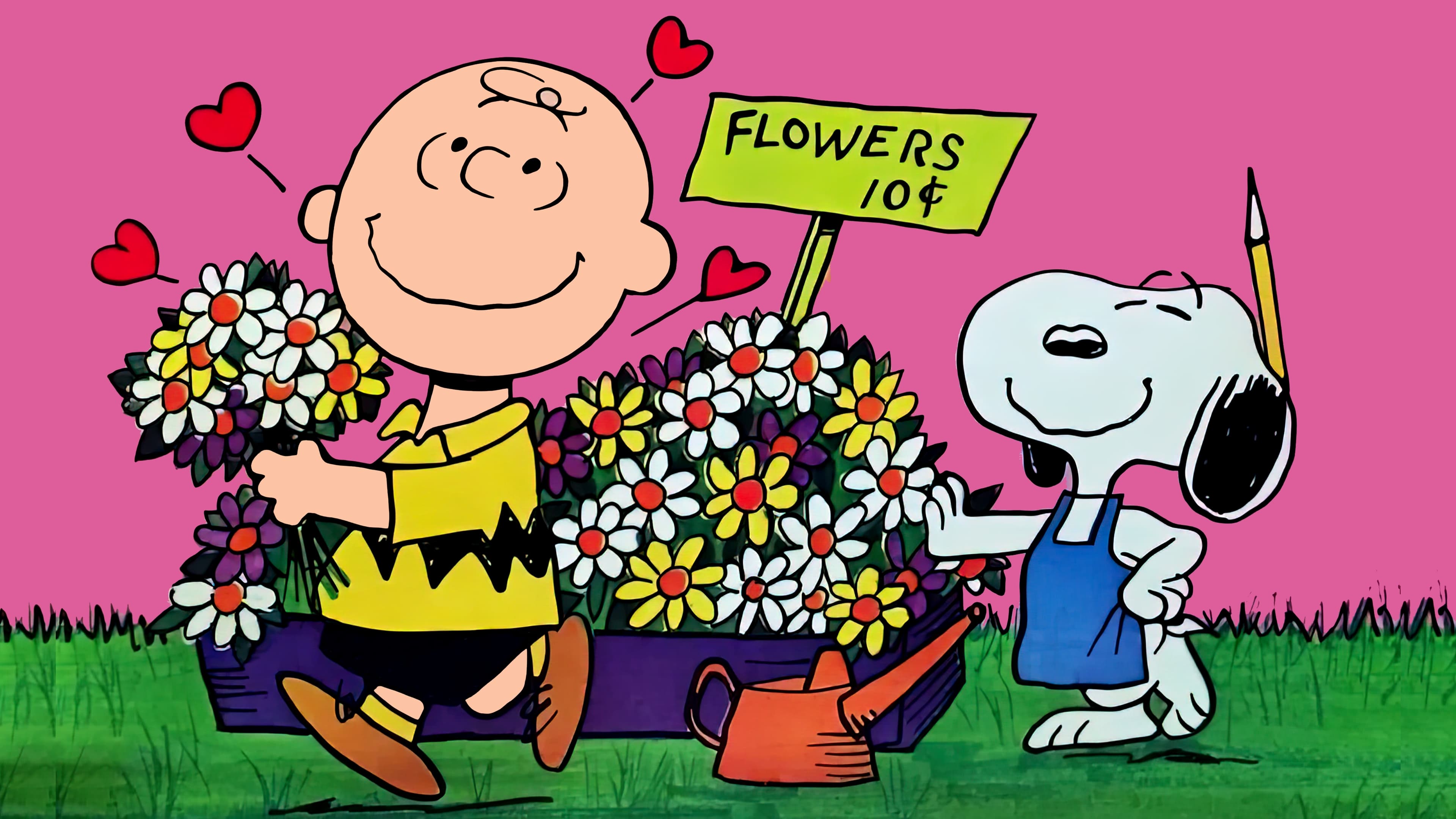
Charlie Brown is the patron saint of the "almost." He almost kicks the football. He almost wins the ballgame. In the 1967 animated special You’re in Love, Charlie Brown, he almost—just almost—talks to the girl of his dreams.
It’s painful. Honestly, it’s some of the most relatable television ever made, even sixty years later. If you grew up watching Peanuts, you know the drill. This wasn't the first time we saw the "Little Red-Haired Girl" mentioned, but it was the first time she became the gravitational center of a story. For a different view, read: this related article.
Most people remember A Charlie Brown Christmas or the Great Pumpkin. They’re classics. But this one? It captures that nauseating, stomach-flipping anxiety of a grade-school crush better than anything else in the Charles Schulz canon. It’s raw. It’s funny. It’s deeply uncomfortable.
The Torture of the Little Red-Haired Girl
The plot is basically a countdown to the end of the school year. Charlie Brown is paralyzed by the sight of this girl. He can't eat. He can't sleep. He literally hides behind a tree just to watch her eat a sandwich. Similar insight regarding this has been provided by Vanity Fair.
Wait—that sounds creepy. But in the world of Peanuts, it’s just pure, unadulterated insecurity.
What makes You’re in Love, Charlie Brown so effective is that we never actually see her face. Not really. She’s an idea. She’s a symbol of everything Charlie Brown thinks he isn't: perfect, popular, and unattainable. Charles Schulz based her on a real woman, Donna Mae Johnson, who actually rejected his marriage proposal in real life. That’s why the stakes feel so high. Schulz wasn't just writing a cartoon; he was exorcising his own teenage ghosts.
Bill Melendez and the Art of the Silent Scream
The animation style here is peak 60s Peanuts. Bill Melendez, the director, used these vibrant, sometimes psychedelic color washes for the backgrounds. When Charlie Brown gets embarrassed, the whole world turns a violent shade of red or purple.
It’s expressionistic.
Think about the sound design. This was the fourth Peanuts special, and the jazz score by Vince Guaraldi is doing a lot of the heavy lifting. The music is bouncy, but there's an underlying melancholy. It’s the sound of a kid trying to be brave while his heart is hammering against his ribs.
Then there’s the "teacher voice." That "wah-wah-wah" trombone sound? It’s iconic now, but back then, it was a brilliant way to show how kids tune out the adult world when they’re hyper-focused on their own social survival. In this special, the school atmosphere feels oppressive. The ringing bells, the crowded hallways—it’s a gauntlet.
Peppermint Patty: The Chaos Factor
If Charlie Brown is the anchor, Peppermint Patty is the hurricane. This special marked her second appearance, and she’s a total wrecking ball. She doesn't get the subtext. She thinks Charlie Brown is talking to her about love.
It’s a classic comedy of errors.
The contrast between Patty’s brashness and Charlie Brown’s neuroticism is where a lot of the humor lives. While Charlie Brown is drafting a letter he’ll never send, Patty is just out there existing, loud and proud. It highlights how some people just "get" life, while others, like our protagonist, get caught in the machinery of their own thoughts.
The Bus Stop Scene: A Masterclass in Tension
The climax happens at the bus stop on the last day of school. It’s now or never. The tension is legitimately high for a half-hour cartoon. Charlie Brown has a note. He’s ready. He’s going to say something.
And then? He misses her.
He misses the bus. He’s left standing there, a failure in his own eyes. The screen feels huge and empty. But then—and this is the part that everyone remembers—he looks at the note she dropped.
"I like you, Charlie Brown. Signed, the Little Red-Haired Girl."
He does a little dance. He’s over the moon. But here’s the kicker: nothing actually changed. He didn't talk to her. They aren't dating. He just got a tiny bit of validation, and for Charlie Brown, that’s a championship win. It’s a bittersweet ending that avoids the "happily ever after" trope, which is why it feels so much more human than most modern animation.
Why We Still Watch This Stuff
Honestly, You’re in Love, Charlie Brown works because it doesn't talk down to kids. It acknowledges that being young is hard. It acknowledges that rejection is a real fear.
- It captures the specific dread of a Monday morning.
- It shows the hierarchy of the playground without being preachy.
- It uses Snoopy as the ultimate "cool" foil to Charlie Brown's "uncool" reality.
Snoopy, by the way, is a menace in this one. He’s out there playing "Spin the Bottle" and living his best life while Charlie Brown is having a literal existential crisis. It’s the perfect comedic balance.
Technical Details and Trivia
The special first aired on June 12, 1967, on CBS. It was nominated for an Emmy, which isn't surprising given the streak Melendez and Schulz were on.
Interestingly, this was one of the few times we see the characters in a formal school setting for the majority of the runtime. Most Peanuts stories happen in the "liminal space" of backyards and baseball mounds. Bringing the drama into the classroom added a layer of relatability for the millions of kids watching at home who were also counting down the days until summer vacation.
How to Revisit the Magic
If you want to watch it today, it’s mostly tucked away on Apple TV+ along with the rest of the Peanuts library. It’s worth a rewatch, not just for the nostalgia, but to see how well the pacing holds up. There are no frantic cuts. No loud, screeching voice acting. It’s patient.
Actionable Insights for Peanuts Fans:
- Look for the backgrounds: Pay attention to how the colors change based on Charlie Brown's mood. It's a masterclass in visual storytelling.
- Listen to the score: Vince Guaraldi's "Cool" and "Baseball Theme" variations in this special are some of his best work outside of the Christmas album.
- Read the strip: This special was adapted from a series of comic strips from 1961 and 1964. Comparing the two shows how much Melendez expanded on the source material to create a cohesive narrative.
- Observe the silence: Notice how much of the story is told through silence and long takes. Modern cartoons rarely give characters room to breathe like this.
The beauty of You’re in Love, Charlie Brown is that it doesn't give the protagonist a "win" in the traditional sense. He doesn't get the girl, he doesn't become popular, and he's still basically a "blockhead" in the eyes of Lucy. But he gets a note. He gets a reason to hope for next year. And sometimes, when you're a kid (or an adult), that's more than enough.



