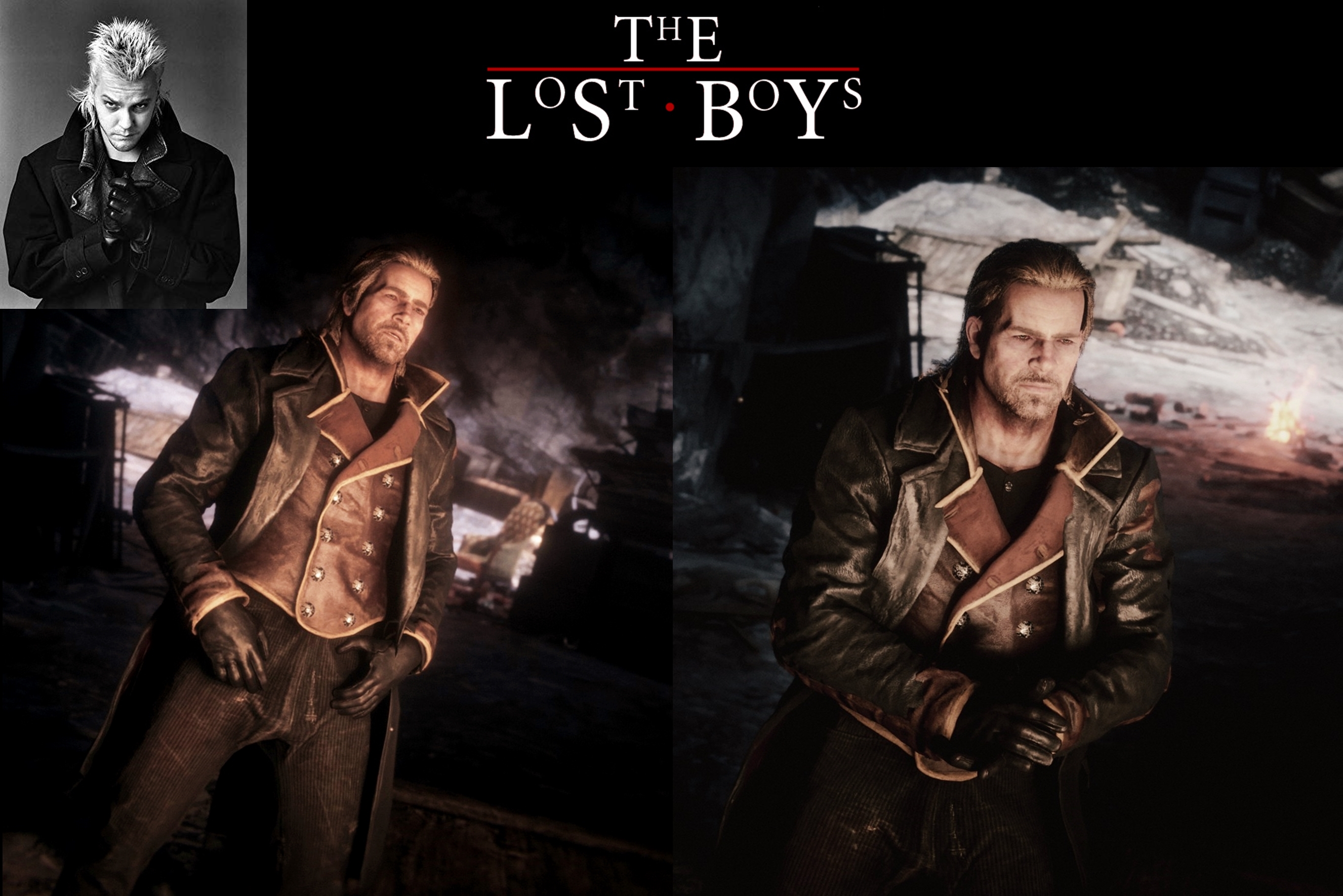
It is a scene that defines 1980s cool, camp, and creature-feature horror all in one messy, noodle-filled bowl. You know the one. Michael, the brooding new guy in Santa Carla, is sitting in a candlelit cave surrounded by a pack of leather-clad, peroxide-blonde vampires. David, played by a peak-charisma Kiefer Sutherland, hands him a carton of what looks like classic takeout. Michael takes a bite. Then the world shifts. David leans in with that predatory smirk and says the line that launched a thousand memes before memes were even a thing: "You’re eating maggots, Michael."
It’s visceral. It’s gross. Honestly, it’s one of the best examples of gaslighting in cinema history.
But why are we still talking about this specific moment from Joel Schumacher’s 1987 cult classic The Lost Boys? It isn't just about the practical effects, though those wriggling larvae looked disturbingly real for the era. It’s about the psychological bridge between being a normal teenager and becoming a monster. When Michael looks down and sees his rice turning into squirming insects, he isn't just losing his lunch. He's losing his grip on reality. That is the exact moment the "invitation" to the vampire life becomes a trap.
The Practical Magic Behind the Rice and Maggots
Joel Schumacher wasn't a director who played it safe with visuals. To get that stomach-churning reaction from the audience, the production didn't rely on grainy overlays or cheap tricks. They used actual, living mealworms and maggots.
Imagine being Jason Patric in that scene. You’re trying to look cool, trying to play the tough protagonist, and you have to handle a container of literal crawling bait. The lighting in that cave—all deep blues and flickering oranges—was designed to make the transformation from "Chinese food" to "crawling nightmare" as seamless as possible. The trick worked because of the editing speed. One second, it’s a standard grain of rice. The next, the camera punches in, and you see the distinct, rhythmic undulation of larvae.
The "worms" were actually just as important. Later in the same sequence, Michael thinks he’s eating noodles, only for David to drop the second bomb: "How are those worms, Michael?" The transition from noodles to a writhing mass of earthworms is arguably even more effective because of the texture. Most of us can imagine the "pop" of a maggot, but the slimy, knotted tangle of worms feels more intimate, more grounded in the dirt. It’s gross-out horror at its most effective because it targets a universal human vulnerability: the food we put in our mouths.
Kiefer Sutherland and the Power of the Delivery
Let’s be real for a second. If anyone else said that line, it might have been cheesy. Kiefer Sutherland’s performance as David is what anchors the entire "you're eating maggots Michael" sequence. He doesn't scream it. He doesn't act like a cartoon villain. He says it with the playful, mocking tone of a big brother who just played a mean prank on you.
That’s the core of The Lost Boys. It’s a movie about the seductive nature of peer pressure. David isn't just a vampire; he’s the cool kid at the back of the bus who wants you to do something stupid just to see if you’ll do it. By making Michael believe he’s eating maggots—whether through a shared hallucination or actual glamouring—David is asserting dominance. He’s showing Michael that his senses can no longer be trusted.
This is a classic trope in vampire lore, often referred to as "the glamour." In Bram Stoker's Dracula or the works of Anne Rice, vampires can cloud the minds of mortals. Schumacher brought this to a 1980s boardwalk setting. He replaced the gothic castles with a biker gang cave and replaced the hypnotic gaze with a box of tainted takeout. It’s brilliant because it’s relatable. Everyone has felt that moment of "I don't think I belong here" at a party. Michael just happened to be at a party where the host was a century-old bloodsucker.
Why the Scene Works as a Psychological Threshold
In screenwriting, there’s a concept called the "Crossing the Threshold" beat. This is when the hero leaves their ordinary world and enters the special world of the story. In The Lost Boys, this is that beat.
Once Michael "eats" the maggots and drinks the "wine" (which we all know is David’s blood), he can’t go back to being the kid from Arizona who just wants to hang out on the boardwalk. He’s physically and psychically altered. The maggots represent the decay of his humanity. It’s a literalization of the phrase "you are what you eat." If he accepts the invitation to feast with the pack, he accepts the rot that comes with it.
The interesting thing is that Michael doesn't actually eat maggots. It’s an illusion. But the psychological impact is the same. David has cracked the door to Michael's perception. If he can make Michael see maggots in his rice, he can make Michael see anything. He can make him see a world where killing is okay, where being "dead" is better than being alive, and where "never growing up" is a gift rather than a curse.
The Legacy of Santa Carla and 80s Horror
Santa Carla, the "Murder Capital of the World," provided the perfect backdrop for this kind of grimy, stylish horror. The movie captured a specific lightning in a bottle. You had the hair, the earrings, the saxophone player (shout out to Tim Cappello), and the sheer, unadulterated angst of the two Coreys (Haim and Feldman).
But amidst the neon and the synth-pop, the maggot scene remains the "gross-out" peak. It’s the part of the movie that kids in the 80s and 90s would rewind on their VHS tapes until the tracking went fuzzy. It’s the scene parents hated. It’s the scene that made you look twice at your lo mein for a week after watching it.
How to Spot a "Lost Boys" Reference Today
You’ll see the DNA of this scene everywhere in modern horror and comedy.
- What We Do in the Shadows: The mockumentary style often plays with the idea of "mortal food vs. vampire life," clearly nodding to the absurdity David brought to the table.
- Stranger Things: The show’s entire aesthetic leans heavily on the "teens on bikes vs. the supernatural" vibe that The Lost Boys perfected.
- Internet Culture: Type "maggots Michael" into any GIF search, and you’ll see Kiefer’s face immediately. It has become shorthand for being "gaslit" or discovering something is much worse than it looks.
Takeaway: Why We Still Love Being Grossed Out
At its heart, "You’re eating maggots, Michael" is about the loss of innocence. It’s a rite of passage. Horror works best when it takes something safe—like a meal with friends—and turns it into something threatening. The Lost Boys did this better than almost any other teen movie of its decade.
If you’re looking to revisit the film or explore its themes further, pay attention to the sound design in that scene next time. The crunching sounds, the wet squelching of the worms, and the sudden silence when the illusion breaks. It’s a masterclass in building tension and releasing it with a punchline that doubles as a threat.
Actionable Insights for Horror Fans and Creators:
- Watch the "Special Edition" Features: If you can find the behind-the-scenes footage, look for the practical effects breakdown of the noodle scene. It’s a great lesson in how to use simple props to create lasting psychological trauma on screen.
- Analyze the "Glamour" Trope: If you’re a writer, look at how David uses the illusion not just to scare Michael, but to test his resolve. Effective horror isn't just about the "ew" factor; it’s about what the "ew" factor says about the character's state of mind.
- Check Out the Soundtrack: To get the full experience, listen to "Cry Little Sister" while thinking about the cave scene. The music and the visuals were designed to be inseparable, creating a sensory overload that makes the maggot reveal even more jarring.
- Re-examine the Coreys: While Michael and David provide the drama, Sam (Corey Haim) provides the audience's perspective. His reaction to Michael’s transformation is the emotional anchor of the film.
The next time you're sitting down with a box of takeout and someone starts acting a little too cool, just remember: it might just be rice. Or, if you’re in Santa Carla, you might want to double-check the carton before you take a bite.



