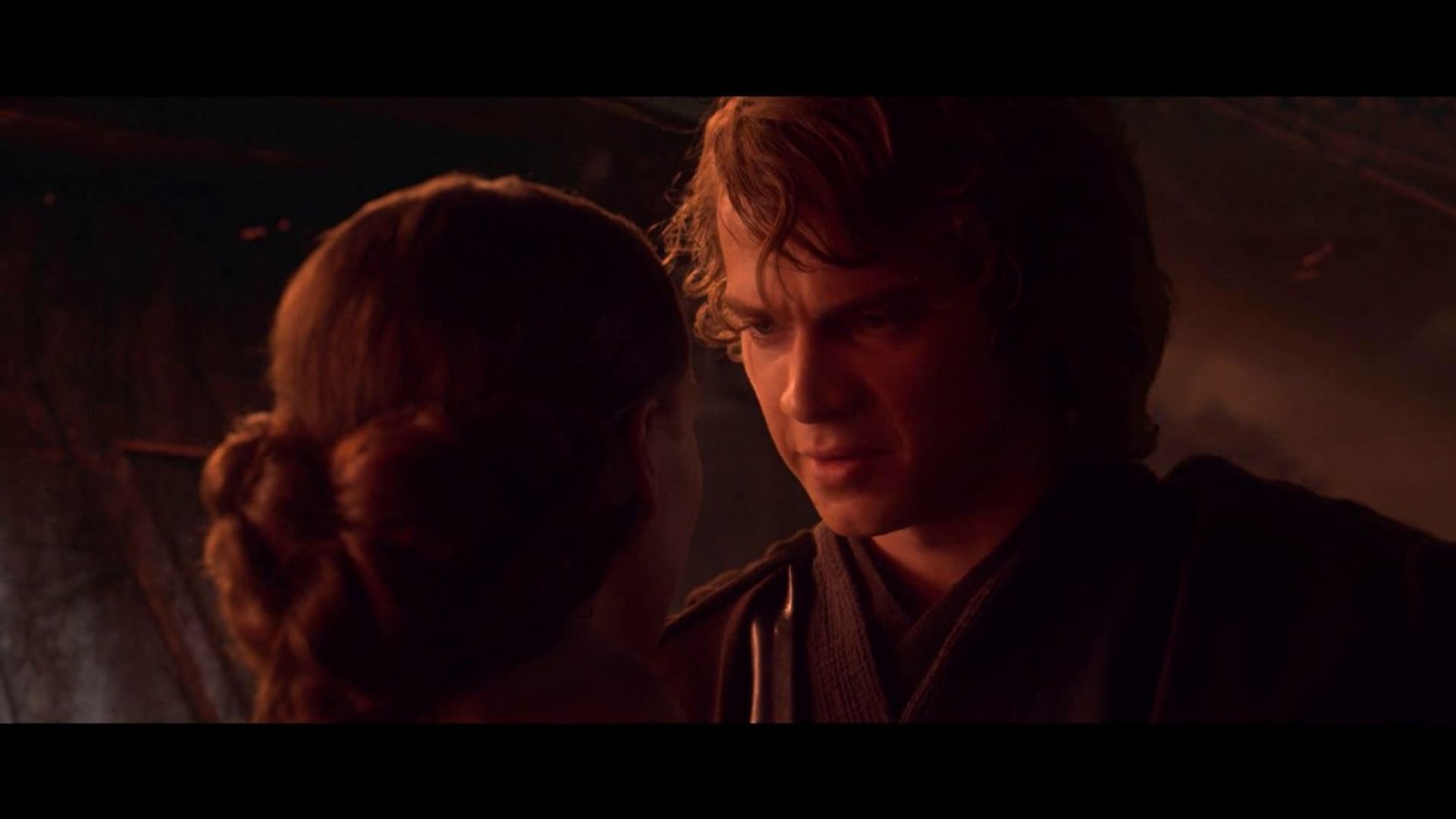
It happened on a volcanic rock. Specifically, the high-stakes, CGI-heavy landscape of Mustafar. When Padmé Amidala stepped off her skiff in Star Wars: Episode III – Revenge of the Sith, she wasn't just there to see her husband. She was there to save his soul. But instead of a redemption arc, we got one of the most memed lines in cinematic history. You're breaking my heart Anakin has spent nearly two decades evolving from a sincere moment of melodrama into an internet shorthand for betrayal, cringe, and deep-seated nostalgia.
People laugh at it. They really do. Natalie Portman’s delivery—breathful, desperate, and perhaps a bit stilted—has been picked apart by critics since 2005. But if you actually look at the narrative weight of that scene, it’s the pivot point for the entire Skywalker saga. It’s the exact moment the "Chosen One" myth dies and the mechanical terror of Darth Vader becomes inevitable.
The Mustafar Confrontation: More Than Just Bad Dialogue
George Lucas has a specific style. He calls it "operatic," while detractors often just call it "clunky." Honestly, both are probably true. When Padmé cries out, you're breaking my heart Anakin, she is reacting to the realization that the man she loved has murdered children—the younglings at the Jedi Temple. It’s a heavy lift for any actor.
Anakin’s response is what makes the scene truly chilling. He doesn't apologize. He doesn't even really deny the horror. He pivots immediately to power. He talks about bringing "peace, justice, and security" to his new Empire. It’s a classic authoritarian descent. He’s stopped seeing Padmé as a partner and started seeing her as a possession. "I'm doing this for you," is the ultimate lie of the abuser, and Lucas pins that dynamic perfectly even if the prose feels a little "Shakespeare-lite."
The tragedy isn't just that he's turning evil. It’s that he thinks he’s winning. He’s standing there, yellow-eyed and drenched in the Dark Side, genuinely believing Padmé will be impressed by his new promotion to Galactic Tyrant.
Why the Line Failed (and Succeeded) in 2005
Back when Revenge of the Sith hit theaters, the "Prequel Hate" was at a fever pitch. Critics like Roger Ebert were lukewarm. They found the romance between Hayden Christensen and Natalie Portman to be the weakest link in the chain. When Padmé uttered that famous line, audiences groaned.
Why? Because it felt too simple.
We expected something profound, something deeply philosophical. Instead, we got a literal description of emotional pain. But maybe that was the point. Padmé isn't a politician in that moment; she’s a wife whose world has just imploded. Simplicity is often the first casualty of trauma. You don't use big words when your life is ending.
The Meme Renaissance and Prequel Reclamation
If you spend five minutes on r/PrequelMemes, you’ll see it. The line is everywhere. It’s used to react to everything from a video game update someone doesn't like to a literal breakup.
Something strange happened around 2016. The generation that grew up with the prequels reached adulthood. Suddenly, the irony started to fade. People began to realize that while the dialogue was "rough and coarse" (to quote Anakin’s infamous sand monologue), the emotional beats were solid.
- Nostalgia Factor: For Gen Z and late Millennials, these movies are Star Wars. The flaws are part of the charm.
- The Clone Wars Effect: The animated series gave us seven seasons of Anakin and Padmé actually being a functional, heroic couple. This added massive retroactive weight to the Mustafar breakup.
- Visual Storytelling: Even if you hate the words, the image of Padmé in her white cloak against the glowing orange lava is iconic.
The Science of "Cringe" turned "Classic"
There is a psychological phenomenon where repeated exposure to a "bad" piece of art makes us eventually find the genius in it. It’s not just Stockholm Syndrome. It’s that we stop looking for what the movie isn't and start looking at what it is. You're breaking my heart Anakin works because it is raw. It’s unpolished. In an era of hyper-curated, Joss Whedon-style quippy dialogue, there is something refreshing about a character just saying exactly how they feel without a layer of sarcasm.
Natalie Portman's Performance: A Second Look
Portman has an Oscar. She is, by any objective measure, one of the best actors of her generation. So why did this line feel so off to people?
In various interviews over the years, including talks with Rolling Stone, the cast has hinted at the difficulty of acting against blue screens with minimal physical sets. Portman was reacting to a tennis ball on a stick while pretending her husband was a burgeoning space-Hitler.
But watch her face. The micro-expressions of horror when Anakin says, "If you're not with me, then you're my enemy," are top-tier. She’s realizing that the man she went to Mustafar to save is already dead. The line you're breaking my heart Anakin isn't a plea for him to stop—it’s a realization that he’s already gone. It’s a eulogy.
Comparing Mustafar to the Original Trilogy
When you look at The Empire Strikes Back, the dialogue is snappier. Lawrence Kasdan brought a grit that Lucas sometimes lacks. "I love you," Leia says. "I know," Han replies.
It’s cool. It’s legendary.
But Padmé’s line is the opposite of cool. It’s vulnerable. It’s the "uncool" nature of the prequels that makes them so memeable, but also so strangely human. Anakin and Padmé’s relationship was a disaster from the start—born in secrecy, fueled by obsession, and ended in fire.
The Political Undercurrents You Might Have Missed
George Lucas wasn't just writing a space soap opera. He was writing about how democracies collapse. Padmé represents the Republic. Anakin represents the military-industrial complex and the slide toward fascism.
When she says he is breaking her heart, she is also saying he is breaking the world. He is destroying the very thing she spent her entire life building. The personal is political. Their domestic dispute is literally the catalyst for ten thousand years of galactic darkness.
If you view the line through that lens, it’s not just a sad wife talking to a mean husband. It’s the dying gasp of a free society.
How to Use the Quote Today (The "Meme-Lord" Guide)
If you’re going to use you're breaking my heart Anakin in the wild, you have to understand the layers.
- The Sincere Use: When a franchise you love makes a terrible creative choice. (e.g., "Disney just canceled my favorite show... you're breaking my heart Anakin.")
- The Ironic Use: When something minor goes wrong. (e.g., "The McDonald's ice cream machine is broken? You're breaking my heart Anakin.")
- The Roleplay: Usually followed by someone screaming "You turned her against me!" or "I have the high ground!"
Actionable Insights for Star Wars Fans
If you want to truly appreciate the depth of this scene beyond the memes, there are a few things you can do to change your perspective.
Watch the "Clone Wars" Siege of Mandalore arc. This runs parallel to Revenge of the Sith. Seeing what was happening elsewhere in the galaxy while Padmé was heading to Mustafar makes her desperation feel much more grounded. It fills in the gaps that the movie’s pacing sometimes skips over.
Read the Matthew Stover novelization. This is widely considered one of the best Star Wars books ever written. It takes the dialogue from the movie and adds internal monologues. In the book, the line you're breaking my heart Anakin is preceded by pages of Padmé’s internal realization that her husband has become a monster. It turns the "cringe" into a genuine psychological thriller.
Listen to the score. John Williams’ track "Anakin’s Betrayal" and "Star Wars and the Revenge of the Sith" are doing the heavy lifting. If you mute the dialogue and just watch the acting with the music, the emotion is undeniable.
The reality is that Star Wars is a generational bridge. We can laugh at the dialogue while still being moved by the tragedy. Padmé’s heartbreak wasn't just a plot point; it was the end of an era. Whether you find the line hilarious or haunting, it remains one of the most recognizable sentences ever spoken in a galaxy far, far away.
Don't just dismiss it as a bad line. Look at it as the moment the Prequels finally earned their place in the mythos. It’s messy, it’s dramatic, and it’s perfectly Anakin.
To get the most out of your next rewatch, pay attention to the lighting on Padmé’s face during the Mustafar scene. The shift from the warm interior of the ship to the harsh, hellish red of the planet’s surface mirrors her internal shift from hope to total despair. It’s a masterclass in visual storytelling that survives even the clunkiest of scripts.



