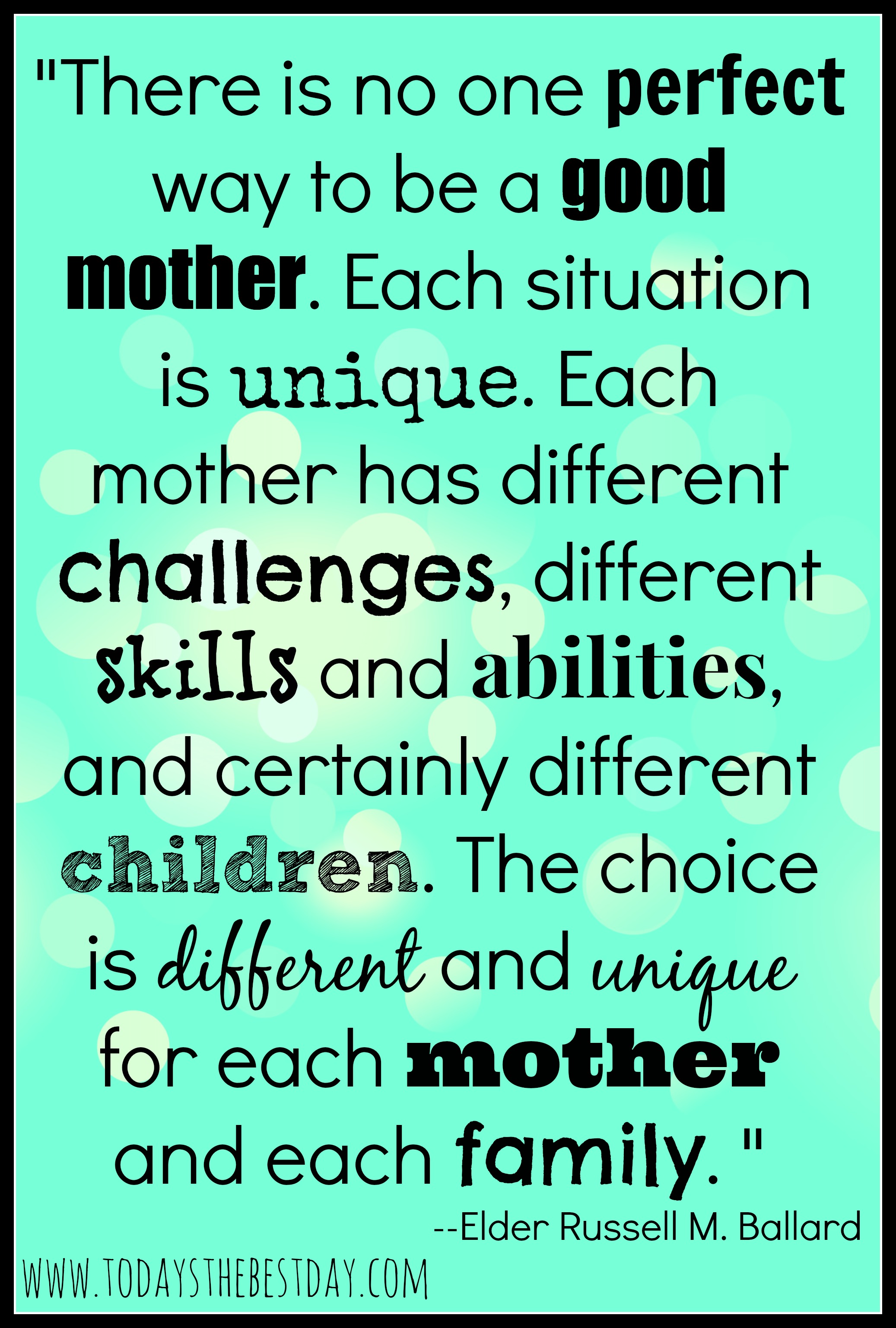
The laundry is a mountain. Again. You’re standing in the kitchen, staring at a half-eaten chicken nugget, wondering if you actually played with your kids today or if you just "managed" them. It’s a heavy feeling. That nagging voice in your head is probably whispering that you’re failing because you lost your temper at 5:00 PM or because the toddler had iPad time so you could just breathe for ten minutes. But here is the objective, data-backed truth: if you are worried about being a good parent, you’re a great mom.
Bad parents don’t worry about being bad parents. They don't have the self-awareness.
We live in a weird era. Social media has created this hyper-visible "perfection" that literally didn't exist thirty years ago. Back then, if you fed your kids cereal for dinner, only the dog knew. Now, you see a reel of a mom making organic, star-shaped bento boxes at 6:00 AM, and suddenly your bowl of Cheerios feels like a moral failing. It isn't. It's just breakfast.
The Science of Why You Feel Like You're Failing
Let’s talk about "maternal guilt." It’s not just a feeling; it’s practically a physiological response. Research published in journals like Developmental Psychology suggests that the transition to motherhood involves massive structural changes in the brain—specifically in the amygdala, which handles emotions and risk detection. Your brain is literally rewired to be hyper-vigilant.
This vigilance is meant to keep the baby safe.
Unfortunately, in the 21st century, our brains mistake "the house is messy" or "I forgot library book day" for "my offspring is in danger." Your nervous system is firing off "danger" signals for minor logistical hiccups. Dr. Suniya Luthar, a leading researcher on parental resilience, found that a mother’s well-being is the single most important factor in a child’s development. Not the enrichment classes. Not the screen time limits. Just you, being okay.
When you feel like you aren't enough, it’s usually because of "intensive mothering" ideology. This is a term coined by sociologist Sharon Hays. It describes the cultural pressure to spend every waking second, every dollar, and every ounce of emotional energy on your child. It’s a recipe for burnout. It's also historically abnormal. For most of human history, kids were raised in communal "villages" where moms had plenty of breaks. Now? We're trying to be the village, the teacher, the chef, and the playmate all at once. It’s impossible.
You’re a Great Mom Even When You Lose Your Cool
We’ve all been there. The "mom rage" is real. You’ve asked them to put their shoes on fourteen times. Fourteen. By the fifteenth time, you’re yelling. Then comes the "shame spiral." You think a "good" mom would stay calm.
Actually, child psychologists like Dr. Becky Kennedy (the "Good Inside" expert) argue that the "perfect" parent who never loses their temper doesn't exist—and wouldn't even be helpful if they did. Why? Because kids need to see how to handle conflict and how to repair a relationship.
If you yell and then later say, "Hey, I’m sorry I raised my voice. I was frustrated, but it wasn't your fault," you are teaching your child the most important life skill: the repair. That is what makes you a great mom. You are modeling human fallibility and accountability. That is worth a thousand Pinterest-perfect afternoons.
The Myth of the "Natural" Mother
Some people think being a mom should just "click."
Like a software update.
It doesn't. Matrescence—the process of becoming a mother—is as significant as adolescence. It's a total identity shift. If you feel like you don't know who you are anymore, or if you miss your old life, that doesn't make you a bad person. It makes you a person undergoing a massive hormonal and social transition.
Real expert knowledge tells us that the "maternal instinct" is often just a series of learned behaviors. You learn your baby’s cues. You learn what that specific "I’m hungry" cry sounds like. It’s work. It’s labor. And doing that labor day in and day out—even when you’re exhausted—is the definition of greatness.
Why Good Enough is Actually Better
The British pediatrician and psychoanalyst Donald Winnicott introduced the concept of the "Good Enough Mother." He argued that children actually benefit from a parent who isn't perfect. If a parent is perfectly attuned to a child 100% of the time, the child never learns how to deal with minor frustrations or how to wait.
By being "good enough"—meeting their needs most of the time but also having your own life and making mistakes—you allow your child to develop autonomy. You are preparing them for the real world. A world that doesn't revolve around them.
Signs You're Doing Better Than You Think
Sometimes we need a checklist that isn't about milestones or grades. Look at these markers instead:
- Your child feels safe enough to have a meltdown around you. (This means you are their "safe harbor.")
- You worry about their happiness.
- You sometimes feel guilty. (Again, this shows you care deeply.)
- Your child comes to you when they are hurt or scared.
- You look for ways to be better.
If any of these apply, stop holding yourself to a standard that literally no human being can meet. The "perfect mom" is a ghost. She’s an algorithm-generated hallucination.
Handling the Pressure of 2026 Parenting
The expectations today are wild. We're expected to work like we don't have kids and parent like we don't have a job. In the current economy, many moms are juggling remote work while managing a household. The "mental load"—that invisible list of who needs new shoes, when the dentist appointment is, and what’s for dinner—is a heavy burden.
Acknowledge the weight of it.
You're a great mom because you carry that load. But you're also allowed to put it down sometimes. Self-care isn't just bubble baths; it's setting boundaries. It's saying "no" to the PTA if it means you get an extra hour of sleep. It's letting the kids watch a movie so you can sit in silence.
Actionable Steps to Shift Your Mindset
Knowing you're a great mom is one thing; feeling it is another. Here is how to actually start believing it:
1. Curate your digital environment. If an account makes you feel like your life is "less than," unfollow it. Immediately. Your brain doesn't need the comparison trap. Follow creators who show the messy reality—the unfolded laundry, the tantrums, and the burnt toast.
2. Practice the "Five-Minute Rule." Instead of trying to be "on" all day, give your child five minutes of 100% focused attention. No phone, no chores, just you and them. Research shows these small bursts of "special time" are more impactful for attachment than hours of distracted supervision.
3. Lower the bar on "success." Did everyone get fed? Are they relatively clean? Did they feel loved? If yes, the day was a win. The rest is just extra credit.
4. Talk to yourself like a friend. If your best friend told you she felt like a failure because she forgot a school spirit day, would you agree? Of course not. You’d tell her she’s doing an amazing job under a lot of pressure. Say that to yourself.
5. Focus on "The Repair." When you mess up—and you will—apologize to your kids. It’s the most powerful tool in your parenting kit. It builds trust and shows them that love isn't about being perfect; it's about staying connected through the mess.
The truth is, your kids won't remember the dust on the baseboards. They won't remember the nights you served frozen pizza for the third time in a week. They will remember the way you smelled when you hugged them. They will remember that you were the person they could always come to. That is the core of parenting. Everything else is just noise. You are doing the hardest job in the world with no manual and very little support. You’re doing it anyway. You’re a great mom. Period.