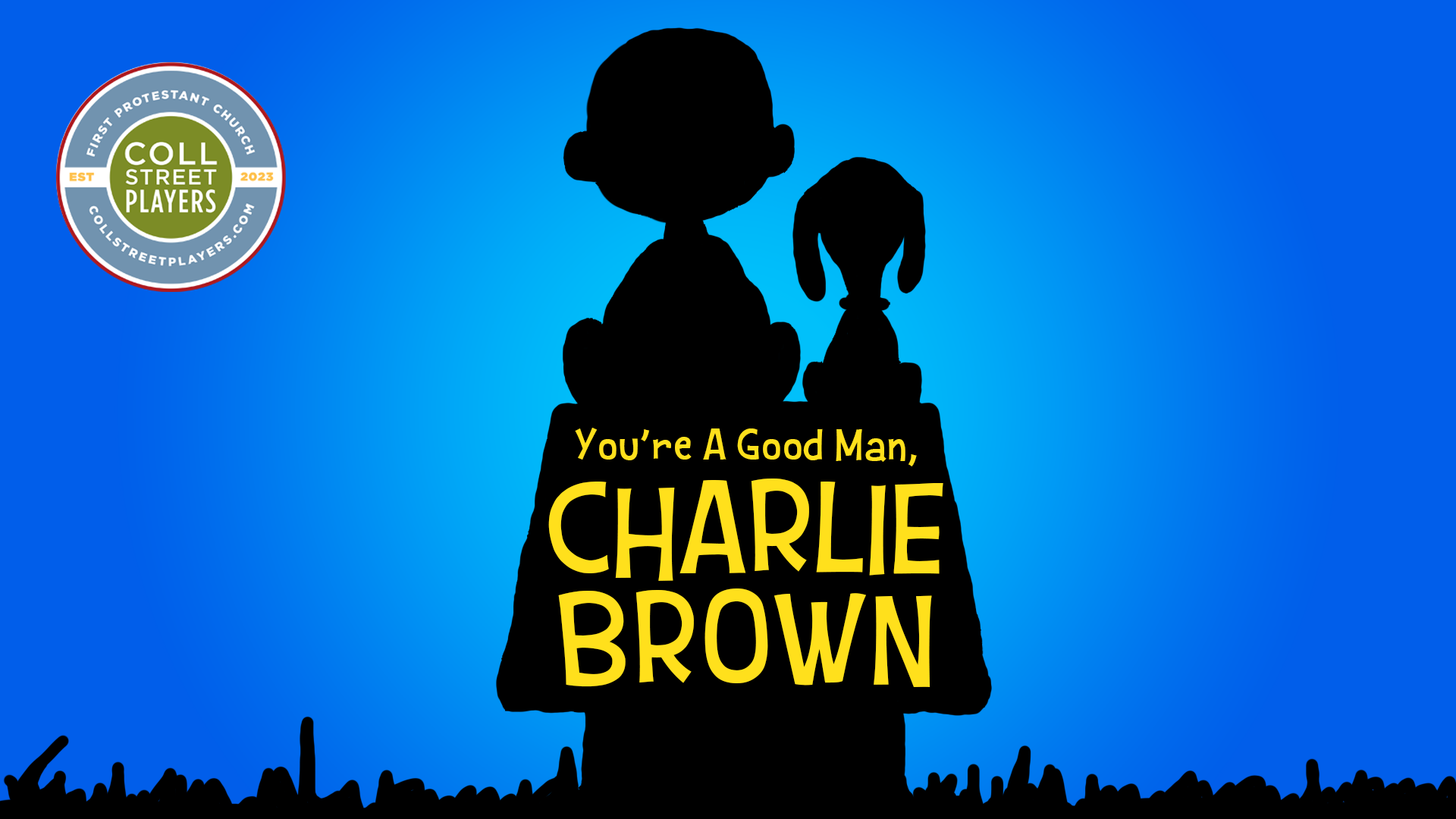
Charles Schulz didn’t want a musical. Honestly, the idea of his beloved, neurotic "Peanuts" characters singing and dancing on a stage felt a bit wrong to him at first. He was protective. He was meticulous. But when Clark Gesner approached him in the mid-1960s with a collection of songs based on the comic strip, something clicked. It wasn't a sweeping Broadway epic with a massive orchestra. It was a series of vignettes. It was simple. It was, well, Peanuts.
Today, You're a Good Man, Charlie Brown is arguably one of the most-produced musicals in history. If you went to high school in America, you either performed in it, ran the lights for it, or knew the person playing Snoopy. But beneath the bright primary colors and the oversized baseball jerseys, there is a weird, melancholy depth that most people miss. It's a show about failure. It’s about the crushing weight of being five years old and realizing the world doesn't always want you to win.
The Scrappy Origins of a Theatre Staple
The show didn't start in a grand theater on 42nd Street. It started as a "concept album." Clark Gesner, who wrote the book, music, and lyrics, originally just wanted to capture the voices of the characters. When it finally moved to the stage Off-Broadway in 1967 at the Theatre 80 in the East Village, the set was basically just some painted boxes.
That simplicity is the secret sauce.
Gary Burghoff—long before he became "Radar" O'Reilly on MASH*—was the original Charlie Brown. He played him with this quiet, desperate hope that resonated with an audience exhausted by the chaos of the late sixties. It ran for an incredible 1,597 performances. People weren't coming for spectacle. They were coming because they saw themselves in the kid who couldn't fly a kite.
The 1999 Broadway revival changed the game again. This is the version most modern fans know. It’s the one that gave us Kristin Chenoweth as Sally Brown, a role that earned her a Tony Award and basically launched her into superstardom. They added new songs like "My New Philosophy," which became an instant audition room staple. They beefed up the arrangements. But the core—the "Happiness" of it all—remained untouched.
Why We Keep Coming Back to the Round-Headed Kid
Why does You're a Good Man, Charlie Brown still work in 2026?
It’s the existentialism.
Schulz was a genius at putting adult anxieties into the mouths of children without making them sound like "mini-adults." When Charlie Brown sits on the bench eating his peanut butter sandwich and wondering why he's so lonely, it hits different. We’ve all been there. We’ve all had those moments where we feel like an outsider looking in at the "red-headed girls" of our own lives.
The structure of the show mimics the reading experience of a Sunday comic strip. It’s jerky. It’s episodic. You get a quick joke about a blanket, then a deep dive into the philosophy of Ludwig van Beethoven, then a frantic musical number about a book report on Peter Rabbit. It shouldn't work as a cohesive narrative, but it does because the theme is consistent: the struggle to find "goodness" in a day full of minor defeats.
The Characters Are Universal Archetypes
- Lucy Van Pelt: She’s not just a bully. She’s an entrepreneur of the ego. Her psychiatric booth is the original "hot take" platform. She craves power because she’s just as insecure as everyone else.
- Linus: The intellectual with a safety net. He’s the most well-adjusted person in the cast, provided he has his blanket. He represents the tension between growing up and holding on to comfort.
- Snoopy: The pure escapist. While the humans are worrying about their grades or their hair, Snoopy is fighting the Red Baron. He is the id of the show.
- Schroeder: Total artistic obsession. He doesn't care about the world; he only cares about the notes.
The Technical Reality: Why Schools Love It
From a purely practical standpoint, this show is a dream for community theaters and schools.
- Small Cast: You only need six people.
- Minimal Set: You can literally perform this on a bare stage with three wooden cubes.
- Gender Flexibility: While the roles are written for specific genders, modern productions have flipped them every which way.
- No "Stars": It’s an ensemble piece. Everyone gets a "moment."
But don't let the low barrier to entry fool you. It’s actually a incredibly difficult show to pull off well. The music is deceptively complex. Gesner used a lot of jazz-inspired rhythms and tight harmonies that require real precision. If the actors play the characters as "cutesy" kids, the show fails. It becomes saccharine. To make You're a Good Man, Charlie Brown work, you have to play the stakes as if they are life and death. Because for a kid, a lost baseball game is life and death.
Misconceptions and the "Easy" Trap
The biggest mistake people make is thinking this is a "kids' show."
Sure, kids like the bright colors and the dog. But the lyrics are actually quite sharp. Take the song "The Kite." It’s a literal play-by-play of anxiety. Or "The Book Report," which perfectly captures the four different ways people approach a deadline: the overachiever (Lucy), the researcher (Linus), the procrastinator (Charlie Brown), and the person who just wants to talk about something else (Schroeder).
There's also this weird idea that the 1999 revival is the "only" version. While Andrew Lippa’s additions (like "Beethoven Day") are great, the original 1967 version has a certain folk-like purity that is worth revisiting. The original "Snoopy" song is much more low-key and introspective than the high-energy dance numbers we see today.
Looking Back to Move Forward
If you’re planning on directing or performing in a production of You're a Good Man, Charlie Brown, there are a few things to keep in mind. You have to honor the strip. Schulz’s line work was clean and minimalist; your production should be too. Avoid the temptation to clutter the stage with props. The imagination of the audience is your best friend here.
Also, lean into the silence. Some of the best moments in the show are the "beats" between the lines where the characters just sit with their thoughts. It’s in those quiet moments that the "goodness" really shines through.
Actionable Steps for Fans and Creators
If you want to truly appreciate the depth of this work, start by reading the "Peanuts" strips from the early 1960s—specifically the ones where Charlie Brown is at his most philosophical. You'll see exactly where Gesner got his inspiration.
For performers, don't try to "act like a child." Act like a person who happens to be short. The emotions are adult-sized even if the characters aren't.
For theaters looking to license the show, check out the difference between the "Revised" version (1999) and the "Original" version. The Revised version is more high-energy and flashy, while the Original is more contemplative and intimate. Pick the one that fits your space and your cast's specific vocal strengths.
Finally, remember that the title isn't a compliment. It's a reassurance. "You're a good man, Charlie Brown" is what people say to him when he fails. It's a reminder that your worth isn't tied to your win-loss record. In a world obsessed with success, that’s a message that stays relevant regardless of how many decades pass.
Next Steps for Deepening Your Knowledge:
- Listen to the 1967 Original Cast Recording: Pay attention to the orchestration. It’s much thinner and more "vaudeville" than the modern version. It gives the show a completely different, more grounded vibe.
- Watch the 1985 Animated Special: This was actually an adaptation of the musical back into animation. It’s a fascinating look at how the material translates between mediums.
- Analyze "My New Philosophy": If you’re a student of musical theater, look at how Andrew Lippa used the character's internal logic to drive the song's structure. It’s a masterclass in character-driven songwriting.
- Read "Schulz and Peanuts" by David Michaelis: This biography gives you the context of Charles Schulz’s life and why the "Good Man" theme was so personal to him. It adds a layer of bittersweet reality to every song in the show.



