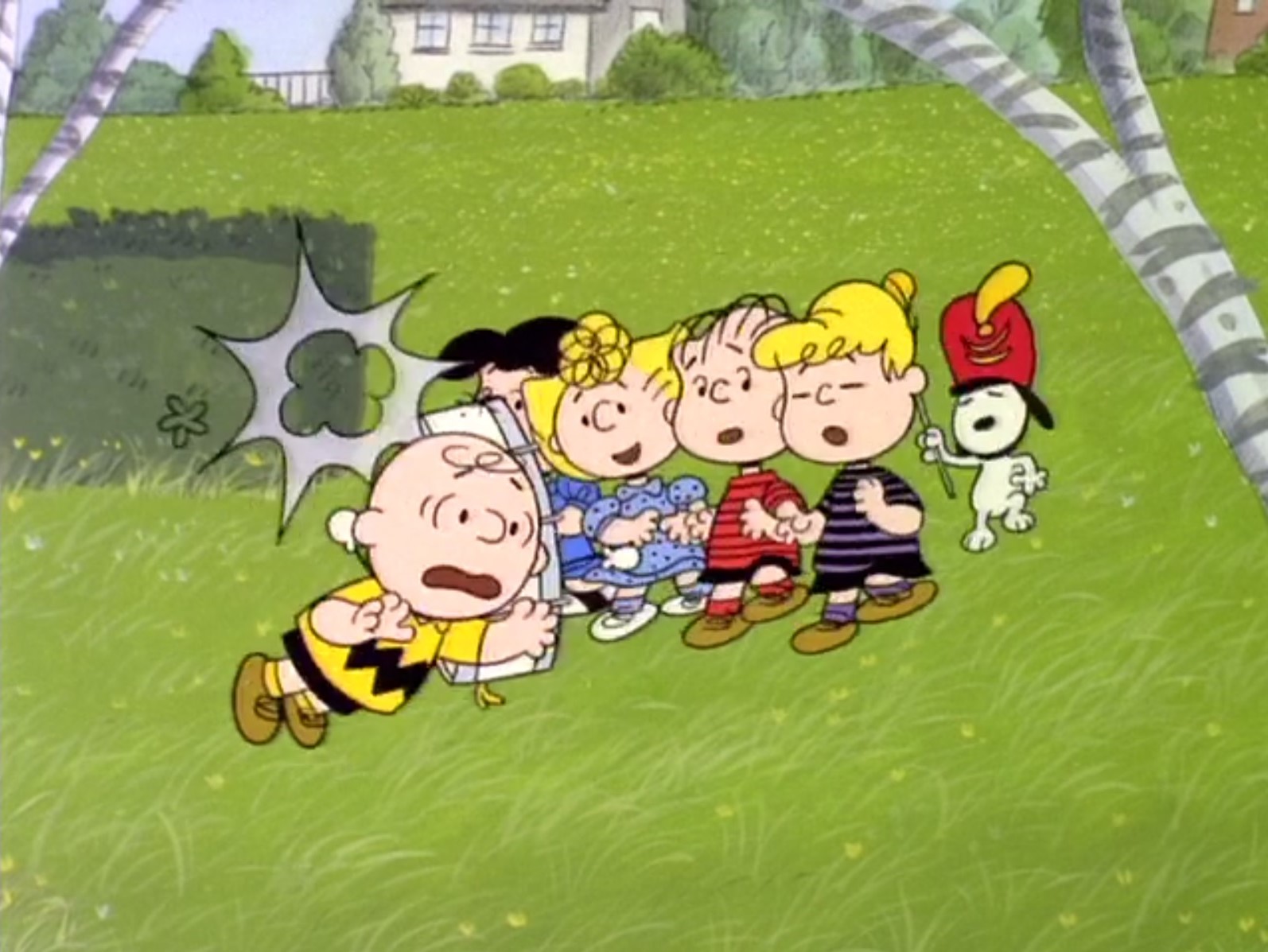
Charles Schulz didn’t initially want a stage musical. He was protective. The Peanuts world lived in the quiet white space of newsprint, and the idea of actual humans jumping around in yellow shirts felt... risky. But in 1967, Clark Gesner did something weird. He didn't try to write a massive, sweeping Broadway plot. He just wrote songs based on the vignettes. It worked. It more than worked; it became one of the most produced musicals in the history of the English language.
If you’ve ever been to a community theater, a high school auditorium, or a professional regional playhouse, you've seen it. You’ve seen a grown man agonize over a red-haired girl while clutching a lunch bag. You're a Good Man, Charlie Brown isn't just a nostalgic trip. It’s a masterpiece of "non-plot" storytelling that somehow captures the existential dread of being five years old. Or thirty-five.
Honestly, the show is a bit of a miracle. It has survived multiple revisions, a massive Broadway revival in 1999, and the transition from the black-and-white era to the digital age without losing its soul. It succeeds because it refuses to be cool. It’s earnest. In a world of cynical reboots, Charlie Brown remains the patron saint of the "lovable loser," and the musical is his liturgy.
The 1967 Original vs. The 1999 Revival: What Actually Changed?
Most people don't realize there are actually two very different versions of this show. The original 1967 Off-Broadway production was scrappy. It featured a small cast: Charlie Brown, Lucy, Linus, Schroeder, Patty (not Peppermint Patty, just "Patty"), and Snoopy. It was minimalist. The set was basically some oversized blocks. It felt like a jazz record come to life.
Then came 1999.
The Broadway revival changed the game. They swapped out the character of Patty for Sally Brown, Charlie’s younger sister. This wasn't just a casting swap; it changed the comedic timing of the entire show. Kristin Chenoweth played Sally and basically invented a new way to be funny on stage, winning a Tony Award in the process. They also added two powerhouse songs by Andrew Lippa: "My New Philosophy" and "Beethoven Day."
If you're licensing the show today, you're almost certainly doing the 1999 version. The orchestration is fuller. The jokes are snappier. But some purists still miss the quiet, almost melancholic vibe of the '67 original. The '99 version is "bigger," which is great for Broadway, but the '67 version felt like the Sunday funnies on a rainy afternoon. Both have their merits, but the shift from Patty to Sally was undoubtedly the right move for modern audiences. Sally brings a specific brand of chaotic energy that the show desperately needs to balance out Charlie Brown’s depression.
Why Snoopy is a Nightmare to Cast
Ask any director. Snoopy is the hardest role.
In the comic strip, Snoopy doesn't talk. He thinks. On stage, he has to sing "Suppertime," a high-energy showstopper that usually involves a literal tap dance on top of a doghouse. You need an actor who can be a dog, a World War I Flying Ace, and a Broadway belter all at once. It’s physically exhausting.
I've seen productions where Snoopy carries the whole show and others where the actor looks like they’re having a breakdown by the second act. The genius of the character—and why You're a Good Man, Charlie Brown stays relevant—is that Snoopy represents the imagination we all lose as we get older. While Charlie Brown is worrying about his kite, Snoopy is fighting the Red Baron. That contrast is the heartbeat of the play.
The "Happiness" Factor and Existentialism for Kids
The finale, "Happiness," is famous. It’s been covered by everyone from the Glee cast to various children’s choirs. But if you actually listen to the lyrics, it’s kind of profound. "Happiness is anyone and anything at all that's loved by you."
Schulz was a complex guy. He struggled with depression and anxiety his whole life, and you can see it in Charlie Brown. The musical captures this "melancholy-joy" perfectly. It’s not a "happy" show in the traditional, bubbly sense. It’s a show about failing. Charlie Brown loses the ball game. He fails to fly the kite. He doesn't get the Valentine.
And yet, the show ends on a note of resilience.
That’s why it works for adults. We recognize that feeling of being "not enough." When Lucy counts Charlie Brown’s flaws in "The Little Known Facts" or "The Doctor is In," it’s funny because it’s cruel, but it’s also funny because it’s relatable. We all have a Lucy in our lives. Or we are the Lucy.
The Technical Weirdness of the Script
The script is written as a series of "quick-cuts." It’s basically a comic strip in 3D. There isn't a traditional "And then this happened" plot structure. Instead, you get:
- A scene about a bus stop.
- A song about a blanket.
- A five-second "blackout" joke about a pencil sharpener.
- A philosophy lecture from a five-year-old.
This structure is a nightmare for some actors who are used to "finding their arc." In this show, your arc is just surviving the day. It’s episodic. It’s fast. If a joke doesn't land, don't worry—a new one is coming in thirty seconds.
How to Actually Stage It Without Being Cringe
There is a major trap with You're a Good Man, Charlie Brown. The trap is "acting like a child."
When adult actors try to talk in high-pitched "baby voices" and skip around like toddlers, the show becomes unwatchable. It’s painful. The best productions—like the 1999 revival with Anthony Rapp—treat the characters like small adults. They take their problems seriously. When Linus talks about his blanket, he isn't being "cute." He is discussing a legitimate psychological dependency.
If you’re involved in a production, tell the actors to play the truth, not the age. The humor comes from the fact that these "kids" are saying things that are incredibly complex. They are tiny philosophers in primary colors.
The Enduring Legacy of the "Peanuts" Sound
We have to talk about the music. Clark Gesner’s score is deceptively simple. Most of the songs are built on catchy, repetitive hooks that stick in your brain for weeks. "You're a Good Man, Charlie Brown," the title track, uses a bouncy, rhythmic drive that mimics the feeling of a brisk walk.
Then you have "The Book Report."
This is arguably one of the best-constructed ensemble numbers in musical theater history. You have four characters (Charlie Brown, Lucy, Linus, and Schroeder) all singing about their struggle to write a report on Peter Pan. Their individual styles clash and then weave together:
- Lucy is just trying to hit the word count.
- Linus is over-analyzing the symbolism.
- Schroeder is indifferent.
- Charlie Brown is paralyzed by procrastination.
It’s a perfect musical representation of how different brains work. It’s also incredibly hard to conduct because the rhythms are so specific. It’s the "Get It Together" moment for the cast. If they nail "The Book Report," the audience is theirs for the rest of the night.
Is It Still Relevant in 2026?
People keep asking if Peanuts is "dated." Sure, kids today don't use rotary phones and they aren't exactly writing book reports on Peter Pan in the same way. But the core emotions? Those haven't moved an inch.
The "Red-Haired Girl" is just a metaphor for the person we’re too afraid to talk to. The kite-eating tree is just a metaphor for the projects that fail no matter how hard we work. Lucy’s psychiatric booth is just... well, that’s just Twitter, isn't it? Five cents for bad advice.
The show remains a staple because it’s cheap to produce (minimal set, small cast) and it has a high emotional ROI. It’s one of the few shows that a grandmother and a five-year-old can sit through together and both actually enjoy without the "boredom" or "inappropriateness" factor.
Practical Tips for Appreciating the Show
If you're looking to dive deeper into this specific corner of musical theater history, here are a few things to do:
- Listen to the 1999 Cast Recording first. Specifically, listen to Kristin Chenoweth in "My New Philosophy." It is a masterclass in comedic character singing.
- Watch the 1985 Animated Special. There is an animated version of the musical. It’s a bit trippy because it uses the voices of actual children for the songs, which gives it a very different, more grounded vibe than the Broadway versions.
- Read the "Peanuts" strips from 1960-1966. This is the era the musical pulls from most heavily. You’ll see the exact dialogue used in the show. It’s fascinating to see how Gesner lifted Schulz’s prose and set it to music.
- Look for the "Easter Eggs." In many productions, the "Red-Haired Girl" is never seen, just like in the strip (mostly). Notice how the characters rarely touch each other. There’s a specific "distance" in the Peanuts world that emphasizes their individual internal struggles.
You're a Good Man, Charlie Brown isn't about a kid who finally wins. It’s about a kid who gets back up after losing. In a world obsessed with winning, that’s a message that probably won't ever go out of style.
Next Steps for Your "Peanuts" Deep Dive:
- Compare the Versions: Find the 1967 original cast recording on a streaming service and play it back-to-back with the 1999 version. Notice the "Patty vs. Sally" dynamic and how the orchestration changed from a small combo to a fuller pit band.
- Analyze the Lyrics: Take a look at the lyrics for "Happiness." It’s a great exercise in seeing how simple concrete nouns (a pizza with sausage, a postage stamp, climbing a tree) can be used to build a complex emotional payoff.
- Check Local Listings: Because it's a "perennial" show, there is almost always a production happening within driving distance. Go see a live version—the "blackout" comedy style of the script works significantly better in a room full of people than it does on a screen.



