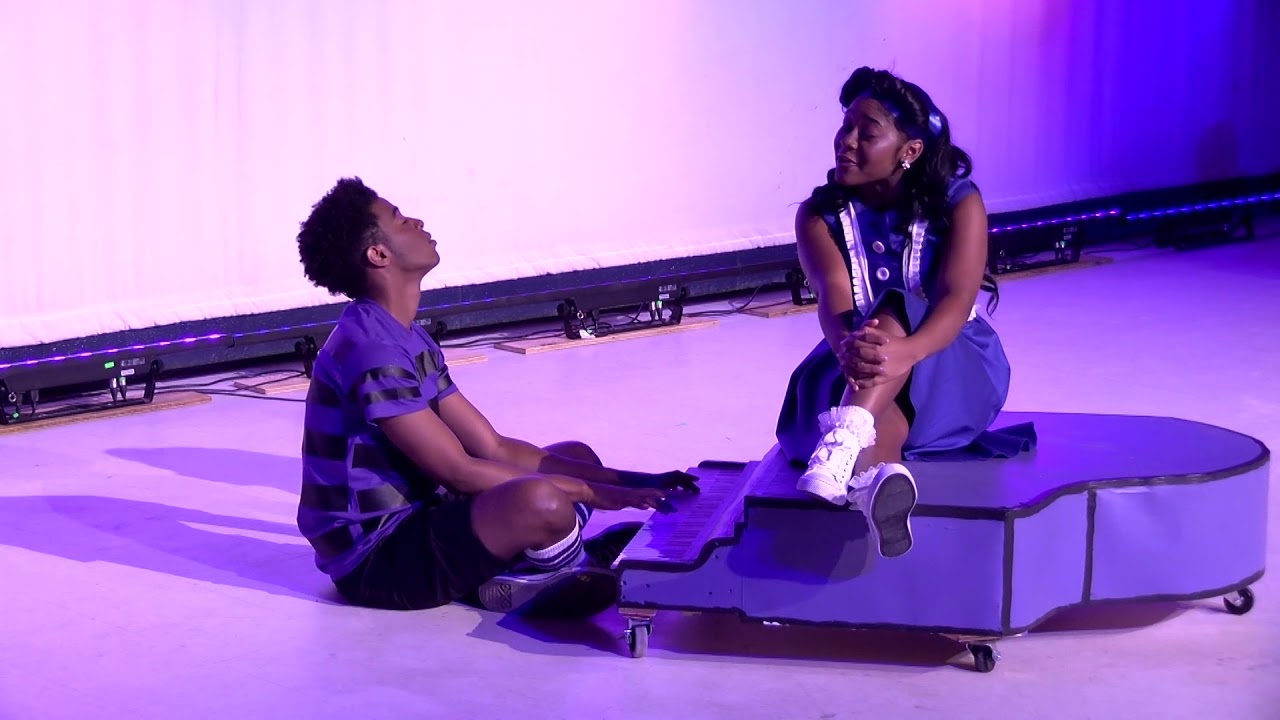
It is basically impossible to think about American musical theater without hitting on the blockheads. You know the ones. A round-headed kid who can't fly a kite, a bossy girl at a psychiatric booth, and a beagle with a disturbing amount of charisma. When You’re a Good Man, Charlie Brown first hit the stage, nobody really expected it to become the most-produced musical in history. Honestly, on paper, it sounds like a disaster. It has no real plot. There isn’t a central conflict that gets resolved in a big, sweeping finale. It’s just a series of vignettes based on Charles M. Schulz’s comic strip, Peanuts. Yet, decades later, it’s still everywhere.
Why?
Because it’s deceptively smart. It captures the weird, existential dread of being five years old.
The Weird Origins of a Broadway Staple
The show didn't start in a massive theater with a million-dollar budget. In 1966, John Gordon and Clark Gesner put together a concept album. They didn't even have the rights from Schulz at first. Gesner sent the demos to Schulz, who liked them enough to give the green light. But it wasn't a "musical" yet. It was just songs.
When it finally moved to an off-Broadway space at Theatre 80 in 1967, the set was literally just some bright-colored blocks. It stayed that way for 1,597 performances. People loved it because it didn't try too hard. You’ve got adults playing children, which usually feels creepy or annoying, but here it feels like a universal truth. We are all just big kids trying to figure out why the "Kite-Eating Tree" exists.
The 1999 Revival Changed Everything
If you grew up in the late 90s or 2000s, the version of You’re a Good Man, Charlie Brown you know is likely the Broadway revival. This is where things got "fancy." They added two new songs by Andrew Lippa: "My New Philosophy" and "Beethoven Day."
They also swapped out the character of Patty (not Peppermint Patty, just "Patty") for Sally Brown. This was a massive shift. Kristin Chenoweth played Sally, and she basically became a superstar overnight because of it. She won a Tony, and suddenly the show had a different energy. It went from a quiet, contemplative piece of "theatre-in-the-round" style art to a belt-heavy, high-energy comedy.
Some purists hated it. Most people loved it.
The Music: More Than Just Simple Melodies
Clark Gesner was a genius at writing lyrics that sound like a kid's internal monologue. Take "The Book Report." It’s a chaotic masterpiece. Four characters are trying to write a report on Peter Rabbit, and they each approach it with their specific neuroses.
- Lucy is just trying to hit the word count. She’s counting every "the" and "and."
- Schroeder is trying to turn it into a deep, artistic meditation.
- Linus is over-analyzing the psychological implications of the story.
- Charlie Brown is just procrastinating until the very last second.
It’s relatable. It’s not just about kids; it’s about anyone who has ever had a deadline.
The title song, "You’re a Good Man, Charlie Brown," sets the tone for the whole experience. It’s a list of backhanded compliments. His friends tell him he’s a "good man," but they also point out he’s a bit of a loser. It’s that duality that makes the Peanuts world so enduring. It’s cynical and sweet at the exact same time.
Why High Schools and Community Theaters Are Obsessed
Go to any town in America. Search for "community theater." I bet you 10 bucks they’ve done this show in the last five years.
The reasons are purely practical, but also emotional. First, the cast is small. You only need six people. That’s a dream for a director on a budget. Second, there’s no "lead" in the traditional sense. Yes, Charlie Brown is the title character, but everyone gets a "moment."
Snoopy has "Suppertime," which is basically a Vaudeville showstopper. Lucy has "The Doctors Is In." Linus has his blanket dance.
But there’s a deeper reason. You’re a Good Man, Charlie Brown deals with failure. Most musicals are about winning—finding love, getting the job, saving the day. Charlie Brown loses. Every single time. He misses the kick. He loses the game. He never talks to the Little Red-Haired Girl.
There is something incredibly healing about watching a character fail and still be told they are a "good man."
The Philosophy of "Happiness"
The show ends with the song "Happiness." It’s a laundry list of small things: a finger shadow, a pizza with sausage, five different crayons, tying your shoes.
In a world that is increasingly loud and stressful, this song hits hard. It argues that happiness isn't a destination or a big achievement. It’s just a collection of tiny, mundane moments. It’s a very "Zen" way to end a musical about a bunch of anxious kids.
Common Misconceptions About the Show
People think it’s just for kids. It isn't.
If you actually listen to the lyrics of "My Blanket and Me," Linus is talking about a psychological crutch. He’s talking about the fear of the unknown. When Lucy conducts her "Crabbiness Survey," she’s dealing with ego and self-perception. This is heavy stuff dressed up in primary colors.
Another misconception is that it’s easy to perform.
Actually, it’s a nightmare for actors. You have to play a child without being "cutesy." If you act like a "wittle kid," the audience will want to leave within ten minutes. You have to play the seriousness of a child. To a kid, a lost pencil is a tragedy. To a kid, a book report is life or death. If the actors don't treat it with that level of stakes, the show falls flat.
Production Details You Might Not Know
- The Original Cast: Bob Balaban played Linus in the original 1967 production. Yes, that Bob Balaban.
- The "Lost" Songs: There are several songs that were written for the show or the TV specials that don't always make it into the stage version, like "Glee Club Rehearsal," which is a nightmare to coordinate but hilarious when done right.
- The Set: The "doghouse" is the most important prop in theater history. It has to be sturdy enough for an adult man to do a dance routine on top of it.
The licensing for the show is handled by Concord Theatricals (formerly Tams-Witmark). They offer two versions: the "Original" and the "Revival." Most groups go with the revival because Sally is a much stronger character than Patty, and the arrangements are a bit more modern.
How to Approach the Show Today
If you’re a director or a performer looking at You’re a Good Man, Charlie Brown, stop thinking about the cartoons. Forget the Sunday funnies.
Focus on the anxiety.
Charlie Brown’s opening monologue is about him wondering if he’s liked. That is a universal human experience. If you play the "realness" of that insecurity, the jokes land better. The comedy comes from the contrast between their sophisticated vocabulary and their small stature.
Essential Checklist for a Successful Production
- Cast for Chemistry: These six people need to feel like they’ve known each other forever.
- Keep the Pacing Fast: The show is a series of "bits." If the transitions take more than five seconds, the energy dies.
- Don't Over-Design: You don't need a 3D house. You need blocks. Let the audience use their imagination.
- Embrace the Silence: Some of the best moments in the show are the quiet ones where Charlie Brown is just sitting on a bench eating a peanut butter sandwich.
What This Musical Teaches Us About Resilience
At the end of the day, the show is a masterclass in resilience. Charlie Brown gets beat down by life in every scene. He’s humiliated. He’s ignored. But in the final scene, he stands there, looks at the audience, and moves on.
He doesn't get the girl. He doesn't win the game. But he survives.
That is why we keep coming back to this musical. It doesn't lie to us. It tells us that life is kinda hard and people can be mean, but as long as there’s a "pizza with sausage" or a "sister and a brother," it’s going to be okay.
To truly appreciate the show, look into the 1999 cast recording. Listen to the way the vocal arrangements work in "Beethoven Day." It’s complex stuff. Then, go back and watch the 1985 animated special version. You’ll see how the material adapts to whatever medium it’s in.
The next step for any theater fan is to look at the "Revised" script vs. the "Original" script. Notice how the removal of the character Patty changed the gender balance and the comedic timing of the group. It’s a fascinating case study in how a show can be "updated" without losing its soul.
Check your local listings. Someone, somewhere, is currently rehearsing "Suppertime." Go see it. Wear a yellow shirt with a zig-zag. You’ll get it.
Actionable Next Steps:
- Listen to the Comparison: Stream the 1967 Original Cast Recording and the 1999 Broadway Revival Recording back-to-back to hear how Andrew Lippa's additions changed the show's DNA.
- Read the Source: Go back to the Peanuts strips from the early 1960s. You will find the exact dialogue used in the musical, proving how timeless Schulz's writing really was.
- Check Licensing: If you're a performer, look up the "Concord Theatricals" page for the show to see the different versions available, including the "Junior" version for younger casts.
- Watch the Tony Performance: Search for the 1999 Tony Awards performance of "My New Philosophy" to see exactly why that revival took the theater world by storm.



