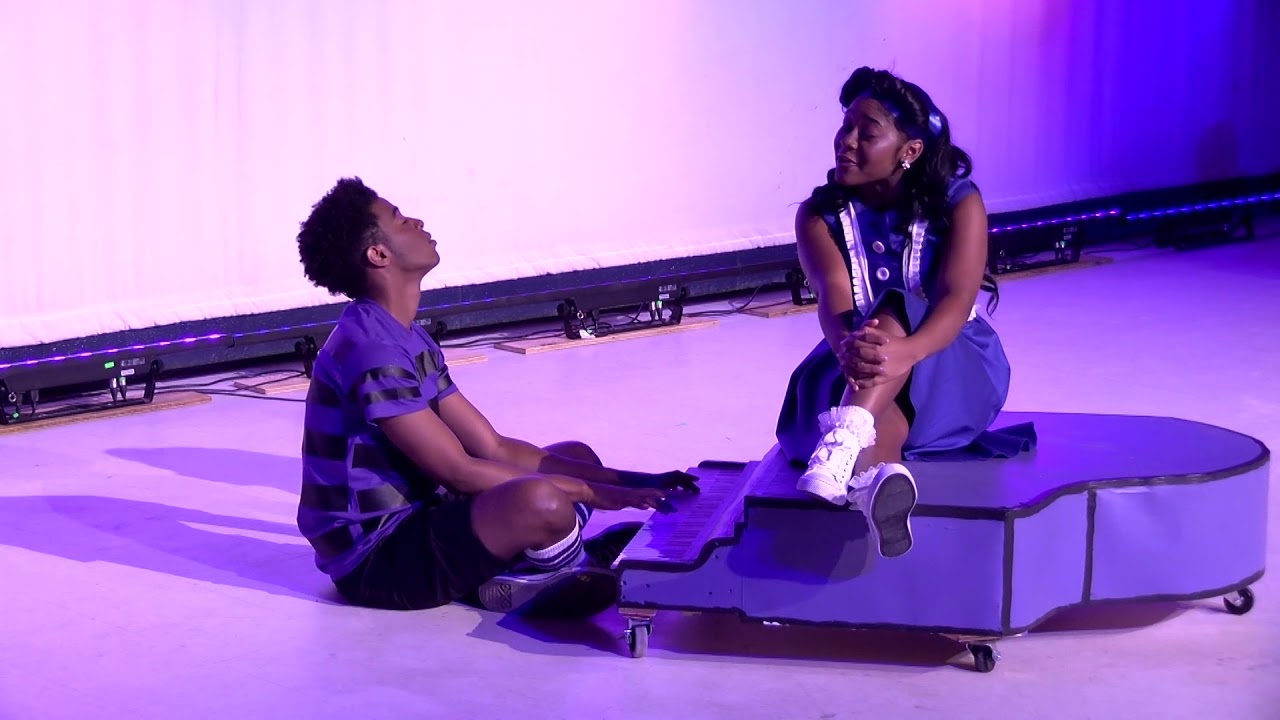
Maybe it’s the zig-zag shirt. Or maybe it’s the fact that we’ve all felt like the world was out to get us at some point. When Clark Gesner first sat down to turn Charles Schulz’s comic strips into a musical, he wasn't just writing a play. He was capturing a vibe. The You're a Good Man Charlie Brown characters aren't just kids; they are vessel for our collective anxieties, joys, and weird little obsessions.
It’s actually kind of wild how well it works.
The show premiered off-Broadway in 1967. It was simple. A few boxes on stage, some bright costumes, and a bunch of adults pretending to be six years old. But people loved it because it felt true. You don't need a massive budget when you have a cast that perfectly mirrors the human condition.
The Round-Headed Kid Himself
Charlie Brown is the heart of the whole thing. He's the "blockhead." But honestly, he’s the most relatable guy in theater history. He isn't a hero in the traditional sense. He loses baseball games. He can't fly a kite. He spends half his time worrying about a "Little Red-Haired Girl" he can't even talk to.
In the musical, his character arc is basically a series of small defeats followed by a tiny, glimmering hope. Take the opening number. The other kids are literally listing his flaws while he’s standing right there. It’s brutal! But he takes it. Why? Because he’s a "good man." He has this relentless, almost annoying persistence.
Schulz always said that Charlie Brown has to lose, because losing is more common than winning. We see ourselves in his failure. When he tries to lunch with the Little Red-Haired Girl and ends up with a paper bag over his head, it’s funny because it’s a nightmare we’ve all lived through. He’s the anchor. Without his quiet desperation, the rest of the high-energy cast would just be noise.
Lucy van Pelt and the Art of the Fuss
If Charlie Brown is the soul, Lucy is the friction. She’s loud. She’s opinionated. She’s basically a five-cent psychiatrist who doesn't actually want to help you. In the 1967 version and the 1999 Broadway revival, Lucy’s role is to challenge everyone.
She wants to be a queen. Literally. She has a whole song about it.
What’s interesting about Lucy is that she isn't just a "mean girl." She’s deeply insecure in her own way. She’s obsessed with Schroeder, a boy who wouldn't notice her if she sat on his piano (which she frequently does). Her "Crabbiness Survey" is a classic bit of musical comedy, but it also shows her desperate need for validation. She wants to be "the most" of something, even if that thing is being a crab.
Kristin Chenoweth actually won a Tony for playing Sally in the revival, but the role of Lucy provides the necessary edge that keeps the show from being too sugary. You need that bite.
Snoopy: The World-Famous Something
You can't talk about You're a Good Man Charlie Brown characters without the beagle. Snoopy is the outlier. While the kids are dealing with homework and social hierarchies, Snoopy is living a thousand different lives in his head.
He's a WWI Flying Ace. He's a wild jungle beast. He's a Joe Cool.
In the musical, Snoopy is often the show-stealer. His song "Suppertime" is a high-energy, gospel-style celebration of... well, eating. It’s a total shift from the existential dread of the kids. Snoopy represents the pure, unadulterated ego. He doesn't care about the baseball game. He cares about his dinner bowl.
Interestingly, the way Snoopy is portrayed has changed over the years. In the original 1967 production, Bill Hinnant played him with a sort of sly, cynical wit. By the time the 1999 revival rolled around, Roger Bart turned him into a high-kicking, show-stopping bundle of energy. Both work. They both capture that "dog-ness" that Schulz drew so well.
Linus, Sally, and the Supporting Players
Linus van Pelt is the philosopher. He’s the one with the blanket. He’s smarter than everyone else but also can’t function without his security object. His song "My Blanket and Me" is a genuine masterpiece of character writing. It starts as a sweet ballad and turns into a frantic dance routine. It perfectly captures that childhood feeling of having one specific thing that makes the whole world feel safe.
Then there’s Sally Brown.
She wasn't in the original 1967 cast. The original show featured a character named Patty (not Peppermint Patty, just Patty). When the show was revived in the 90s, they swapped Patty for Sally, Charlie Brown's younger sister. It was a brilliant move. Sally brings a specific type of "new-age" philosophy. She has "philosophies" for everything—like "No," "Why me?" and "It’s a secret."
Schroeder rounds out the main group. He’s the artist. He’s the one who is completely disinterested in the drama of the others. He just wants to play Beethoven. His refusal to acknowledge Lucy’s flirting is one of the longest-running gags in the show. He represents the person who is so focused on their craft that they miss everything else happening around them.
Why the 1999 Changes Mattered
When the show was updated, the creative team didn't just swap characters. They beefed up the orchestrations and added new songs by Andrew Lippa. This gave the You're a Good Man Charlie Brown characters more room to breathe.
- Sally's inclusion: Added a sibling dynamic that was missing.
- "My New Philosophy": Became a breakout hit that defined Sally’s character.
- Updated Orchesrations: Made the small "jazz trio" sound of the original feel like a full-blown musical.
The swap from Patty to Sally was primarily because Sally had a more distinct personality in the later comic strips. Patty was a bit of a generic "mean girl" from the early 50s. Sally is a ball of chaotic energy.
The Philosophy of Peanuts on Stage
Why do we still perform this show in high schools, community theaters, and professional stages?
It’s because the characters are archetypes. Everyone knows a Lucy. Everyone has a Linus blanket—even if it’s just a specific coffee mug or a lucky shirt. We are all Charlie Brown trying to kick the football.
The show doesn't have a traditional plot. It’s a day in the life. It’s a series of "vignettes." This structure mirrors the comic strip format. You get a joke, a beat, and a transition. It shouldn't work as a two-hour show, but it does because the characters are so well-defined. You don't need a plot when the people on stage are this interesting.
Common Misconceptions About the Cast
A lot of people get the characters mixed up, especially if they only know the TV specials.
First off, Peppermint Patty and Marcie are not in this musical. People always ask where they are. They were prominent in the later years of the strip and the cartoons, but the musical focuses on the "core" neighborhood group. Adding them would make the cast too large and dilute the focus on Charlie Brown’s internal struggle.
Secondly, the characters are often played by adults, but they aren't being adults. They are playing the logic of children. When Linus talks about the theological implications of the Great Pumpkin, he isn't being a "smart-aleck" adult. He is a child who takes his interests very seriously. That’s the secret to acting these roles. You have to play them with total sincerity. If you "wink" at the audience, the magic dies.
How to Bring These Characters to Life
If you’re a performer or a director looking at the You're a Good Man Charlie Brown characters, there are a few "musts" for a successful production.
- Don't play "cute." The biggest mistake is trying to act like a baby. These characters are articulate. They are brooding. They are intense. Play the stakes. For Charlie Brown, failing to fly a kite isn't "adorable." It’s a personal tragedy.
- Find the rhythm. The dialogue is written to mimic the "four-panel" strip. There’s a setup, a development, and a punchline. If the actors miss the "beat" before the punchline, the joke fails.
- Physicality is key. Lucy should take up space. Charlie Brown should look like he’s carrying the weight of the world. Snoopy should be the most agile person on stage.
- Embrace the "blanket." Every character has a "blanket." For Schroeder, it’s the piano. For Lucy, it’s her ego. Identify what each character is holding onto for dear life.
The genius of Charles Schulz was that he didn't talk down to kids. He knew they felt real pain, real anger, and real joy. The musical honors that.
When the cast sings "Happiness" at the end, it’s not a cheesy song. It’s a list of very specific, very small things. A pizza with sausage. Climbing a tree. Catching a firefly. It’s a reminder that even for a "blockhead" like Charlie Brown, life is okay.
Next Steps for Fans and Performers
To truly understand these characters, you should look beyond the script.
- Read the 1960s strips: This is where the musical draws its primary inspiration. You’ll see the exact dialogue used in scenes like the "Rabbit Chase" or the "Baseball Game."
- Listen to both soundtracks: Compare the 1967 Original Cast Recording with the 1999 Revival. You can hear how the characterizations of Snoopy and Charlie Brown evolved over thirty years.
- Watch the 1985 animated version: There is an animated special based specifically on the musical. It’s a great way to see how the songs translate back into the original medium.
- Check the licensing: If you're a theater geek, look up Tams-Witmark (now part of Concord Theatricals) to see the different versions available, including the "Revised" version which is the gold standard for most modern productions.
Understanding these characters isn't just about theater trivia. It’s about recognizing the small, "good man" moments in your own life. Whether you're a "fussy" Lucy or a "blanket-dependent" Linus, there's a piece of this cast in everyone.
Just remember: the kite-eating tree is always out there, but you keep trying to fly the kite anyway. That’s the whole point.



