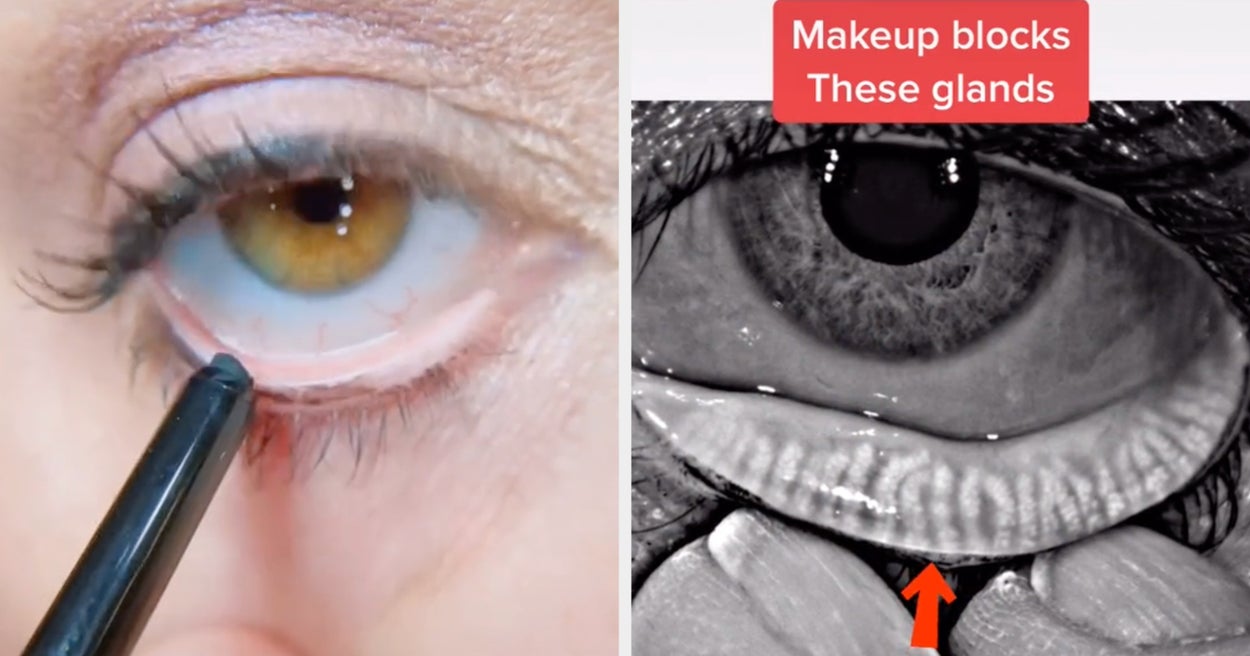
You've probably spent years looking at your eyes in the mirror without actually knowing the name of that tiny, wet strip of skin right above your lower lashes. It’s a weird little anatomical feature. Some call it the "inner rim." Others just call it the place where they get those annoying tiny white bumps. In the beauty and ophthalmology worlds, it's officially known as your waterline.
Understanding your waterline isn't just about nailing a smokey eye or figuring out why your liner keeps smudging. It’s actually a pretty big deal for your eye health. If you mess with it the wrong way, you’re looking at infections, dry eyes, or even long-term damage to the glands that keep your vision clear.
So, What Exactly Is Your Waterline?
Basically, the waterline is the area of skin between your eyelashes and the actual surface of your eyeball. It’s a very narrow, moist transition zone. If you pull your lower eyelid down just a tiny bit, you’ll see it—a pinkish, slick surface.
It’s not just a blank space. It’s home to the Meibomian glands. These tiny openings are crucial. They secrete oil (meibum) that mixes with your tears. Without that oil, your tears would evaporate way too fast. You’d end up with eyes that feel like sandpaper.
Honestly, most people ignore it until something goes wrong. Maybe it gets red. Maybe it gets itchy. Or maybe you realize that the "waterproof" eyeliner you bought is currently migrating into your tear duct.
The Science of the Tear Film
To get why the waterline matters, you have to look at the chemistry of a blink. Every time you shut your eyes, you’re spreading a three-layer sandwich of moisture across your cornea.
The bottom layer is mucus. It helps the tears stick to the eye. The middle layer is water (aqueous), which provides nutrients. The top layer? That’s the oil from those Meibomian glands on your waterline. This oil is the "sealant."
If you clog the waterline with heavy makeup or let bacteria hang out there, the oil can’t get out. This leads to Meibomian Gland Dysfunction (MGD). Dr. Preeya Gupta, a corneal specialist, has often highlighted how common this is among people who "tightline" their eyes every single day. When those glands get blocked, they can eventually atrophy. Once they’re gone, they don’t really come back.
The Tightlining Debate: Style vs. Safety
Tightlining is a huge trend. You take an eyeliner pencil and scribble it directly onto the waterline. It makes your lashes look incredibly thick. It gives that "invisible" makeup look that people love.
But here’s the thing: you’re essentially painting over your eye’s oil vents.
A study published in Eye and Contact Lens tracked how makeup particles move when applied to the waterline. Researchers found that when liner is applied inside the lash line, significantly more particles enter the tear film compared to when it's applied outside. Within five minutes, those tiny bits of wax and pigment are floating around on your eyeball.
Does this mean you can never wear liner there? Not necessarily. But it does mean you need to be picky.
What Happens When You Clog It?
- Styes and Chalazia: These are those painful, red bumps. They’re basically pimples of the eyelid, caused when a gland gets infected or blocked.
- Contact Lens Discomfort: If you wear contacts, that eyeliner film is going to stick to your lens. It gets blurry. It gets irritating.
- Chronic Dry Eye: This is the big one. If your oil glands are constantly stifled, your eyes stay dry, red, and tired-looking.
Keeping Your Waterline Healthy
If you’re a makeup lover, don’t panic. You just need a better strategy.
First, look at your products. If a pencil is scratchy, toss it. You’re dealing with incredibly delicate tissue. You want something creamy but formulated specifically for sensitive eyes.
Hygiene is non-negotiable. Sharpen your eyeliner every single time you use it. This removes the outer layer that might have bacteria from the last use. Also, never, ever share eye products. It sounds like a middle school health class warning, but "pink eye" is a very real consequence of sharing a kohl pencil.
The Removal Process
Removing makeup from the waterline is tricky. You can’t just scrub your eyes with a washcloth. That’s too aggressive.
Use a dedicated eye makeup remover or micellar water. Dip a pointed cotton swab into the liquid and gently—very gently—trace the waterline. You want to lift the pigment off without shoving it into the glands.
Beyond Makeup: Allergies and Irritation
Sometimes your waterline looks "off" even if you haven't touched a makeup brush in weeks.
If it’s bright red and itchy, it might be allergic conjunctivitis. Pollen, pet dander, or even a new face cream can trigger it. The tissue there is super reactive.
Another culprit? Screen time. When we stare at phones, we blink about 60% less than usual. This means the oil on our waterline doesn’t get "pumped" out properly. It gets stagnant. The waterline might look slightly swollen or "foamy" at the corners.
Professional Care and Warning Signs
When should you see a doctor about your waterline?
If you see a "capped" gland—it looks like a tiny, clear or white bubble on the rim—it’s time for a check-up. This is a sign of a blockage. Don’t try to pop it. Seriously. You can cause a massive infection or even permanent scarring.
Optometrists now offer treatments like LipiFlow or intense pulsed light (IPL) therapy specifically to clear out these glands. It’s basically a spa day for your waterline. It sounds extra, but for people with severe dry eye, it’s life-changing.
Actionable Steps for Waterline Health
Stop thinking of your waterline as just a canvas for makeup. Think of it as a functional part of your vision.
- The 20-20-20 Rule: Every 20 minutes, look at something 20 feet away for 20 seconds. And blink intentionally. It keeps the oils moving.
- Check Expiration Dates: Eye products usually expire in 3 to 6 months. If that eyeliner is from two years ago, it’s a petri dish. Get rid of it.
- Warm Compresses: If your eyes feel gritty, a warm compress for five minutes can help melt the oils in the waterline and keep things flowing.
- Avoid "Waterproof" on the Rim: Waterproof formulas are harder to remove and contain harsher solvents. Save them for the outer lash line.
- Look for "Ophthalmologist Tested": It’s not just marketing. These products have been vetted for use near the actual ocular surface.
Your waterline is small, but it’s doing a lot of heavy lifting. Treat it with a bit of respect, keep it clean, and pay attention when it starts looking a little too red or bumpy. Your future self—and your vision—will definitely thank you.



