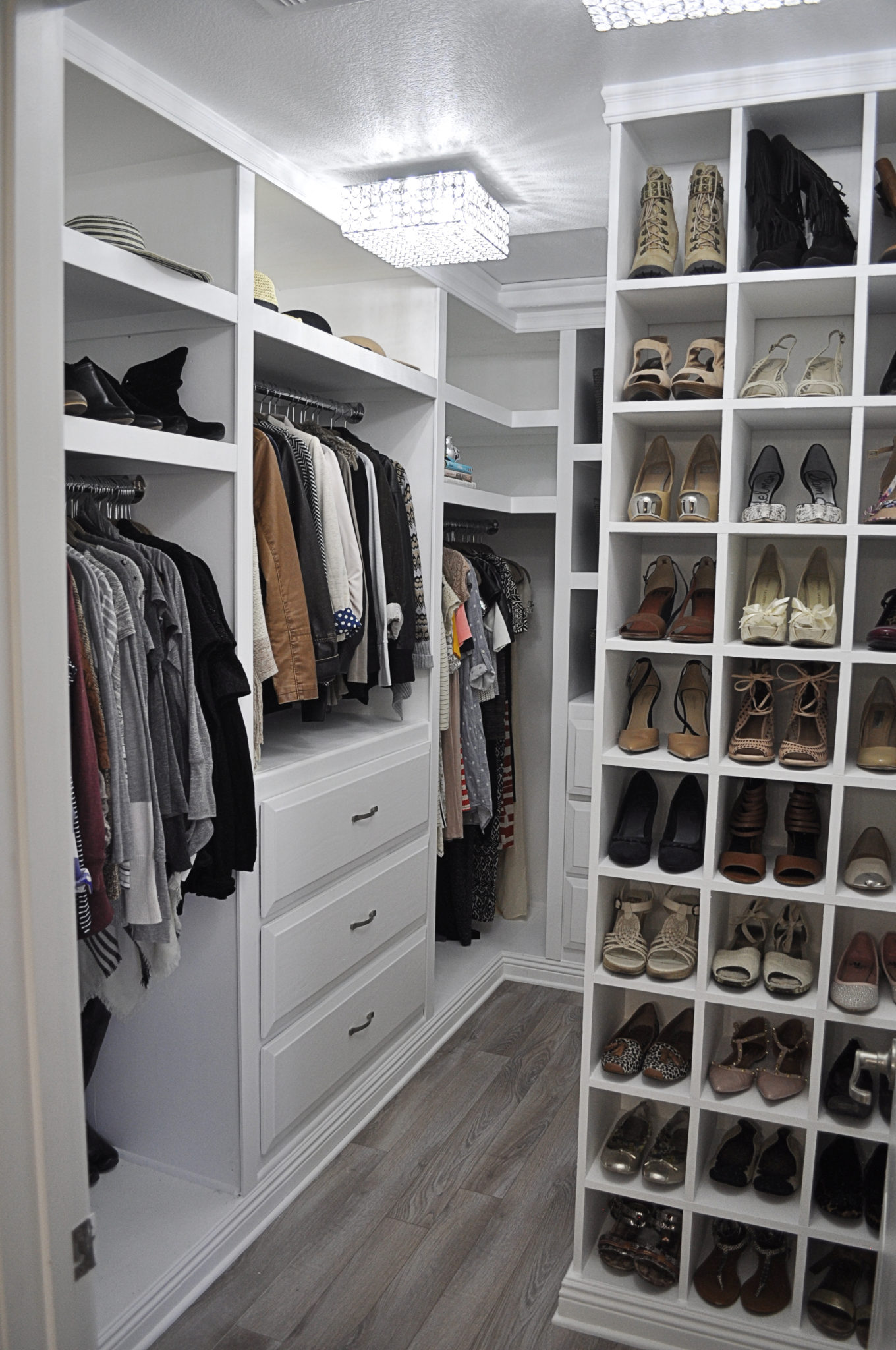
Let’s be real for a second. Most people approach a walk in closet makeover like they’re playing a high-stakes game of Tetris, except they’re losing. You see these pristine Pinterest photos with color-coded cashmere and think, "Yeah, I can do that with a few MDF boards and some brass hardware." Then three months later, your floor is a graveyard for discarded leggings and that one belt you haven’t seen since 2019. It’s frustrating. It's expensive. And honestly? It’s usually because you’re designing for the person you wish you were, not the person who actually lives in your house.
Stop thinking about aesthetics first. Start thinking about friction.
The Brutal Truth About Your Walk In Closet Makeover
Most DIY projects fail because they prioritize "more rods" over "better access." If you have to move three things to get to one thing, you won’t do it. You’ll just leave the one thing on the chair in the corner of your bedroom. This is why professional designers like California Closets or the team at The Container Store focus so heavily on the "reach zone."
Your reach zone is the area between your eyes and your knees. Anything you use daily—your work uniform, your favorite jeans, that one hoodie that makes you feel human—needs to live here. If you’re shoving your everyday sneakers on a shelf that requires a step stool, you’ve already lost the battle. A successful walk in closet makeover isn’t about maximizing storage; it’s about minimizing the effort it takes to stay organized.
Think about the "Bermuda Triangle" of closet design: hanging space, shelving, and drawers. If the balance is off, the whole system collapses.
Why Most Custom Systems Get It Wrong
You’ve probably seen those "all-in-one" kits at big-box retailers. They look great in the box. But here’s the kicker: they’re built for a standardized human that doesn't exist. If you’re five-foot-two, a standard double-hang rod setup is going to leave you staring at the bottom of your shirts while the top rack feels like a workout. Conversely, if you're tall, your "long hang" dresses are going to puddle on the floor.
Customization doesn't have to mean spending $10,000 on solid walnut. It means grabbing a tape measure and actually looking at your clothes. Measure your longest coat. Measure the height of your tallest boots. This is the boring part. It's tedious. It's manual. But it’s the difference between a closet that works and a closet that's just a glorified pantry for your clothes.
Lighting: The Overlooked Secret Weapon
You can’t organize what you can’t see. Most walk-in closets have one sad, flickering overhead bulb that casts shadows exactly where you don’t want them. If you’re serious about a walk in closet makeover, you need to talk about Color Rendering Index (CRI).
Ever walked out of the house thinking you’re wearing black socks only to realize in the sunlight that one is navy? That’s a low CRI problem. You want bulbs with a CRI of 90 or higher. LED strip lighting is the modern gold standard here. You can run them along the underside of shelves or behind the face frames of your cabinetry. It sounds fancy, but you can get plug-in kits for forty bucks that completely change the vibe of the room. It makes the space feel like a boutique rather than a cave.
The Psychology of Open vs. Closed Storage
There’s a huge debate in the design world about drawers versus shelves. Drawers are great for hiding the mess of socks and underwear. They look clean. They feel premium. But they’re also "out of sight, out of mind." If you struggle with clutter, drawers can become "doom bins" where things go to die.
Open shelving, on the other hand, forces accountability. If your sweaters are falling over, you see it immediately. This is where "shelf dividers" become your best friend. They prevent the dreaded "lean" that happens when you pull one shirt out from the bottom of the stack. Acrylic dividers are popular because they disappear, but wire ones are sturdier if you’re stacking heavy denim.
Flooring and the "Third Surface"
We always talk about walls, but what about the floor? A lot of people leave the builder-grade carpet in their closet during a walk in closet makeover. Big mistake. Carpet traps dust, hair, and skin cells—gross, but true—and closets are high-dust environments because of the textile fibers.
Switching to a hard surface like LVP (Luxury Vinyl Plank) or even a polished hardwood makes the space feel bigger and much easier to clean. Plus, it allows for "rolling" elements. Maybe you want a small island or a laundry hamper on wheels? You can't do that effectively on shaggy carpet.
Don't ignore the ceiling either. If you have ten-foot ceilings and you’re only building up to seven feet, you’re wasting prime real estate. Use that top three feet for "seasonal rotation." This is where you put the ski gear in July and the swimsuits in January. Get some uniform, labeled bins. Clear is best so you don't have to guess what's inside, but if you hate the visual clutter, go with solid linen boxes and a really clear labeling system.
Real Talk: The Purge
You cannot organize your way out of a hoarding problem.
Before you buy a single bracket or screw, you have to get rid of the stuff you don't wear. I'm not talking about the "spark joy" thing necessarily—sometimes a plain grey t-shirt doesn't spark joy, but you need it for work. I'm talking about the "it might fit one day" or "I paid a lot for this" guilt. If it hasn't touched your skin in twelve months, it’s taking up valuable square footage in your walk in closet makeover. Sell it on Poshmark, donate it to a local shelter, or just toss it if it’s trashed.
The Logistics of the Build
If you’re going the DIY route, please, for the love of your drywall, find the studs. Closet systems get heavy fast once you load them with 40 pairs of shoes and a winter wardrobe. A standard 2x4 stud is your lifeline. If you can't hit a stud, use high-quality toggle bolts, not those cheap plastic wall anchors that come in the kit. Those will pull out of the wall the moment you hang your heavy wool overcoat.
- Standard hanging height: 84 inches for top rods.
- Double hang: Top rod at 80-82 inches, bottom rod at 40 inches.
- Shelf depth: 12 inches is standard, but 14 inches is better for men's shoes or bulky sweaters.
There’s a nuance to corner units that most people miss. "Dead corners" are where clothes go to be forgotten. Use curved hanging rods or "L-shaped" shelving to keep the flow continuous. If you just butt two straight rods against each other, you lose about 12 inches of hanging space in the intersection. It’s a rookie mistake that’s easily avoided with a bit of planning.
Hardware Matters More Than You Think
Don't skimp on the hinges or drawer slides. Soft-close hardware feels like a luxury, but it’s actually a durability feature. It prevents the constant jarring of the structure, which keeps your screws tight and your shelves level over time. Plus, there’s nothing worse than the sound of a slamming drawer at 6:00 AM when your partner is still sleeping.
Knobs and pulls are the "jewelry" of your closet. You can take a basic IKEA Pax system and make it look like a high-end Italian import just by swapping the plastic handles for heavy unlacquered brass or matte black steel. It’s the cheapest way to elevate the entire look of your walk in closet makeover.
Actionable Steps for Your Transformation
Don't just stare at the mess. Move.
- The Seven-Day Audit: Every time you get dressed this week, notice where you struggle. Are you digging through a pile? Are you reaching too high? Write it down.
- The Tape Method: Use blue painter's tape on your closet walls to "draw" where the new shelves and rods will go. Walk into the space. Does it feel cramped? If you can't comfortably turn around, your design is too deep.
- Empty Everything: You can't do this halfway. Take every single item out. Paint the walls a bright, reflective white (like Benjamin Moore’s Simply White) to bounce light around.
- Install Top-Down: Always start your installation from the top and work your way down. It’s easier to adjust a bottom shelf than it is to move a top-mounted rail once everything else is in place.
- The Hanger Uniformity Rule: Buy 100 matching hangers. Wood, velvet, or heavy-duty plastic—it doesn't matter, as long as they are identical. It instantly reduces visual noise and makes the clothes hang at the same height, which makes browsing much faster.
- Label the Bins: Even if you think you’ll remember where the scarves are, you won't. Labeling creates a psychological barrier against tossing random junk into a bin just to get it off the floor.
A walk in closet makeover is ultimately about reclaiming time in your morning. When you know exactly where your keys, your wallet, and your favorite blazer are, your day starts with a win instead of a frantic search. It’s not about being a minimalist; it’s about being an intentionalist. Build the space for the life you actually lead.