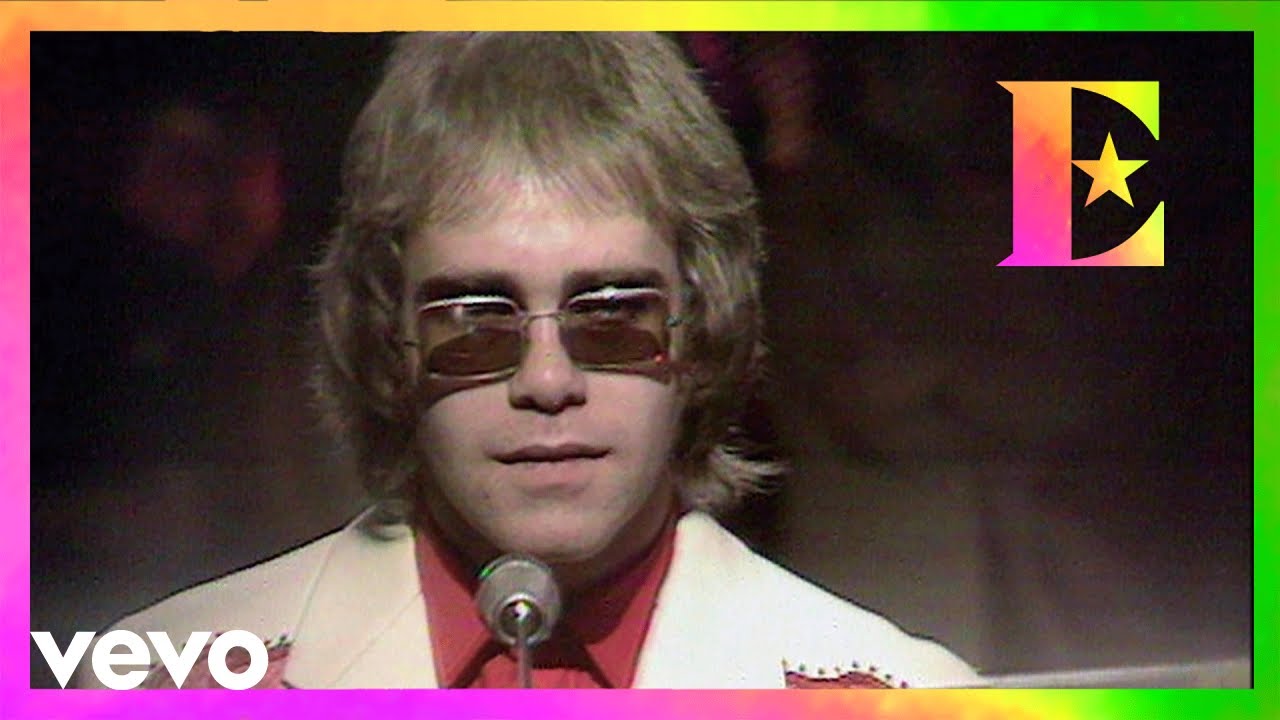
It was 1970. Elton John was basically a nobody. He was still Reg Dwight, a scrawny kid living in his mom’s apartment in Northwood Hills, working as an office boy and trying to figure out how to be a rock star without the "cool" factor. Then came the breakfast that changed everything. Bernie Taupin, Elton’s lifelong lyricist, was sitting at the kitchen table, probably nursing a cup of tea and staring at a grubby piece of exercise paper. He scribbled down some lines about moss on a roof and not having much money.
He handed those tea-stained lyrics to Elton. Elton sat at the piano. Twenty minutes later, Your Song was born.
Honestly, it shouldn’t have worked. It’s a love song where the singer admits he’s bad at writing love songs. It’s clumsy. It’s naive. But that’s exactly why people are still obsessed with it in 2026.
The Weird History of Your Song
Most people think this was Elton’s first-ever release. Nope. It was actually the opening track on his second, self-titled album. But even then, he wasn't the first person to put it out. Believe it or not, the band Three Dog Night actually recorded it first. They were big fans of Elton (he was their opening act at the time) and they included it on their album It Ain’t Easy in March 1970.
They were cool enough not to release it as a single, though. They wanted the "kid" to have his shot.
When Elton’s version finally hit the airwaves, it didn't just climb the charts; it broke them down. It was "McCartney-esque," according to critics at the time, but it had this raw, vulnerable edge that Paul usually polished away. It eventually hit the Top 10 in both the US and the UK, effectively killing off "Reggie" and birthing the legend of Elton John.
What Most People Get Wrong About the Lyrics
There is a huge misconception that Bernie Taupin wrote this for a specific girlfriend. Or even for Elton himself.
Actually, Bernie was only 17 when he wrote those lines. Seventeen! He’s gone on record saying he had almost zero experience with romantic love back then. He was just a kid from the country trying to imagine what it felt like to be head-over-heels.
- The "Green or Blue" Eyes: In the song, Elton sings, "I’ve forgotten if they’re green or they’re blue." Fans used to debate if this was a slight or a sign of true love. Bernie’s take? It’s just the voice of someone so nervous they can’t think straight.
- The "Roof" Line: "I sat on the roof and kicked off the moss." This wasn't some poetic metaphor. Bernie actually sat on the roof of 20 Denmark Street in London, where Elton worked, to find some peace and quiet.
- The Intent: It’s an "innocent" song. It’s the sound of two guys who were still very much children, navigating a world that was about to get very loud, very fast.
Why Your Song Hits Different Today
We live in an era of hyper-produced, perfectly engineered pop. Your Song is the opposite. It’s a diary entry.
When you hear that opening piano trill, you’re not hearing a billionaire in a flamboyant suit. You’re hearing a 22-year-old in a cramped apartment. The song is "bashful," as fans on Reddit and music forums often describe it. It doesn’t demand your attention; it asks for it politely.
John Lennon famously said that when he heard it, he thought, "That's the first new thing that's happened since we (The Beatles) happened." That’s high praise from the guy who wrote Imagine.
The Evolution of a Classic
Elton has performed this song thousands of times. You’d think he’d be sick of it. Yet, in the 2019 biopic Rocketman, the scene where he composes it is treated like a religious experience. Taron Egerton’s version brought a whole new generation into the fold.
And let’s not forget the covers.
- Lady Gaga gave it a powerhouse, theatrical spin.
- Ellie Goulding turned it into a minimalist, breathy ballad that dominated the UK charts in 2010.
- Moulin Rouge! made it a soaring, orchestral climax for Ewan McGregor.
Each version tries to capture that same "I’m just a guy" energy, but nobody does it like the original. The cracks in Elton's early 70s voice are where the magic lives.
What You Can Learn From Elton's "Simplest" Hit
If you’re a creator, or just someone trying to say something meaningful, Your Song is basically a masterclass.
First, stop trying to be perfect. The song literally admits it’s "quite simple." It admits the writer is "forgettin'" things. That vulnerability is what makes it relatable. People don't want to be impressed; they want to be understood.
Second, speed matters. Sometimes the best ideas are the ones that fall out of your head in 20 minutes. If Elton and Bernie had spent six months over-analyzing those lyrics, they might have edited out the "moss" or the "tea stains." They would have "fixed" it until it was broken.
Actionable Takeaways for the Elton Obsessed
If you want to dive deeper into the world of this specific era of Elton’s career, don't just stick to the Greatest Hits.
- Listen to "Skyline Pigeon": It’s from his first album Empty Sky (1969). It’s the precursor to the ballad style he perfected in Your Song.
- Watch the 1970 Troubadour Footage: This was the run of shows in Los Angeles that made him a star. You can see the transition from the shy piano player to the "Rocket Man" in real-time.
- Read Bernie Taupin’s Autobiography: If you want to know what was actually going on in that kitchen in Northwood Hills, Scattershot is the book you need. It’s gritty and doesn’t sugarcoat the early years.
Elton John the song—well, Your Song—isn't just a piece of music. It’s the foundation of a 50-year career. It’s the proof that you don't need a massive budget or a complex metaphor to change the world. You just need a piano, a grubby piece of paper, and something honest to say.
Go back and listen to the original 1970 studio version. Pay attention to the way the strings come in halfway through. It’s not a grand entrance; it’s a gentle swell. That’s the feeling of a legend being born, right there in the middle of a humble "little song."
To truly appreciate the craftsmanship, try playing the song on a piano or guitar yourself. You'll quickly realize that while the sentiment is simple, the chord structure—especially that descent in the verse—is surprisingly sophisticated. It’s a perfect example of "complex made easy," a hallmark of the Elton-Bernie partnership that would define the rest of the 20th century.



