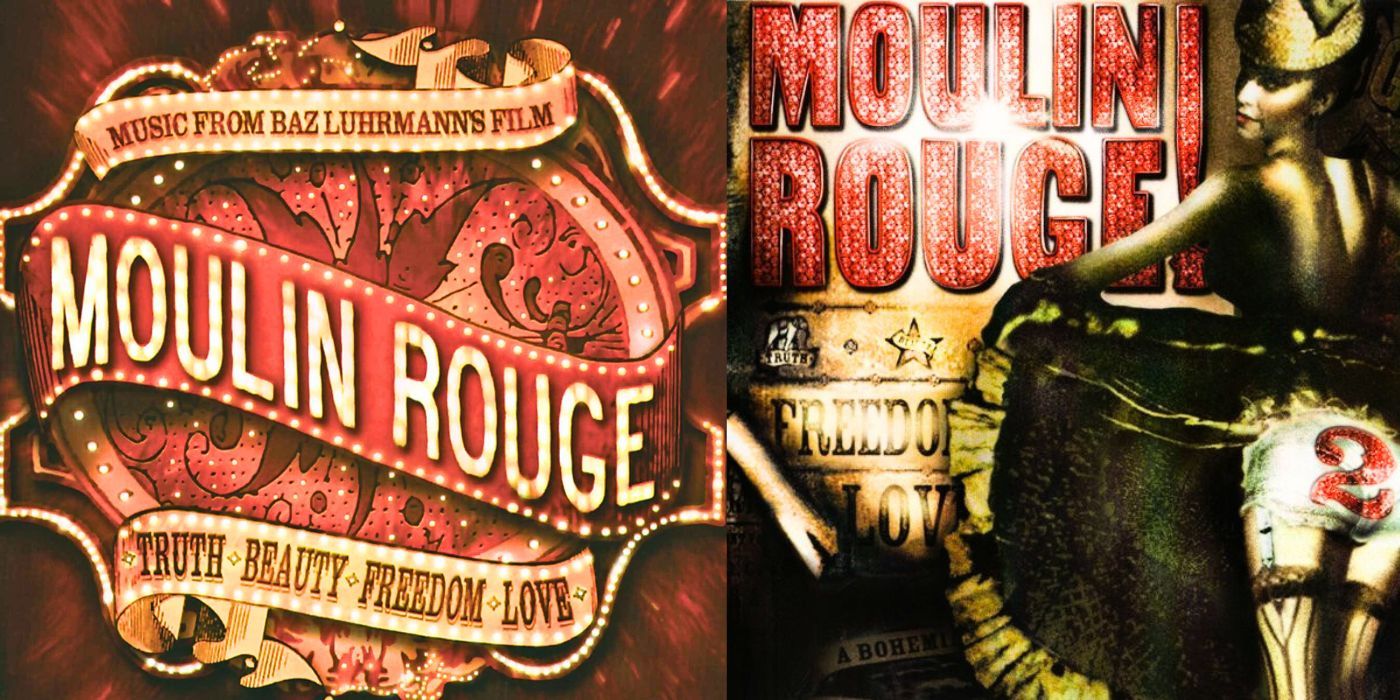
It starts with a few tentative notes on a piano. Then, Ewan McGregor opens his mouth, and suddenly, the entire world of 2001 cinema shifted. We're talking about Your Song in Moulin Rouge, a moment that didn't just redefine the "jukebox musical" but arguably saved the genre from extinction. Honestly, it's kinda wild to think about now. Before Baz Luhrmann took a sledgehammer to the rules of filmmaking, movie musicals were mostly considered dusty relics of a bygone era. Then came Christian, standing on a Parisian rooftop, singing Elton John lyrics to a courtesan, and everything changed.
Baz didn't just use the song. He weaponized it.
Most people don't realize how high the stakes were for this specific track. In the context of the story, Christian is trying to prove he’s a "real" writer. He’s nervous. He’s sweating. Satine, played by Nicole Kidman, thinks he’s just another wealthy mark. When he launches into those famous lyrics—"It’s a little bit funny, this feeling inside"—the movie stops being a frantic, neon-drenched fever dream and becomes a raw, human confession. It’s the pivot point. Without this song working perfectly, the rest of the movie’s emotional weight just kind of evaporates into the Bohemian air.
The Secret History of the Your Song Cover
Did Elton John like it? That’s usually the first thing people ask. The answer is a resounding yes, but the path to getting it on screen was more complex than just signing a check. Luhrmann had to convince the legends of rock and pop that their music wouldn't be parodied. He wanted to treat these songs as the "new standards," much like how Cole Porter or Irving Berlin were used in the 40s.
Bernie Taupin, who wrote the original lyrics, has often spoken about how the song is meant to be innocent. It’s a "first love" song. In Your Song in Moulin Rouge, McGregor captures that exact vulnerability. He isn't trying to out-sing Elton. He isn't doing a Vegas impression. He’s singing like a guy who just found the right words for the first time in his life. It’s messy. It’s breathless.
Craig Armstrong’s arrangement deserves a lot more credit than it usually gets. He took a folk-pop ballad and infused it with sweeping, orchestral grandeur that matches the visual scale of the Moulin Rouge. If you listen closely to the film version versus the soundtrack edit, the film version is full of diegetic noise—the sound of footsteps, the rustle of clothes, and Satine’s shocked gasps. It makes the experience feel tactile.
Why Ewan McGregor’s Vocal Performance Works
He’s not a Broadway belter. And that’s exactly why it works.
If you’d cast a perfect, polished singer, the scene might have felt clinical. McGregor has this slight rasp, a bit of a break in his voice when he hits the higher register in the bridge. It feels authentic. When he hits that big "How wonderful life is, now you’re in the world," it’s a shout of joy as much as it is a musical note.
Interestingly, David Bowie was originally considered for a massive role in the musical landscape of the film (he eventually provided the "Nature Boy" cover), but the core of the movie stayed anchored in this Elton John classic. The choice to keep the arrangement relatively simple at the start—just piano and voice—allows the audience to breathe after the chaotic "Zidler’s Rap" and "Can Can" sequences that open the film. You need that contrast. You need the silence before the storm.
The Elephant Medley Connection
You can't really talk about Your Song in Moulin Rouge without mentioning how it bleeds into the "Elephant Love Medley" later. The song acts as a motif. It’s Christian’s "thesis statement." While the movie is packed with hits from Madonna, Queen, and T-Rex, "Your Song" is the one that Satine actually falls for. It’s the bridge between the gritty reality of the brothel and the idealized world of the "Children of the Revolution."
Misconceptions About the Recording Process
There’s a common myth that all the singing in Moulin Rouge! was live on set. That’s not quite true. While some snippets were captured live to maintain the acting beats, most of it was recorded in a studio under the guidance of music director Marius de Vries. However, McGregor and Kidman had to perform the songs hundreds of times on set to get the lip-syncing to look that visceral.
The "Your Song" sequence was particularly grueling because of the choreography on the rooftop. They were moving around a giant, stylized elephant structure, dealing with wind machines and complex lighting cues. Keeping the intimacy of a ballad while standing on a giant prop is no small feat.
- The Tempo: The movie version is slightly slower than Elton’s 1970 original, giving the lyrics more room to land.
- The Key: It was transposed to fit McGregor’s natural tenor range, ensuring he could hit the "sweet spot" of his voice without sounding strained.
- The Reaction: Kidman’s reaction in the scene wasn't just acting; she’s gone on record saying McGregor’s voice genuinely surprised the cast and crew.
The Cultural Ripple Effect
After 2001, every musical tried to do what Moulin Rouge did. Some succeeded (Chicago), many failed (the jukebox musical craze of the mid-2000s). But Your Song in Moulin Rouge remains the gold standard for how to reinterpret a classic. It’s been covered by dozens of artists since, and it’s a staple of the Broadway adaptation that premiered years later.
But the Broadway version is different. On stage, the song is often shared or shifted in context. There’s something about the film’s version—the way the camera swoops over a fake Paris—that keeps it trapped in amber. It’s a perfect alignment of cinematography, editing, and a song that was already perfect to begin with.
Sometimes, people argue that the movie is "too much." It’s hyper-active. It’s loud. It’s edited like a music video on caffeine. But when that song starts, everything stops. It’s the eye of the hurricane.
Actionable Takeaways for Fans and Creatives
If you're looking to revisit this soundtrack or you're a creator looking at how to use licensed music in your own work, keep these points in mind:
- Listen to the "Extended" Soundtrack: There are versions of the track that include more of the orchestral swell from the film’s score. It’s a much more immersive experience than the radio edit.
- Analyze the "Pivot" Moment: If you’re a filmmaker, study how Luhrmann uses "Your Song" to change the genre of the film mid-stream—from comedy to romance. It’s a masterclass in tonal shifting.
- Check out the Broadway Cast Recording: Compare Aaron Tveit’s version to Ewan McGregor’s. Tveit has a more technical, polished musical theater voice, which offers a totally different perspective on the same lyrics.
- Watch the 4K Restoration: If you can find the high-definition versions, the detail in the "Your Song" sequence—from the textures of the costumes to the glitter in the air—adds a whole new layer to the emotional impact.
The reality is that Your Song in Moulin Rouge shouldn't have worked. It should have been cheesy. It should have felt like a cheap cover. Instead, it became the heartbeat of a masterpiece. It reminded us that even if a song has been played a million times on the radio, in the right mouth and at the right moment, it can still feel brand new.
Go back and watch that scene again. Look at the way McGregor’s Christian looks at the camera, then away, then back. It’s not just a song; it’s a character study. And that is why, twenty-plus years later, we’re still talking about it.



