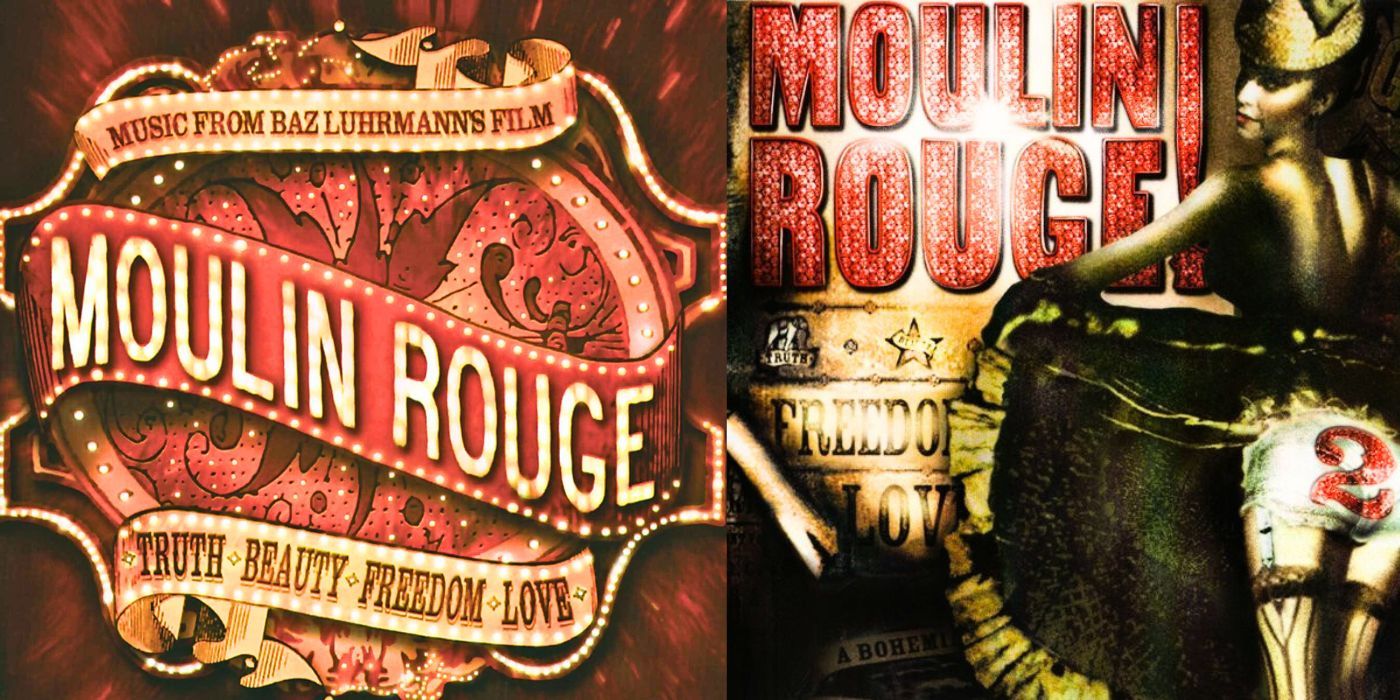
It starts with those few piano chords. You know the ones. It's that hesitant, almost shy intro that Elton John made famous back in 1970, but when Ewan McGregor opens his mouth in Baz Luhrmann's 2001 fever dream, something shifts. Your Song from Moulin Rouge isn't just a cover. It's a cinematic reset button.
Honestly, most jukebox musicals feel like karaoke with a budget. They’re fine, sure. But "Your Song" in the context of Christian and Satine’s first real meeting is different because it stops being a pop hit and starts being a script. It’s the moment the movie stops being a chaotic, neon-drenched music video and starts being a story about people.
People still argue about it. Some purists think you can't touch Elton. Others think the 2001 version is the definitive "romantic" take. Whatever side you're on, you can't deny the cultural footprint.
The Day Christian Met Satine (and the Elephant)
Let’s look at the staging. It’s ridiculous. Christian is a penniless writer, Satine is a courtesan who thinks he’s a Duke, and they’re inside a giant plaster elephant. The setup is pure farce. Then, the music kicks in.
Craig Armstrong’s arrangement did a lot of heavy lifting here. Unlike the original version, which feels like a guy at a piano in a dusty studio, the Moulin Rouge! version builds like a Broadway showstopper. It starts small. Ewan McGregor’s voice is breathy, almost nervous. It sounds like a guy who’s never said these words out loud before.
Then the strings hit.
Suddenly, it’s not just a song; it’s an explosion. When McGregor hits that "How wonderful life is now you're in the world" line, the movie literally changes its visual language. Clouds appear. They start dancing on the roof. It’s incredibly cheesy, but in the world Baz Luhrmann built, it’s the only thing that makes sense.
Why Ewan McGregor Was the Right Choice
They could have hired a "singer." You know the type—someone with a four-octave range who hits every note with clinical precision. But Luhrmann wanted an actor who could sing, not a singer who could act. There’s a crack in McGregor’s voice during the high notes that feels more "real" than a perfect studio recording.
It’s about the vulnerability.
If you listen to the soundtrack version versus the film version, there are slight differences in the "acting" of the lyrics. In the film, he’s reacting to Nicole Kidman’s face. It’s a conversation. That’s the secret sauce of Your Song from Moulin Rouge. It’s the sound of a man falling in love in real-time.
The Elton John Approval Factor
Believe it or not, getting the rights to these songs wasn't a given. Elton John and Bernie Taupin are notoriously protective of "Your Song." It’s their baby. Bernie Taupin wrote the lyrics in 1967 when he was just 17 years old, allegedly sitting at Elton’s mother’s kitchen table.
It’s a song about being young and broke and having nothing to offer but a poem.
That’s exactly who Christian is. When Elton John heard the version for the film, he didn't just give it a thumbs up; he became a huge fan of the reimagining. It’s one of the few instances where the original artist admits the new context adds a layer they hadn’t considered. The song was originally a simple, folk-adjacent pop tune. Luhrmann turned it into an operatic declaration.
The Impact on the Jukebox Musical Genre
Before 2001, jukebox musicals were often seen as "lesser." People thought they were lazy. Moulin Rouge! changed that perception by showing how you could take a well-known song and re-contextualize it so deeply that the audience forgets they've heard it a thousand times before.
Think about it:
- The song acts as a bridge between the 19th-century setting and the 21st-century audience.
- It breaks the fourth wall of the "musical" by having the characters acknowledge the beauty of the lyrics.
- It sets the emotional stakes for the entire tragedy to follow.
Without the success of this specific sequence, we might not have Mamma Mia!, Across the Universe, or even Rocketman in the way we see them today.
Technical Layers: Orchestration and Production
If you’re a music nerd, you’ve gotta appreciate what Marius de Vries and Craig Armstrong did with the production. They didn’t just add a beat. They layered it with a full orchestral sweep that mimics the "Wall of Sound" technique but keeps it focused on the vocal.
There’s a specific moment—about two-thirds of the way through—where the brass comes in. It’s triumphant. It’s the sound of the "Bohemian Revolution" that Christian keeps talking about.
A lot of people don’t realize that the version in the movie is actually a medley of sorts, or at least it’s chopped up to fit the dialogue. The soundtrack version is a clean 3:38, but the film version breathes with the actors' pauses. It’s a masterclass in film scoring where the song is the score.
What People Get Wrong About the Lyrics
There’s a common misconception that "Your Song" is a "perfect" love song. It’s actually a very clumsy one.
"I know it's not much but it's the best I can do." "My gift is my song and this one's for you."
These are the lyrics of someone who is incredibly self-conscious. That’s why it works so well for Christian. He’s a writer who can’t find the words until he steals someone else’s (meta-commentary at its best). The song isn't about being smooth; it's about being honest.
When McGregor sings it, he leans into that clumsiness. He isn't trying to be a rockstar. He’s trying to convince a woman that he’s worth her time even though he has no money.
Comparison: 1970 vs 2001
| Feature | Elton John (1970) | Ewan McGregor (2001) |
|---|---|---|
| Vibe | Intimate, singer-songwriter, fireplace vibes | Epic, theatrical, soaring |
| Vocal Style | Soulful, slightly gravelly | Bright, theatrical, "actorly" |
| Instrumentation | Piano-driven, acoustic guitar | Full orchestra, cinematic swells |
| Key Purpose | A standalone radio hit | A narrative plot point |
Honestly, they’re both perfect for different moods. Elton’s version is for a rainy Sunday. Ewan’s version is for when you want to feel like you’re standing on top of a giant elephant in Paris.
The Cultural Legacy 25 Years Later
It’s been over two decades. People still sing this at weddings. It’s a staple of "Best Movie Musical Moments" lists.
But why?
Maybe it’s because it represents a specific kind of earnestness that we don’t see much anymore. Modern movies are often afraid of being "cringe." They use irony or meta-jokes to deflect emotion. Moulin Rouge! and Your Song don't do that. They are 100% sincere.
When Christian sings, he’s not being ironic. He’s not "winking" at the camera. He means every single word. That sincerity is infectious. It’s why the song went platinum on the soundtrack charts and why it still gets millions of streams every year.
How to Experience "Your Song" Today
If you haven't watched the movie in a while, go back and look at the "Elephant Love Medley" followed by "Your Song." It’s a 15-minute stretch of cinema that basically defines the early 2000s aesthetic.
For those who want to dig deeper into the music:
- Listen to the "Placido Domingo" cameo. Yes, that's actually him as the "Moon" singing the operatic backing vocals. Most people miss that.
- Check out the Broadway cast recording. Aaron Tveit takes a crack at it in the stage musical version. It’s more "polished" than Ewan’s, but it has a different kind of power.
- Watch the 4K restoration. The colors in the "Your Song" sequence are meant to be seen in high definition. The saturation is a choice.
Actionable Takeaways for Music Lovers
If you're a musician or a creator, there’s a lot to learn from Your Song from Moulin Rouge.
- Context is King. You can take an old idea and make it feel brand new just by changing the "why" behind it.
- Embrace Imperfection. Ewan McGregor’s vocal isn't "perfect," and that’s exactly why people love it. It feels human.
- Go Big or Go Home. If you're going to do a cover, don't just copy the original. Change the arrangement. Add strings. Make it your own.
The song remains a benchmark for how to use popular music in film. It isn't just background noise; it's the heart of the movie. Whether you're a die-hard Elton fan or a musical theater nerd, there's no denying that this specific version changed the way we hear those famous lyrics. It made us believe that, for a few minutes, life really was wonderful just because someone was in the world.
To truly appreciate the craft, listen to the track with high-quality headphones. Pay attention to the way the piano fades out at the very end, leaving just a tiny bit of reverb. It’s the sound of a moment ending, but the feeling staying behind.
Go watch the scene again. Pay attention to Nicole Kidman’s eyes—the way she goes from laughing at him to being completely mesmerized. That’s the power of a great song used perfectly. And honestly, that’s all you really need to know about why it still matters.



