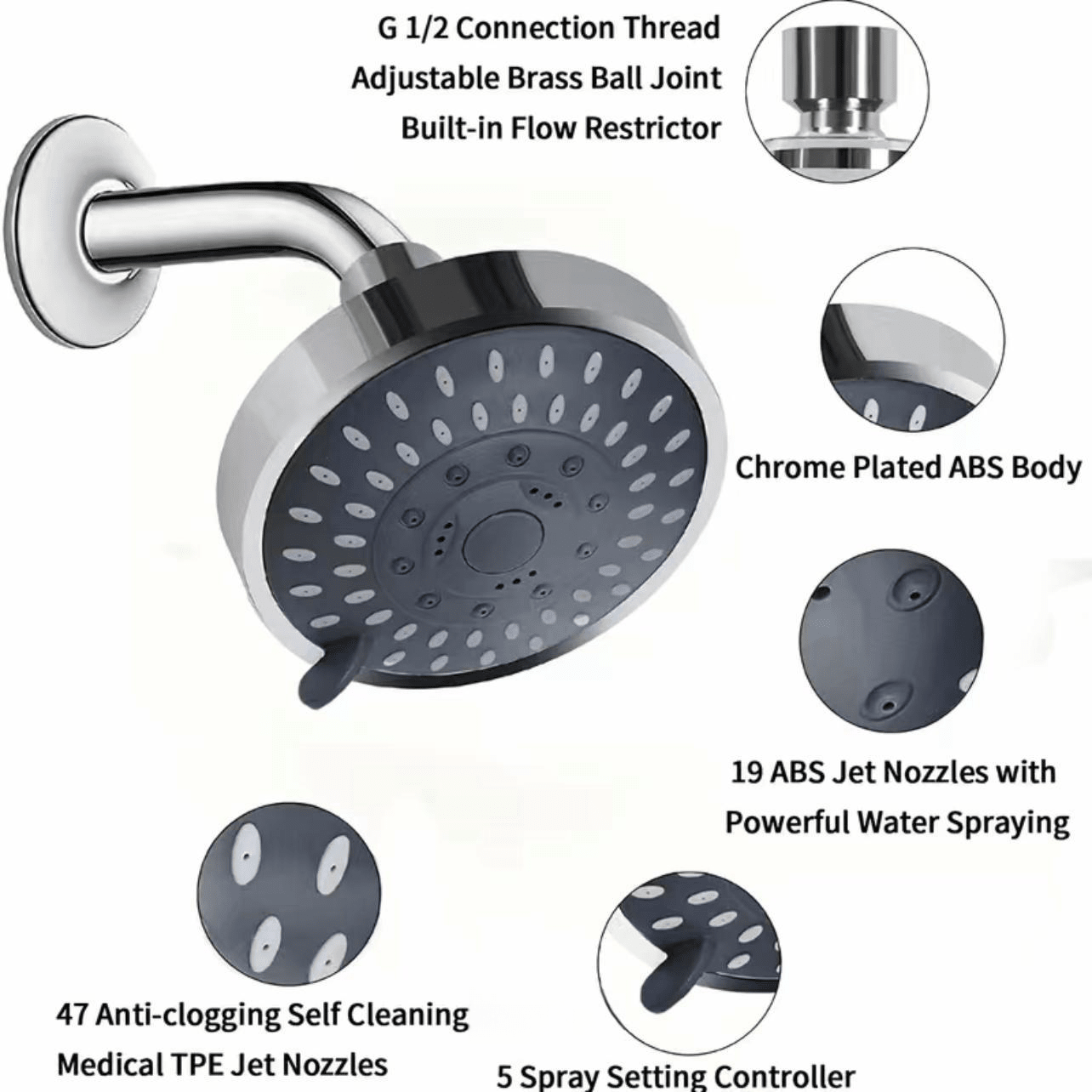
Water pressure shouldn't feel like a suggestion. Honestly, most people just accept a mediocre shower head in bathroom setups because they think it’s a "house problem" or a "plumbing issue." It’s usually just scale. Calcium. Magnesium. The invisible rocks living in your pipes.
You stand there. You wait for the spray to hit that one spot on your shoulder, but instead, it’s a pathetic trickle. Or worse, one single high-pressure stream is shooting sideways, stabbing you in the eye while the rest of the nozzles are dead. It’s annoying. It’s a bad way to start a Tuesday. But most of us just deal with it until the thing literally falls off the wall.
Water quality in the United States varies wildly, and your bathroom hardware is the front line of that battle. If you live in a place like Phoenix or San Antonio, your water is basically liquid rock. According to the U.S. Geological Survey, hard water is found in about 85% of American homes. That "white crusty stuff" on your fixtures? That’s the culprit. It’s not just ugly; it’s a flow-killer.
The Low-Flow Lie and What Actually Works
In 1992, the Energy Policy Act changed everything. It mandated that new shower heads couldn't exceed 2.5 gallons per minute (GPM). Then, the EPA’s WaterSense program pushed it further to 2.0 GPM. This is great for the planet, but it’s why your modern shower feels like a leaky teapot compared to the fire hose your grandparents had in the 70s.
Pressure and flow are different things. You can have a low-flow head that feels powerful if the engineering is right.
Look at brands like High Sierra or Nebia. They use different tactics. High Sierra uses a single-hole nozzle design that doesn't clog easily and creates large, heavy drops that retain heat. Nebia uses atomization—basically turning your shower into a controlled cloud. It’s weird at first. You feel like you’re standing in a warm mist, but it covers more surface area with less water.
Then there’s the "flow restrictor." It’s that little plastic disk, usually green or pink, hidden behind the screen in the neck of the unit. While removing it technically voids the WaterSense certification and might even be against local drought ordinances in places like California (where the limit is 1.8 GPM), many DIYers pull them out with a pair of needle-nose pliers the second they get home.
Rain Heads vs. Handhelds: The Great Divide
People see those giant 12-inch rain heads on Pinterest and think they want one. They look expensive. They look like a spa. But here is the reality: unless you have a dedicated high-capacity water heater and massive 3/4-inch plumbing lines, a rain head is often a disappointment.
Gravity is the only thing powering a rain head. If you don't have enough "head pressure," the water just falls off you. It doesn't rinse shampoo out of thick hair. It just... lingers.
Handhelds are the superior choice for real life. Think about it. You can wash the dog. You can rinse the soap off the far wall of the tub without a bucket. You can actually reach your lower back.
Material Matters More Than Finish
Don't get distracted by the "Brushed Nickel" or "Oil Rubbed Bronze" labels. That’s just the paint. What’s inside?
- Plastic (ABS): Most affordable heads are plastic. They don't rust, which is a plus, but the threads can strip if you over-tighten them.
- Solid Brass: This is the gold standard. It’s heavy. It’ll last thirty years. It also costs three times as much.
- Zinc Alloy: Usually found in the "middle ground" price tier. It’s fine, but it can corrode over time if the plating chips.
If you’re buying a new shower head in bathroom remodels, feel the weight. If it feels like a toy, it’ll perform like one.
The Biofilm Situation Nobody Wants to Talk About
Microbiology enters the bathroom. A study led by Noah Fierer at the University of Colorado Boulder found that shower heads are hotspots for "biofilms"—slimy layers of bacteria. Specifically, Mycobacterium.
These little guys love the warm, dark, damp environment inside your shower head. When you turn the water on, the spray aerosolizes the bacteria, and you breathe it in. For most healthy people, it’s a non-issue. But if you have a compromised respiratory system, it’s something to think about.
Plastic heads tend to host more bacteria than metal ones. Why? Because the porous nature of some plastics gives the biofilm a better "grip." Switching to a metal faceplate or at least cleaning your head every few months isn't just about flow; it's about hygiene.
Cleaning the Gunk Without Breaking Things
Stop using bleach. Please.
Bleach can actually encourage the growth of some bacteria in biofilms, and it’s harsh on the rubber nozzles. The pro move is simple: white vinegar.
- Get a gallon-sized Ziploc bag.
- Fill it halfway with plain white vinegar.
- Rubber band that bag around the shower head so the nozzles are fully submerged.
- Leave it overnight.
In the morning, run the hot water. You’ll see little white flakes shooting out. That’s the calcium breaking free. If you have a head with those "rub-clean" silicone nozzles, just massage them with your thumb while the water is running. It pops the scale right out. It’s satisfying. Sorta like popping bubble wrap, but for plumbing.
Why Your "High Pressure" Head Might Be a Scam
You’ve seen the ads on social media. The "Ionic Filtration" shower heads with the little colorful beads in the handle. They claim to "soften" water and "ionize" your skin.
It’s mostly marketing fluff.
Those beads do almost nothing for water hardness. To truly soften water, you need an ion-exchange system with salt, which is usually a large tank in your garage or basement. Those tiny beads don't have enough contact time with the water to actually change its chemical makeup.
The "high pressure" feel they provide usually comes from tiny, laser-drilled holes in a metal plate. It works—for a week. Then, because the holes are so small, a single grain of sand or a tiny bit of calcium clogs them completely. Suddenly, you have a high-pressure jet shooting toward the ceiling.
Stick to reputable brands. Kohler, Moen, Delta, or even the niche ones like HammerHead Showers. They use standard engineering that’s easier to maintain.
Installation Fails to Avoid
You don't need a plumber to change a shower head in bathroom setups. It’s a five-minute job. But people still mess it up.
First, the tape. Teflon tape (Plumber's tape) should be wrapped clockwise around the threads. Why? Because you screw the shower head on clockwise. If you wrap the tape the other direction, the act of screwing on the head will just unwrap the tape and bunch it up. It’ll leak.
Second, don't use a massive pipe wrench. You’ll mar the finish. Use a crescent wrench and wrap a rag around the shower arm first. And don't over-tighten. Hand-tight plus a quarter turn is usually plenty. If it leaks, add more tape; don't just keep cranking on it until the plastic cracks.
Moving Toward a Better Experience
Standardized plumbing is your friend. Almost every shower arm in the U.S. uses a 1/2-inch NPT thread. This means you can swap parts easily.
If you're unhappy with your spray, you don't necessarily need a whole new system. Sometimes just swapping the hose on a handheld unit for a longer, "no-kink" metal hose makes the whole experience feel more premium.
Think about the height, too. If you’re tall and the shower arm is low, get an "S-pipe" or an adjustable extension arm. You shouldn't have to do a limbo dance just to get your hair wet.
Actionable Next Steps
- Check your GPM: Grab a gallon bucket and a stopwatch. If it takes less than 24 seconds to fill, you’re using more than 2.5 GPM. If it takes a full minute, you’ve got a major clog or a very restrictive head.
- The Vinegar Soak: Do this tonight. Even if you think your flow is fine, you’ll be surprised at the difference a clear nozzle makes.
- Audit the Hose: If your handheld hose is stiff plastic that fights you every time you move it, spend $20 on a stainless steel replacement hose. It’s the single best "quality of life" upgrade you can make in a bathroom.
- Assess the "Why": Are you replacing the head because of pressure, or because the spray pattern is too narrow? Narrow patterns feel "stronger" but are annoying for rinsing. Wide patterns feel "softer" but are more relaxing. Choose based on your morning routine, not just aesthetics.
Stop settling for a bad shower. It’s the one place where you’re supposed to relax. If your hardware is fighting you, it’s time to swap it out. It's cheap, it's fast, and it's one of the few home improvements you’ll actually notice every single day.