You’re twenty-eight years old, maybe twenty-nine, and suddenly your life feels like a house of cards in a high wind. You might be staring at your partner thinking, "Who even are you?" or sitting in a cubicle wondering why you spent four years on a degree for a job you secretly despise.
It’s not just a "quarter-life crisis" or some vague bout of millennial anxiety. If you look at your saturn return natal chart, you’ll see that a giant celestial body—one with massive rings and a reputation for being a cosmic drill sergeant—has finally made its way back to the exact spot it occupied when you were born.
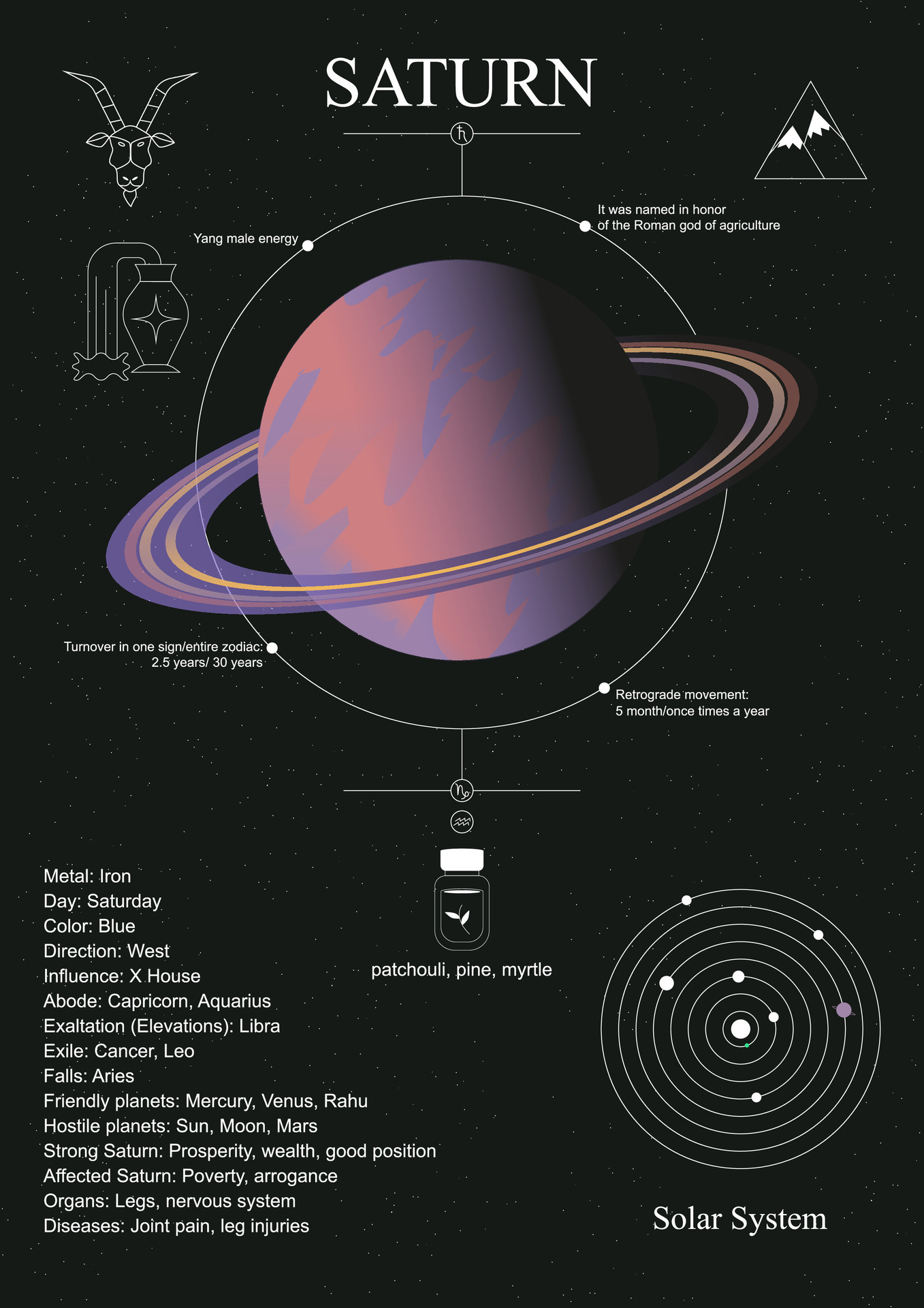
Saturn takes roughly 29.5 years to orbit the sun. When it returns to its birth position, it’s basically time for your first performance review from the universe.
It’s heavy. It’s loud. It’s unavoidable.
What the Saturn Return Natal Chart Is Actually Doing
Most people think astrology is just about your Sun sign, but Saturn is the planet of boundaries, time, and karma. In a saturn return natal chart, this planet acts as a structural engineer. It walks through the foundation of your life and thumps the walls to see what’s solid and what’s rot.
If you built a career on a lie, Saturn knocks it down. If you’re in a relationship because you’re afraid of being alone, Saturn makes that loneliness feel unbearable until you leave.
It sounds terrifying, right? But honestly, it’s the most honest transit you’ll ever experience. Astrologer Liz Greene, in her seminal work Saturn: A New Look at an Old Devil, argues that Saturn isn't "malefic" or "evil" in the way medieval astrologers thought. Instead, it represents the "Gatekeeper." You cannot pass into true adulthood without paying the toll.
The placement of Saturn in your specific chart determines how this manifests. Someone with Saturn in the 7th House will likely see their relationships crumble or formalize. Someone with Saturn in the 10th House? They’re going to have a massive reckoning regarding their public status or career.
The Three Phases of the Return
It doesn’t just happen in a day. It’s a three-year process, typically spanning from ages 27 to 30.
The first phase is the Shadow Phase. You start feeling a weird, low-level pressure. You’re noticing that your old coping mechanisms—maybe partying until 3 AM or ignoring your mounting credit card debt—don't feel fun anymore. They feel like a weight.
Then comes the Exact Return. This is when Saturn sits at the precise degree of your natal Saturn. This is the "tower moment."
- Everything that isn't working gets removed.
- Responsibilities increase significantly.
- You realize time is finite.
Finally, there’s the Release. By age 30 or 31, the pressure lifts. You look around and realize the wreckage has been cleared, and you're finally building something that actually belongs to you.
Why Your House Placement Changes Everything
You can't just read a general horoscope for this. You have to look at your saturn return natal chart to see which "house" Saturn lives in.
If Saturn is in your 2nd House, the crisis is about money and self-worth. You might lose a job or realize you’ve been using shopping to mask a lack of confidence. If it’s in the 4th House, it’s about home and family. Maybe you finally move out of your parents' basement, or you have to deal with a difficult family legacy.
Take the 6th House, for example. This is the house of health and daily routines. A Saturn return here often brings a health scare or a total overhaul of how you treat your body. It’s the universe saying, "You can’t eat like a teenager anymore."
Real-World Examples: The Saturnian Weight
Look at celebrities, because their lives are public data points for this.
Adele is a classic example. She released 30 right as she was coming out of her Saturn return. Her saturn return natal chart saw Saturn in her 11th house of community and 12th house of the subconscious (depending on the house system used). She got divorced, overhauled her physical health, and changed her entire public image. She even mentioned the Saturn return in interviews, noting that she felt like her life was falling apart and she had to "rebuild the house."
Then there's the "27 Club"—Amy Winehouse, Jimi Hendrix, Kurt Cobain. While the Saturn return peaks at 29, the lead-up (the Saturn Square at age 21 and the start of the return at 27) creates immense pressure. If someone is struggling with heavy addictions or a lack of structure, the initial "thump" of Saturn’s arrival can be catastrophic.
Common Misconceptions: Is It Always Bad?
No. Absolutely not.
If you have been doing the work—if you’ve been disciplined, honest, and brave—the Saturn return can be a period of massive rewards. This is often when people get the "big" promotion, buy their first home, or have their first child.
In your saturn return natal chart, Saturn is also known as the "Lord of Karma." Karma isn't just punishment; it's simply the result of previous actions. If you planted oak seeds for ten years, you get an oak tree. If you planted weeds, you get weeds.
A lot of people think they can "bypass" the return with crystals or "manifesting." You can't. Saturn doesn't care about your vision board. Saturn cares about your spreadsheets, your boundaries, and your integrity.
How to Prepare Using Your Chart
First, get your birth time. Exactly. Five minutes can change the house placement.
Check the "Sign" of your Saturn.
- Saturn in Aries: The lesson is about courage and healthy anger.
- Saturn in Taurus: The lesson is about stability and what you truly value.
- Saturn in Gemini: The lesson is about communication and focus.
- Saturn in Cancer: The lesson is about emotional boundaries and "mothering" yourself.
- Saturn in Leo: The lesson is about ego and true creative expression.
- Saturn in Virgo: The lesson is about perfectionism and service.
- Saturn in Libra: The lesson is about justice and partnership.
- Saturn in Scorpio: The lesson is about intimacy and shared resources.
- Saturn in Sagittarius: The lesson is about belief systems and truth.
- Saturn in Capricorn: The lesson is about authority and legacy.
- Saturn in Aquarius: The lesson is about your role in society.
- Saturn in Pisces: The lesson is about spirituality and ending cycles.
The Psychological Perspective
Astrology aside, the Saturn return mirrors the psychological transition from "provisional adulthood" to "true adulthood."
Developmental psychologists like Erik Erikson pointed to the late twenties as a period of "Intimacy vs. Isolation." We are deciding who we are for the long haul. The saturn return natal chart is just the celestial clock that times this psychological maturation.
It’s the end of the "trying on hats" phase of your twenties. You stop pretending to be people you aren't.
Practical Steps to Surviving the Transit
Stop resisting.
When things start to break, let them. If a job feels like a dead end, it is. If a friend group feels superficial, it is. The more you white-knuckle your old life, the harder Saturn will hit your hands to make you let go.
- Audit your commitments. Look at where you spend your time. Is it out of guilt? Stop doing it.
- Face your finances. Saturn loves a budget.
- Address your health. Get the check-up you've been avoiding.
- Check your "Saturn sign" traits. If you have Saturn in Libra, look at your codependency issues. If you have Saturn in Capricorn, look at your workaholism.
You’ll feel lonely sometimes. That’s normal. Saturn is the planet of isolation. It wants you to sit with yourself so you can hear your own voice without the noise of your parents' expectations or your friends' opinions.
Moving Beyond the First Return
You actually get three of these if you live long enough.
The second one happens around age 58-60. That’s the transition into your "Elder" phase. It’s when people retire or find a new sense of purpose after their children grow up.
The third happens in your late 80s.
But that first one? That’s the "Great Awakening." It's the moment you stop being a passenger in your own life.
When you look at your saturn return natal chart, don't see a death sentence. See a map. It shows you exactly where you need to grow up so you can finally be free. Freedom, in the Saturnian sense, isn't the ability to do whatever you want. It's the ability to do what is right for you, regardless of the pressure to conform.
Actionable Steps for Today
If you are between the ages of 27 and 32, or just want to prepare for what’s coming, start with these specific actions:
- Pull your full natal chart. Use a reliable tool like Astrodienst or Astro-Seek. Ensure you use your exact birth time from a birth certificate; even a 15-minute discrepancy can shift Saturn into a different house.
- Identify the House placement. Focus your energy on that specific area of life. If Saturn is in your 10th house, stop drifting in your career and pick a direction. If it's in your 3rd, look at how you communicate with siblings or neighbors.
- Look for "Saturnian" mentors. Find people who are 10-20 years older than you who have the kind of grounded, disciplined life you admire. Ask them how they handled their late twenties.
- Commit to one "boring" discipline. Whether it's a daily meditation, a savings plan, or a consistent gym routine, Saturn rewards consistency. Pick one thing and do not miss a day.
- Document the "decluttering." Write down what is leaving your life. Don't mourn it. Recognize that space is being cleared for a version of you that actually knows what it’s doing.
The goal isn't to "survive" the Saturn return. The goal is to emerge from it as a person who no longer needs permission from the world to exist.
Next Steps: Pull your chart and locate the house Saturn occupies. Cross-reference that house with the primary sign to understand your specific "test." If you're currently in the thick of it, focus on radical honesty; Saturn cannot break what is already true.



