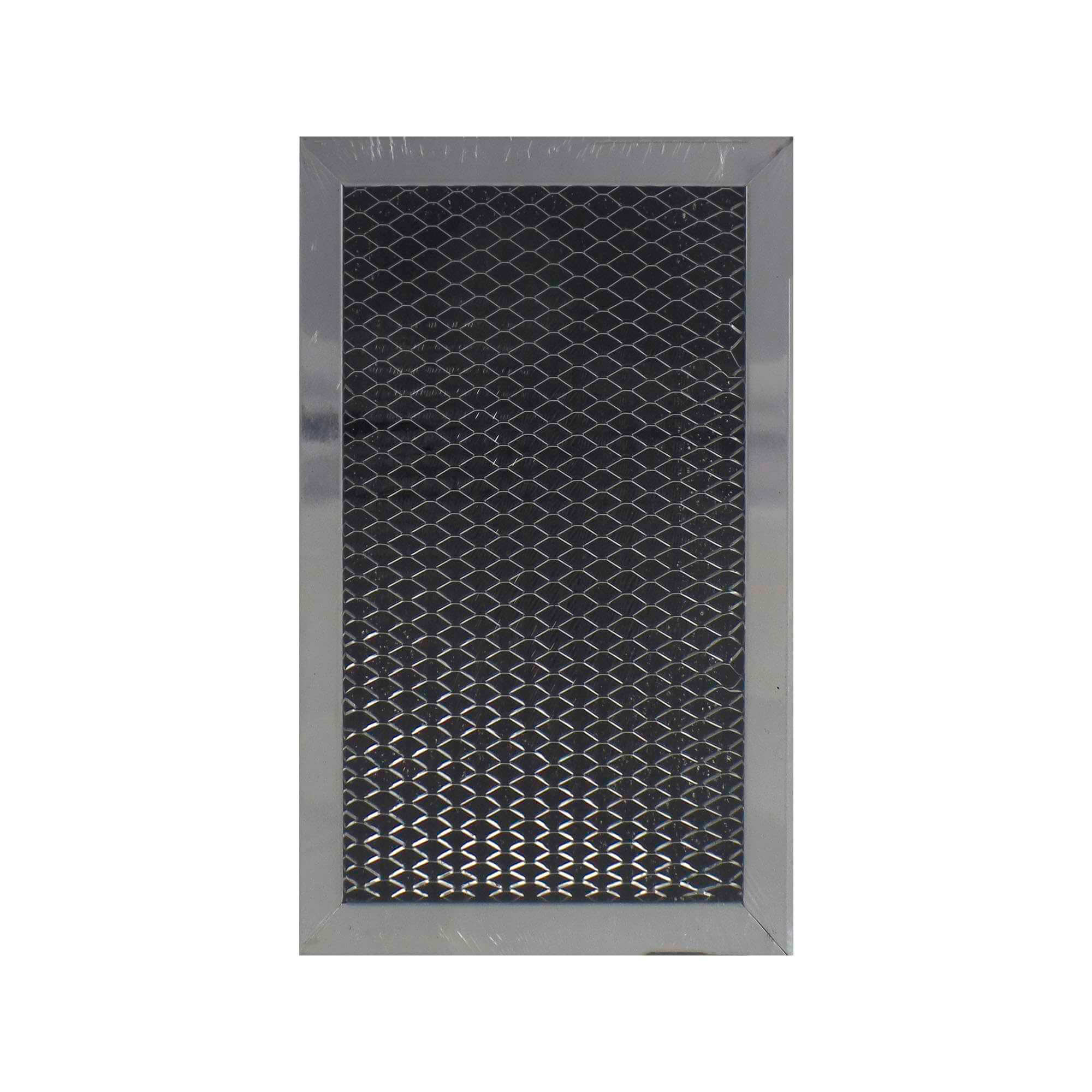
You probably haven’t thought about your microwave filter in months. Honestly, most people don’t even know it exists until the kitchen starts smelling like last Tuesday’s salmon every time they turn on the stove. It’s tucked away, usually behind that plastic vent grille at the top or hidden underneath the unit, quietly scrubbing the air. But here is the thing: a samsung microwave charcoal filter isn't a "set it and forget it" part of your kitchen. It’s a porous block of carbon designed to trap odors, and once those pores are full, the filter basically becomes a useless brick of dust.
If you have an over-the-range (OTR) microwave that recirculates air back into the kitchen rather than venting it through a duct to the outside, that charcoal filter is the only thing standing between you and a house that smells like a grease fire.
The Science of Why Charcoal Actually Works (and Fails)
It’s not just a sponge. Activated charcoal is processed to have small, low-volume pores that increase the surface area available for adsorption. Note the "d," not a "b." Adsorption is a chemical reaction where pollutants stick to the outside of the carbon granules. According to materials science, a single gram of activated carbon can have a surface area of over 3,000 square meters. That’s massive.
But it has a limit.
Once every "sticky" site on that carbon surface is occupied by grease molecules and odor particles, the samsung microwave charcoal filter stops working. Period. There is no way to "wash" a charcoal filter. If you put it in the dishwasher, you’re just turning it into a soggy, useless mess. You’ve gotta replace it. Most Samsung manuals—if you actually dig through the drawer to find yours—suggest a swap every 6 to 12 months, but if you’re frying bacon every morning, you might be looking at a 3-month lifespan.
Locating Your Specific Samsung Filter
Samsung isn't always consistent with where they hide these things. It depends on your model. If you have one of the newer Bespoke models or the classic ME21 series, you’re likely looking at the top vent.
- Usually, there are two or three screws along the top edge of the microwave cabinet.
- You unscrew those, and the plastic louver (the vent cover) tilts forward or slides to the left.
- Behind that, you’ll see a black, mesh-like rectangle. That’s your target.
Sometimes, they’re clipped in with a flimsy metal tab. Be careful. Those tabs are notorious for snapping if you’re too aggressive. If your microwave is a "low profile" model, the access point might be slightly different, often requiring you to pop a panel that feels like it’s going to break—but usually won't.
Finding the Right Part Number
Don't just buy a random "universal" filter on a whim. While some work, many are too thin, allowing air to bypass the charcoal entirely. Look for the DE63-00367H or the DE63-30016E, which are the most common part numbers for Samsung OTR units.
Always check your specific model number on the sticker inside the door frame. Samsung’s ME18H704SFS or the ME21M706BAS might look similar from the outside, but their internal filter slots can vary by a fraction of an inch. A loose filter is a useless filter. If air can go around it, it will, because air is lazy and takes the path of least resistance.
The Great Venting Debate: Recirculating vs. External
If your microwave is vented to the outside through a duct in the wall or roof, you technically have a charcoal filter in there, but it’s doing almost nothing. In a vented setup, the air is sucked up and shoved outdoors. In that case, the metal grease filters on the bottom are your primary concern.
However, millions of apartments and modern homes use "recirculating" mode.
This is where the samsung microwave charcoal filter becomes the MVP. The fan pulls smoke up, passes it through the charcoal to kill the smell, and then blows it right back into your face from the top of the microwave. If that filter is old, you’re just moving hot, stinky air around the room. It’s a cycle of grease. You’ll start noticing a sticky film on your cabinets above the microwave. That is a dead giveaway that your filter is saturated.
Signs Your Filter Has Given Up the Ghost
How do you know it's time? It’s not always obvious.
- The Smell Test: This is the big one. If you burn toast and the smell lingers for three days, the charcoal is dead.
- Visible Grease: Pull the filter out. If it feels heavy or "gummy" to the touch, it’s cooked.
- Reduced Airflow: If the fan sounds like it’s struggling or if smoke is escaping around the sides of the microwave instead of being sucked into the vents, the filter might be physically clogged with dust and hair.
- The 6-Month Mark: If you can't remember the last time you changed it, you're probably overdue.
Common Mistakes When Replacing Samsung Filters
Most people make the mistake of buying the cheapest 2-pack they find online. The problem? Some of these "budget" filters have very little actual activated carbon inside. They’re mostly just a polyester pad painted black. They look the part, but they don't do the chemistry.
Another mistake: ignoring the grease filters. Your Samsung microwave has two types of filters. The aluminum mesh ones on the bottom catch the heavy grease droplets. The charcoal filter catches the gas-phase odors. If you don't clean the metal mesh filters (which are washable in hot soapy water), your new charcoal filter will get bombarded with grease and die in weeks instead of months.
Clean the bottom. Replace the top. That’s the rule.
Real-World Maintenance Steps
When you finally get that replacement samsung microwave charcoal filter in the mail, don't just shove it in.
- Vacuum the area: Once the old filter is out, use a crevice tool to suck out the dust bunnies that live in the fan housing.
- Check the orientation: Many charcoal filters have a "this side up" or an arrow for airflow. If you put it in backward, the mesh might not support the carbon properly under the pressure of the fan.
- Reset the reminder: Some high-end Samsung microwaves have a "Filter Reset" button on the control panel. Hold it down for three seconds once the new one is in.
Why This Actually Matters for Your Health
It’s not just about smells. Cooking, especially on gas ranges, releases carbon monoxide, nitrogen dioxide, and formaldehyde. While a charcoal filter isn't a substitute for a high-end HEPA air purifier or proper outdoor venting, it does help reduce the concentration of Volatile Organic Compounds (VOCs) in your immediate breathing zone.
For people with asthma or scent sensitivities, a fresh filter makes a massive difference. When charcoal is "active," it’s incredibly effective at grabbing those microscopic irritants. When it's "spent," those irritants just bounce off the filter and stay in your kitchen.
Actionable Steps for a Cleaner Kitchen
Stop wondering if your microwave is working and actually check it.
First, turn on your microwave fan to high and hold a single sheet of paper towel against the bottom grease filters. If the fan doesn't hold the paper towel in place, your airflow is blocked—likely by a filthy charcoal filter or clogged mesh.
Second, find your model number. It's usually on the inside wall of the microwave. Type that number into a parts site to find the exact samsung microwave charcoal filter you need. Buy two. They don't expire if you keep them in the plastic wrap, and you'll thank yourself in six months when the "filter" light starts flashing again.
Third, make it a habit to soak those bottom metal filters in a degreaser once a month. This protects your expensive charcoal filter from getting "blinded" by grease. A little bit of maintenance now prevents a kitchen that smells like a deep fryer later.
If you've noticed the fan getting louder or the air feeling "heavy" when you cook, don't wait. Open that top vent, pull out the old black pad, and see how much gunk it's been holding. You’ll probably be disgusted, but your kitchen will finally breathe again.