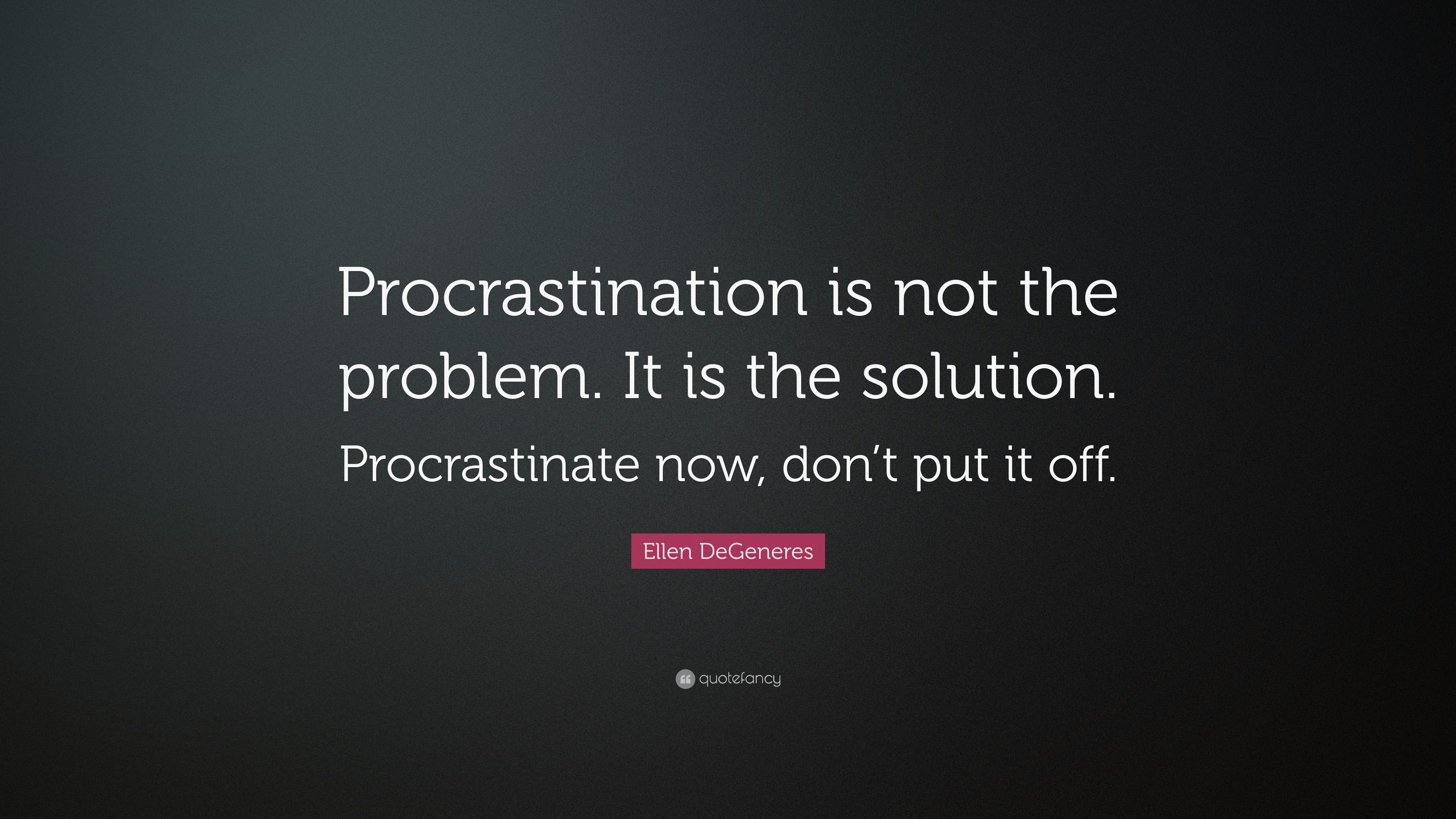
We’ve all been there. It’s 4:45 PM on a Friday. You’re packing up, thinking about that pizza you’re going to order, when an email pings. It’s a "high priority" request from a colleague who had two weeks to finish a report but decided to start it twenty minutes ago. Now, suddenly, their panic is your problem. Except, it shouldn't be. The phrase your procrastination is not my emergency has become a rallying cry for anyone tired of being the collateral damage of someone else’s poor time management. It sounds harsh. Maybe even a little cold. But honestly? It’s the only way to survive in a world where "urgent" has lost all meaning.
Setting boundaries isn't about being a jerk. It’s about protecting your own output. When you constantly "save" people from their own delays, you aren't just being a team player. You’re training them to be unreliable. You’re telling them that your schedule is less valuable than their laziness. That’s a dangerous precedent to set, especially in a hybrid work era where the lines between "on" and "off" are already thinner than a sheet of tracing paper.
The Psychology of the "False Emergency"
Why do we feel so pressured to help? It’s usually a mix of people-pleasing and a genuine desire to see the team succeed. Psychologists often point to the "Urgency Effect," a cognitive bias where people prioritize small tasks with short deadlines over larger, more important tasks with longer deadlines. When someone dumps a last-minute task on your desk, they are effectively trying to transfer their cortisol spike to you.
Dr. Ursina Teuscher, a decision-making coach, often discusses how clarity in roles prevents this friction. If you don't have a clear "no" in your vocabulary, your "yes" doesn't actually mean anything. It’s just a default setting. Most of the time, the person asking for a miracle doesn't even realize they’re being intrusive. They’re just drowning and grabbing the nearest floating object. That object is you.
Your Procrastination Is Not My Emergency: Breaking the Cycle
If you want to stop being the office fire extinguisher, you have to change the way you respond to "hair on fire" requests. You can't just scream the phrase at your boss—well, you can, but it might make Monday morning pretty awkward. Instead, it’s about tactical pushback.
Stop being so available.
If you answer every late-night Slack message within three minutes, you are teaching people that you don't have a life. Or at least, that your life is interruptible. Start by establishing "blackout" periods. Use your status updates. If someone comes to you with a "crisis" that resulted from their own delay, ask them about the timeline. "Hey, I see this is due in an hour. Since I wasn't looped in earlier, I can’t clear my current projects to hit that mark. What’s the secondary plan?"
This does two things. First, it acknowledges the reality of the situation without taking ownership of the failure. Second, it forces the procrastinator to actually think about their own process. You aren't being mean; you're being a mirror.
The Real Cost of Being the Savior
There is a measurable cost to these interruptions. Researchers at the University of California, Irvine, found that it takes an average of 23 minutes and 15 seconds to get back to deep work after a distraction. Every time you pivot to handle someone else’s "emergency," you are sacrificing your own quality of work. You get tired. Your error rate goes up. Eventually, you’re the one procrastinating because you’re too burnt out to care.
It’s a cycle of resentment. You hate them for asking; they expect you to do it because you always do. Eventually, the relationship breaks. It’s actually kinder to set the boundary early than to blow up six months down the line because you’ve reached your limit.
When "Urgent" Is Actually Just Disorganized
We need to talk about the difference between a legitimate crisis and a lack of planning. A legitimate crisis is a server going down or a client having a medical emergency. A lack of planning is someone forgetting to send an invite until the morning of the meeting.
In many corporate cultures, "busy-ness" is worn as a badge of honor. People love to feel like they are constantly fighting fires because it makes them feel important. But a high-functioning environment shouldn't feel like a disaster zone every Tuesday afternoon. If everything is an emergency, then nothing is. You have to be the one to lower the temperature.
Strategies for Practical Boundary Setting
You don't need to be aggressive. You just need to be firm. Here is how you can handle the "your procrastination is not my emergency" dynamic in the real world:
- The "Yes, And" Method: When a disorganized manager drops a bomb on your lap, try: "I can definitely help with this, but it will mean the project I’m currently doing for you will be delayed by two days. Which one is the priority?" This forces them to take responsibility for the trade-off.
- The Buffer Zone: Build "emergency time" into your own calendar that nobody else can see. If you have two hours of open space on a Thursday, don't tell anyone. Use that to catch up on your own deep work so that if a real emergency happens, you actually have the capacity to help.
- The Documentation Trail: If you have a serial procrastinator in your life, keep everything in writing. "As per our email on the 5th, I’m waiting on your input to finish this." When they come screaming for help on the 12th, you have the receipts.
It’s about protecting your peace. Life is too short to spend it stressed out over someone else's inability to use a calendar.
Is It Ever Okay to Help?
Of course. We’re humans, not robots. Sometimes a friend is going through a hard time and genuinely dropped the ball. Sometimes a new hire is just overwhelmed and needs a hand. The distinction is in the pattern. If it happens once, it’s an accident. If it happens every week, it’s a lifestyle. You are not a lifestyle coach for people who refuse to grow up.
Moving Toward a Proactive Culture
The best way to eliminate the "your procrastination is not my emergency" friction is to build a culture of radical transparency. In teams that use tools like Notion, Asana, or even just a shared spreadsheet, there’s nowhere for procrastinators to hide. When everyone can see that a task has been sitting in "In Progress" for three weeks, the social pressure usually kicks in before it becomes an emergency for someone else.
If you’re a leader, stop rewarding the "firefighters." Start rewarding the people who finish their work three days early and leave at 5:00 PM. Those are your real superstars. The ones who are always "so busy" and "stressed" are often the ones causing the most drag on the system.
Actionable Steps to Reclaim Your Time
Ready to stop being the safety net? Here is how you start today:
1. Conduct an "Emergency Audit" Look back at the last five times you felt stressed by a "last minute" request. How many of those were actually unavoidable? If more than two were caused by someone else's delay, identify those people. They are your boundary-testing zones.
2. Script Your No Don't wait until you're flustered to figure out what to say. Write down a few phrases that feel natural to you.
- "I'd love to help, but my capacity is full for the rest of the week."
- "Since I’m just seeing this now, I won't be able to get to it until Tuesday."
- "In the future, I’ll need at least 48 hours' notice for these types of requests to ensure they get the attention they deserve."
3. Practice the "24-Hour Rule" Unless the building is literally on fire, wait. If someone sends a frantic "emergency" email at 8:00 PM on a Thursday, don't reply until 9:00 AM on Friday. By the time you respond, they may have already solved it themselves. People often look for the easiest way out, and if you're the easiest way, they'll keep coming back.
4. Set Clear Expectations Early When starting a new project or relationship, be explicit. "I do my best work when I have a lead time of [X] days. Anything shorter than that usually results in a lower quality output, which I want to avoid for both of us." You’re framing the boundary as a benefit to them.
Boundaries are the distance at which I can love you and me simultaneously. That applies to your coworkers, too. By refusing to let their procrastination become your emergency, you’re actually making the workplace better for everyone. You're promoting accountability, reducing burnout, and ensuring that when a real emergency does happen, you actually have the energy to handle it.
Start small. Say no to one "emergency" this week. See what happens. Most of the time, the world keeps spinning, the task gets done eventually, and you actually get to eat your pizza in peace.



