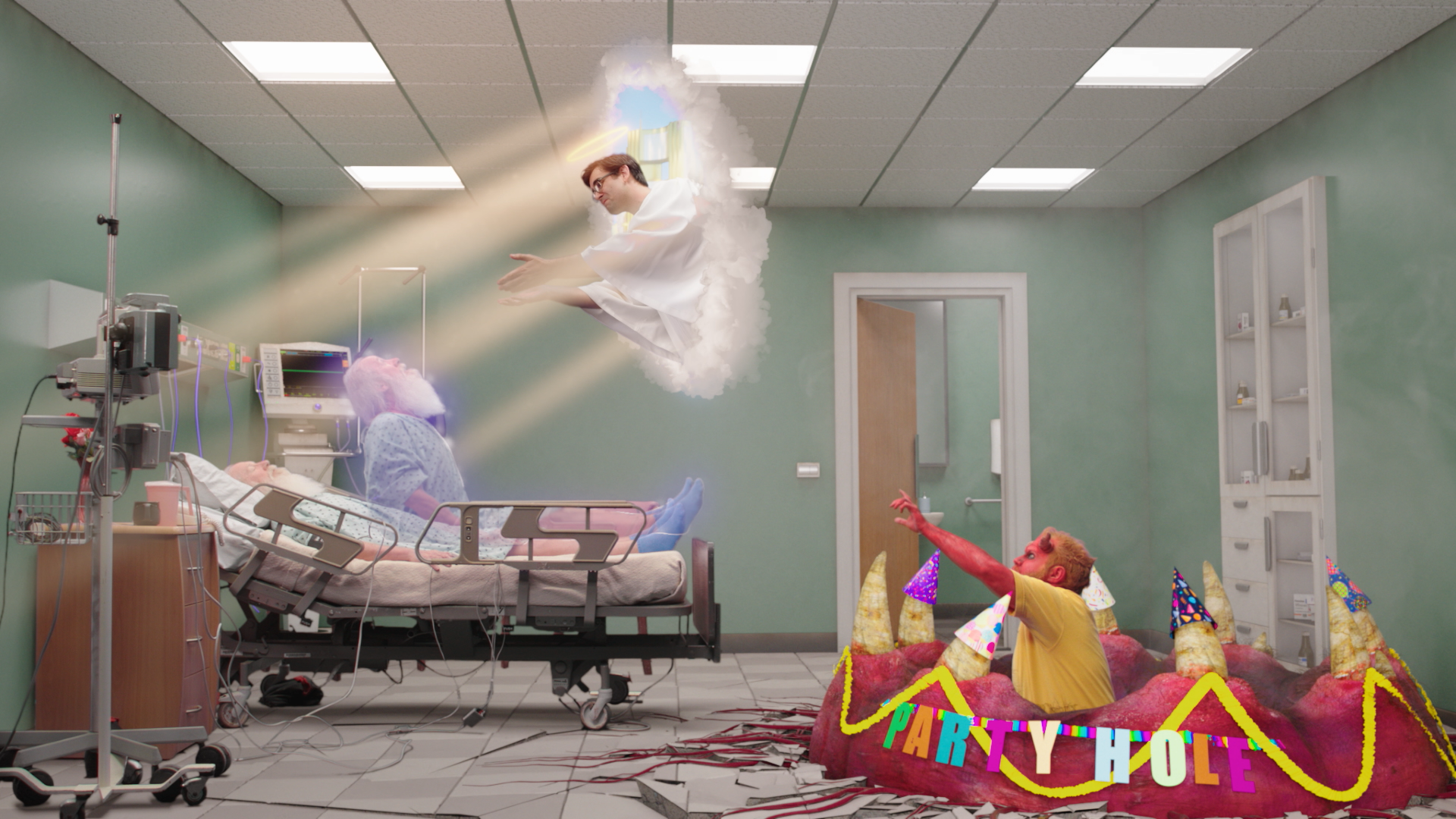
Adult Swim has a reputation for green-lighting the weirdest stuff on television. Honestly, though, nothing quite hits that sweet spot of existential dread and slapstick gore like Your Pretty Face is Going to Hell Season 3. It’s a show that basically asks: "What if Dilbert was set in the actual lake of fire?" By the time the third season rolled around in 2017, the creators, Dave Willis and Casper Kelly, had perfected the formula of making a low-budget, prosthetic-heavy workplace sitcom feel like a fever dream you can't wake up from.
Gary is a demon. He’s played by Henry Zebrowski, who brings this manic, desperate energy to the role that makes you almost feel bad for him. Almost. He's trying to climb the corporate ladder in Hell, but he’s just too "nice" or, more accurately, too incompetent to actually secure souls for Satan. The third season takes this dynamic and cranks it up. It’s not just about the soul-catching anymore; it’s about the crushing bureaucracy of the afterlife.
Why the Third Season Changed Everything
If you watched the first two seasons, you knew the drill. Gary fails, Satan screams, and Claude (played by Craig Rowin) wins. But Your Pretty Face is Going to Hell Season 3 felt different because the world-building expanded. We started seeing more of the "corporate" side of the underworld. It wasn't just a pit of fire; it was a place with HR departments, performance reviews, and middle management that makes your real-life boss look like a saint.
The practical effects in this season are genuinely impressive for a show with a cable budget. They didn't rely on cheap CGI. They used real, sticky, gross prosthetics. When someone gets their head turned into a foot or their skin peeled off, it looks tactile. It’s gross. It’s great.
The Dynamic Between Henry Zebrowski and Matt Servitto
The heart of the show—if you can call it that—is the relationship between Gary and Satan. Matt Servitto plays Satan not as a terrifying horned beast, but as a frustrated CEO who is constantly disappointed by his staff. It's a brilliant subversion. In Season 3, their chemistry is at an all-time high.
There’s an episode where they deal with "The Gary-est Man on Earth," a human so pathetic that Gary thinks he’s found his soulmate. It’s peak Zebrowski. He screams. He sweats through his red face paint. He makes faces that should be physically impossible for a human being. It’s a masterclass in high-energy character acting that keeps the show from feeling like just another stoner comedy.
Analyzing the "Workplace" Satire
Most people watch this for the gore and the dick jokes. I get it. Those are funny. But if you look closer, Your Pretty Face is Going to Hell Season 3 is one of the sharpest satires of modern capitalism ever aired.
Think about the structure of Hell in the show. It’s not about punishment for sins in a moral sense; it’s about quotas. The demons are just sales reps. Their "leads" are humans on Earth. When Gary fails to "close the deal," it’s not because the human stayed virtuous, it’s usually because Gary didn't follow the right paperwork or wasn't aggressive enough with the pitch. This reflects the soul-crushing reality of 9-to-5 life. We are all Gary, just without the horns and the lava.
The show suggests that the ultimate horror isn't being stabbed with a pitchfork for eternity. It’s being stuck in a cubicle, reporting to a guy who hates you, doing a job that doesn't matter, forever. That is the true "hell" the show explores.
Key Episodes You Can't Skip
If you’re revisiting the season or diving in for the first time, you have to watch "The Starving Artist." It’s a brutal takedown of creative ego. Then there’s "Business Ethics," which is probably the most relatable episode for anyone who has ever had to sit through a corporate seminar led by someone who clearly doesn't know what they're talking about.
- "The Gary-est Man on Earth" – A deep dive into Gary’s psyche.
- "Fried Chicken" – It’s as ridiculous as it sounds, involving a fast-food scheme.
- "Amulet" – Shows the lengths Gary will go to for a tiny bit of power.
The pacing is frantic. Most episodes are only 11 minutes long. That’s the Adult Swim sweet spot. No filler. Just jokes, blood, and existential despair.
The Legacy of Season 3 and Beyond
After Season 3, the show eventually transitioned into a series of digital shorts and a final special, but this particular era was the peak. It was when the show had enough of a budget to realize its ambitions but was still "underground" enough to take massive risks.
Some critics at the time argued the show was "too loud" or "too gross." They missed the point. It’s supposed to be an assault on the senses. It’s supposed to make you feel a little oily after watching it.
Actionable Insights for Fans and New Viewers
If you want to get the most out of Your Pretty Face is Going to Hell Season 3, stop looking at it as a horror-comedy and start looking at it as a documentary of office life.
- Watch for the background details: The signs in the hallways of Hell are often funnier than the main dialogue.
- Pay attention to the guest stars: This season had some incredible cameos from the alt-comedy world that many people missed on the first pass.
- Support the creators: Dave Willis also co-created Aqua Teen Hunger Force. If you like the vibe here, his entire filmography is worth a binge.
- Check out the podcasting world: Henry Zebrowski is a lead on Last Podcast on the Left. If you like his energy in Season 3, his podcasting work is where he really lets loose with the same kind of dark, chaotic humor.
The show is currently available on various streaming platforms like Max. It remains a cult classic for a reason. It doesn't care if you like it. It doesn't care if you're offended. It just wants to show you a guy in red paint getting hit in the face with a shovel, and honestly, sometimes that’s exactly what we need.
To fully appreciate the craftsmanship, watch an episode once for the jokes, and then a second time just to look at the practical makeup effects. The level of detail in the prosthetics—the way the "skin" moves and the "blood" flows—is a dying art in an era of cheap digital filters. It’s a testament to the crew’s dedication to a show that is, on its surface, about as silly as it gets.



