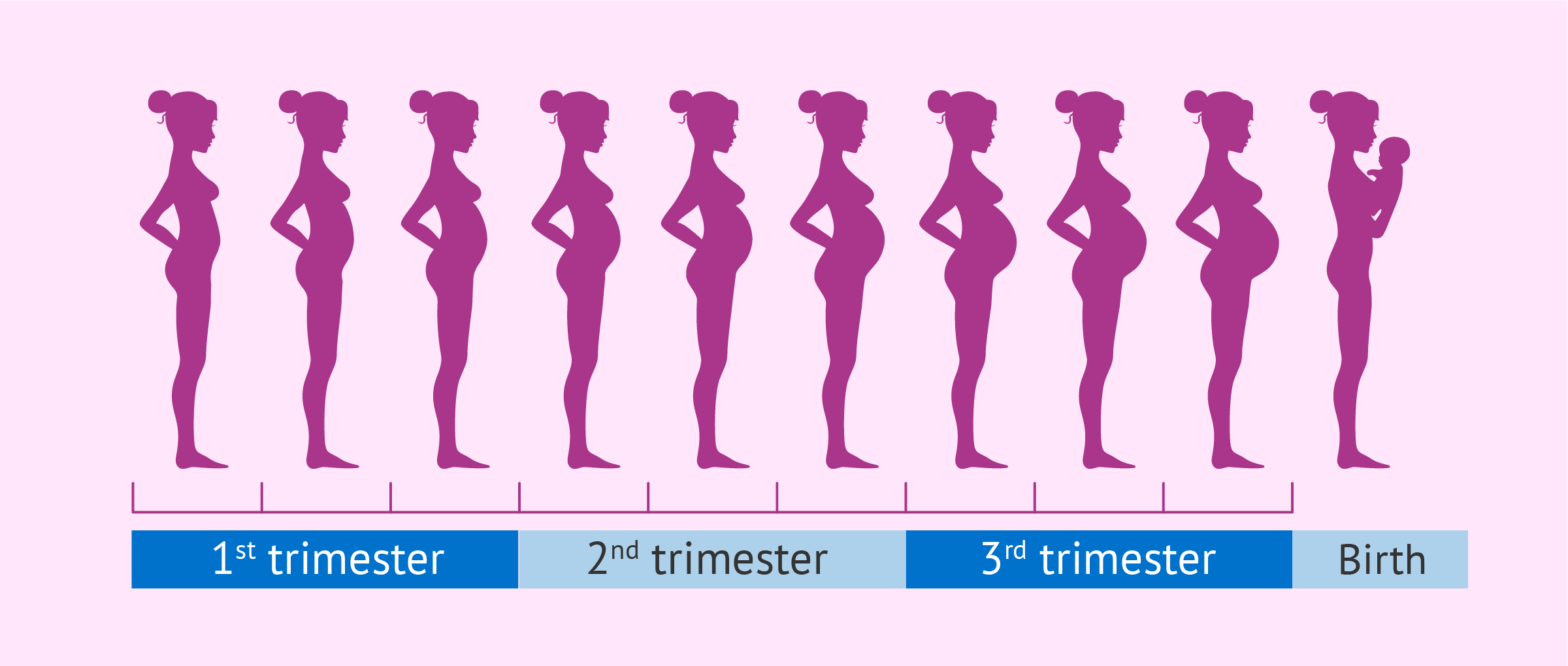
You’re staring at your reflection, wondering when the "pop" actually happens. Honestly, social media has ruined our expectations of what a pregnant body looks like. You see a fitness influencer with a tiny basketball bump at eight months, then scroll to a friend who is "showing" before her first ultrasound. It’s confusing. The reality is that your pregnancy bump month by month is governed by things you can't see, like the tilt of your uterus, the strength of your abdominal muscles, and even your height.
Short torsos leave the baby with nowhere to go but out. Long torsos? They have plenty of vertical room, so the bump might stay "hidden" for way longer than you’d expect.
The first trimester vanishing act
Month one is basically a ghost. Your uterus is still tucked deep inside your pelvis, roughly the size of a walnut. You might feel bloated—thanks, progesterone—but that’s mostly gas and water retention. It isn't a "baby bump" yet, though your jeans might feel a bit tight by the end of the day.
By month two, the embryo is the size of a raspberry. Your body is doing an incredible amount of internal work, but externally? You probably just look like you had a very large burrito for lunch. This is the stage where many women deal with "the bloat" that comes and goes. One morning your stomach is flat; by 7:00 PM, you're reaching for the leggings.
Month three is when things get interesting. The uterus expands to the size of a grapefruit. For some, especially if it’s a second or third pregnancy, a small mound might start to peek over the pelvic bone. But for most first-timers, you’re still in that awkward "is she pregnant or just well-fed?" phase. It's frustrating. You want the world to know, but the mirror isn't cooperating yet.
The second trimester and the great "pop"
Month four is usually when the secret gets out. Your uterus has officially moved out of the pelvic cavity. It’s now heading toward your belly button. At this stage, your pregnancy bump month by month progression starts to follow a more predictable curve. If you have a retroverted uterus—one that tilts toward the back—you might still look relatively flat. Don't panic. Eventually, as the baby grows, that uterus will tip forward and join the party.
Then comes month five. This is the sweet spot. You finally have a distinct, rounded bump. The top of your uterus, called the fundus, is usually right at the level of your navel now. Doctors will start measuring your fundal height in centimeters. Generally, that number should roughly match your weeks of pregnancy.
- Week 20? About 20 centimeters.
- If you're measuring way ahead, it could be extra amniotic fluid (polyhydramnios) or just the way you're built.
- Measuring behind? Sometimes it’s just because the baby is tucked into a weird corner.
By month six, the baby is about a foot long. Your skin might start to feel tight or itchy. This is the "look at me" phase. People will start offering you seats on the bus. Your center of gravity is shifting, and you might notice a slight change in how you walk. Your abdominal muscles are stretching to their absolute limit. If you’ve had a "six-pack" or very strong core before pregnancy, your muscles might actually hold the bump in longer, leading to a smaller appearance.
The third trimester: It’s getting crowded in here
Month seven brings the stretch. The baby is gaining fat rapidly. Your bump is no longer just a cute accessory; it’s a physical hurdle. Tying your shoes? Forget about it. Dropped your keys? They live on the floor now.
In month eight, the baby starts to take up almost all the available space. Your organs are being squished into your ribcage. This is why you get breathless walking up a flight of stairs or feel like you can only eat three bites of food before you're full. The bump might look different every single day depending on how the baby is positioned. If they’re "sunny side up" (occiput posterior), your belly might look a bit flatter or more lumpy.
Month nine is the finish line. Your bump might actually change shape significantly this month. Many women experience "lightening" or "dropping," where the baby’s head moves down into the pelvis to prepare for birth. Suddenly, you can breathe again because your lungs have space, but now you have to pee every five minutes because the baby is sitting directly on your bladder.
Why the "standard" bump is a myth
Dr. Amos Grüebaum, a renowned OB-GYN, often points out that fundal height is just a screening tool, not a perfect science. A study published in the American Journal of Obstetrics & Gynecology highlighted that maternal BMI, the amount of amniotic fluid, and even the presence of uterine fibroids can drastically change the appearance of a pregnancy bump month by month.
You also have to consider Diastasis Recti. If your abdominal muscles separate significantly, your bump will likely protrude much further forward and appear "pointier." This isn't a sign of how big the baby is; it’s a sign of how your connective tissue is handling the pressure.
The impact of "carrying low" vs. "carrying high"
You’ve probably heard the old wives' tales. "Carrying low means it’s a boy!" Honestly? It's nonsense. How you carry is almost entirely about muscle tone and the baby's position.
If your abdominal muscles are lax—common in subsequent pregnancies—the baby will sit lower. If you have very tight, strong muscles, the baby stays higher up for longer. Your height plays a massive role too. A woman who is 5'10" has a lot of vertical "trunk" space. The baby can grow upward for a long time before needing to push outward. A woman who is 5'1" doesn't have that luxury; the bump goes "out" almost immediately.
Actionable steps for tracking your progress
Instead of obsessing over how you look compared to a Pinterest board, focus on these tangible ways to monitor your growth and comfort:
- Document with consistency. Take your "bump photos" from the same angle, in the same spot, wearing similar clothing. This helps you see the actual change in your own body rather than comparing yourself to others.
- Monitor skin elasticity. As the bump grows rapidly in the second and third trimesters, keep the skin hydrated. While oils won't necessarily prevent genetic stretch marks, they will stop the intense itching that occurs as the dermis stretches.
- Support your alignment. As the bump grows, your lower back (lumbar spine) takes the brunt of the weight. Consider a maternity support belt if you’re feeling heavy or experiencing pelvic girdle pain.
- Trust the measurements, not the mirror. If your midwife or doctor says your fundal height is on track, believe them. The visual "size" of your bump is subjective; the medical measurement of your uterus is what actually matters for the baby's health.
- Pay attention to movement over shape. By the third trimester, the shape of your bump matters less than the "kick count." Ensure you are feeling regular patterns of movement, regardless of whether your belly looks "too small" or "too big" that day.
Your body is essentially an apartment building for a human being. Some apartments have high ceilings, and some are wide-plan studios. Both are perfectly capable of housing a healthy tenant. Embrace the unique way your body is shifting to accommodate this growth.
/i.s3.glbimg.com/v1/AUTH_08fbf48bc0524877943fe86e43087e7a/internal_photos/bs/2025/H/e/ewwgKCQCSopdUJUwy6DA/imagem-2025-04-27-114802986.png)


