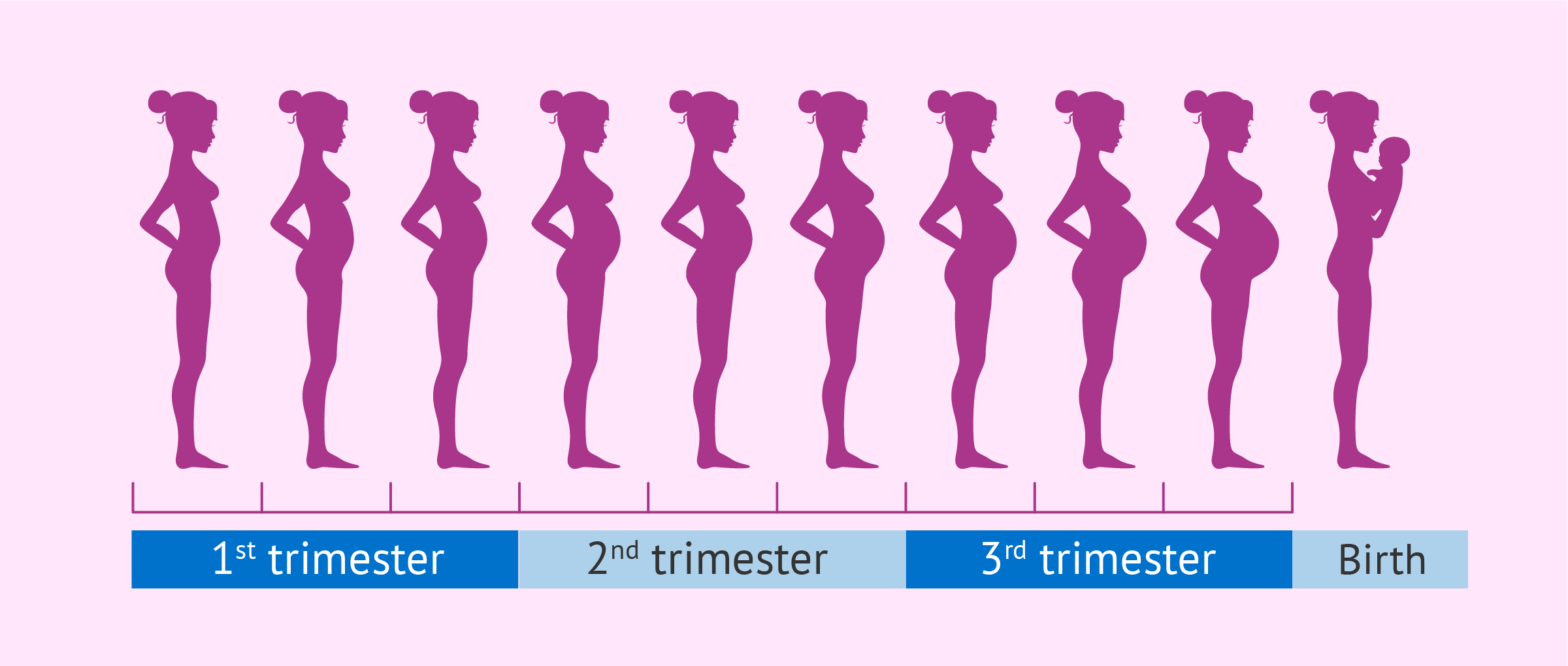
You’re staring at the mirror, turning sideways, and sucking in—or trying to. You wonder if that’s a baby or just the three tacos you had for lunch. Honestly, the obsession with the pregnancy bump by month is real. We compare ourselves to influencers on Instagram who look like they swallowed a marble while we feel like we’ve swallowed a beach ball by week 16.
It’s exhausting.
But here’s the thing: your uterus is a muscle that has its own personality. Whether you’re showing "early" or still wearing your pre-pregnancy jeans in the second trimester, your body isn't failing a test. It’s just doing its thing.
The First Trimester: The Great Bloat Debate
Month one is basically invisible. You know you’re pregnant because the stick said so and you probably feel like you’ve been hit by a bus, but to the outside world? Nothing. Your uterus is still tucked deep inside your pelvis, roughly the size of a lemon.
Then comes month two and three. This is where the "bump" is usually just gas. Progesterone slows down your digestion to ensure the baby gets nutrients, but the side effect is massive bloating. You might feel "thick" or find your buttons digging in, but that’s not the baby pushing out yet. It's mostly air and slowed-down tacos.
By the end of the third month, the fetus is about the size of a lime. Dr. Mary Jane Minkin, a clinical professor at Yale School of Medicine, often points out that for first-time moms, the abdominal muscles are still tight enough to keep everything contained. If it’s your second or third kid? Forget it. Your muscles remember exactly what to do and they just give up the ghost early. You might pop at week 10 just because your body has "muscle memory" for being a human incubator.
Month Four: The "Is She or Isn't She?" Phase
Month four is awkward. It’s the transition. You’ve likely entered the second trimester, and the top of your uterus (the fundus) is starting to rise above the pubic bone. This is usually when people start to notice a small, firm mound, especially when you’re lying down.
- Height and Torso Length: If you have a long torso, you might not show for a while. The baby has plenty of vertical room to hang out.
- Short Torsos: If you’re short-waisted, there’s nowhere for the baby to go but out. You’ll likely look "more" pregnant sooner.
- Fitness Level: Stronger core muscles can actually mask a bump longer.
Honestly, this is the month of the "hair tie trick" on your jeans. You aren't quite ready for maternity clothes, but your regular clothes are staging a protest.
Month Five and Six: The World Finally Notices
By month five, you’re likely sporting a definitive pregnancy bump by month progression that doesn't just look like a big lunch. The fetus is now roughly the size of a banana or a grapefruit. Your uterus has reached your belly button.
This is also where "popping" happens. One day you wake up and—boom—there it is.
In month six, your skin starts to stretch. You might feel itchy. This is because the baby is putting on fat and the uterus is expanding rapidly. If you’re carrying "high," it might start to crowd your lungs, making you feel slightly winded when you walk up stairs. If you’re carrying "low," you’re probably hitting the bathroom every twenty minutes because your bladder is being used as a stress ball.
The Third Trimester: The "Please Get This Baby Out" Expansion
Month seven and eight are intense. The baby is now over a foot long. Your bump isn't just a bump anymore; it's a structural hurdle.
You’ll notice the shape might change daily. If the baby moves their head or limbs, your belly might look lopsided. It’s weird. It’s cool. It’s also kinda uncomfortable. At month eight, the fundal height (the distance from the pubic bone to the top of the uterus) is usually around 32 to 36 centimeters. Doctors measure this to make sure the baby is growing at a steady rate, but even this isn't an exact science.
A study published in the American Journal of Obstetrics and Gynecology notes that fundal height can be affected by BMI, the amount of amniotic fluid, and even the baby’s position. If your doctor isn't worried, you shouldn't be either, even if your friend who is at the same stage looks totally different.
Month Nine: The Final Stretch
In the final month, the bump often "drops." This is called lightening. The baby’s head moves down into the pelvis to get ready for the big exit. You might suddenly find it easier to breathe, but walking becomes more of a waddle.
Your belly is at its maximum capacity. The skin is tight, the belly button might have popped out, and you probably can't see your feet. It’s a lot.
Why Your Bump Might Look "Wrong" (But Isn't)
There are so many myths about how you carry. You’ve heard them. "Carrying high means it's a girl," or "carrying low and out front means it's a boy."
It’s all nonsense.
The shape of your pregnancy bump by month is determined by:
- The Baby's Position: If the baby is "sunny side up" (occiput posterior), your belly might look flatter. If they are tucked in tight, it looks pointier.
- Diastasis Recti: If your abdominal muscles separated in a previous pregnancy, your bump will likely hang lower and appear larger much earlier.
- Amniotic Fluid: Some women naturally carry more fluid (polyhydramnios), which makes the bump appear significantly larger.
Actionable Steps for Tracking Your Progress
Don't just obsess over the size. Focus on the health and the feel.
Take consistent photos. Use the same outfit and the same angle every month. It’s hard to see the change day-to-day, but looking back at month three versus month seven is mind-blowing.
Moisturize early. While genetics mostly dictate stretch marks, keeping the skin hydrated helps with the itching that happens when the bump hits that month six and seven growth spurt. Use a thick cocoa butter or a body oil right after the shower.
Support your back. Once you hit month six or seven, a pregnancy support belt can change your life. It takes some of the weight off your pelvic floor and lower back. Your spine will thank you.
Listen to your doctor, not TikTok. If your fundal height is measuring "off," they will order an ultrasound to check the baby’s weight and fluid levels. Most of the time, you’re just carrying "wide" or "compact."
The human body is weirdly efficient. It will stretch as much as it needs to and not an inch more. Whether your bump is a neat little basketball or a wide watermelon, it’s doing the hardest job on the planet. Stop comparing your month five to someone else's month five. Your body knows exactly what it's doing.
/i.s3.glbimg.com/v1/AUTH_08fbf48bc0524877943fe86e43087e7a/internal_photos/bs/2025/H/e/ewwgKCQCSopdUJUwy6DA/imagem-2025-04-27-114802986.png)


