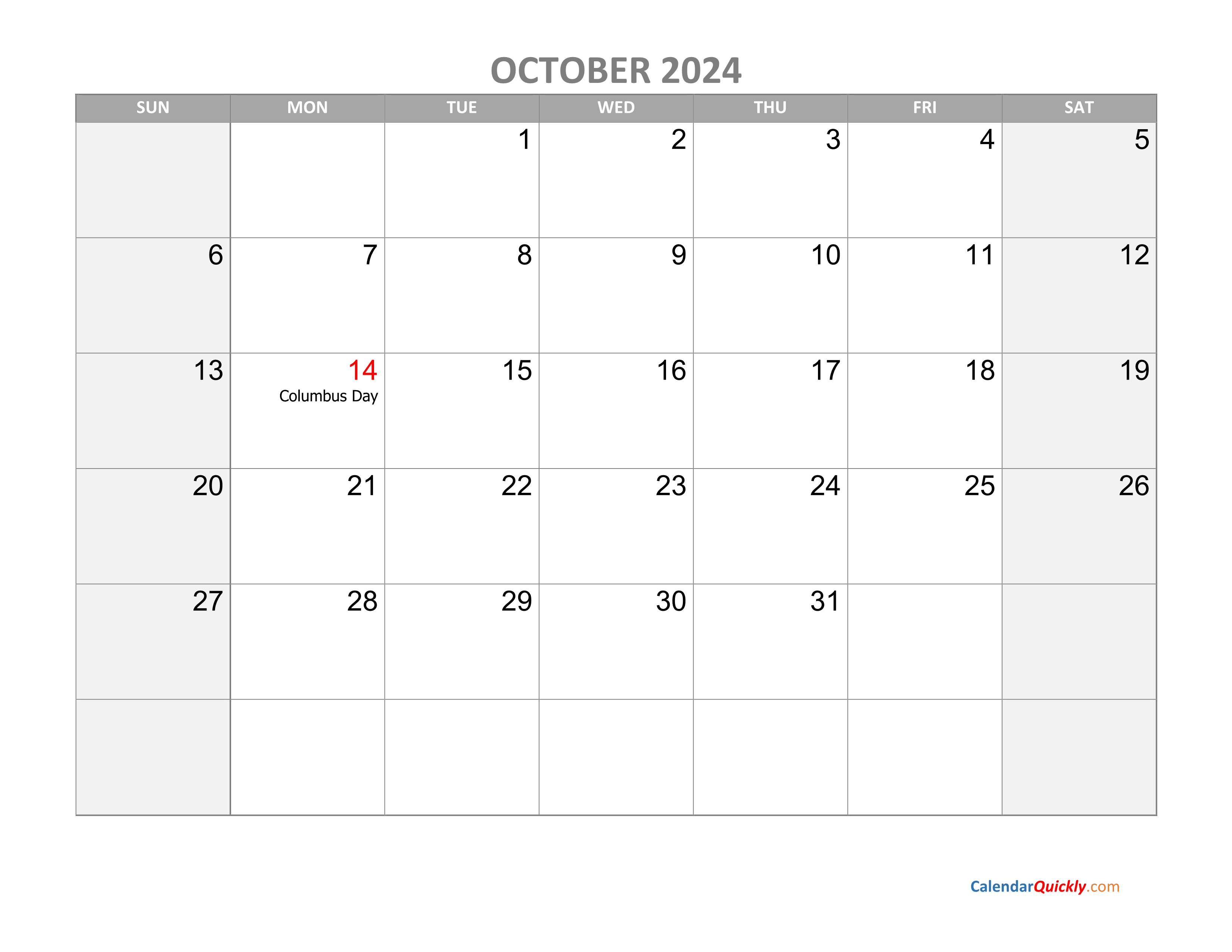
Honestly, looking back at the October 2024 calendar with holidays feels like staring at a jigsaw puzzle where half the pieces are orange and the other half are just... busy. It was a month that didn't just sit there. It moved. If you were trying to balance a budget, plan a wedding, or just figure out when the bank was actually going to be open, you probably noticed that October is surprisingly heavy on the "observed" days. It’s not just about pumpkins.
October 2024 started on a Tuesday. That’s a weird way to start a month. It throws off the rhythm immediately because you’re hitting your stride just as the first full week ends. By the time we got to the middle of the month, the federal holiday schedule kicked in, creating those long weekends that everyone loves but payroll departments usually hate.
The Big One: Columbus Day and Indigenous Peoples' Day 2024
October 14, 2024, was the pivot point for the month.
This is where the October 2024 calendar with holidays gets a bit nuanced. Officially, at the federal level, it’s Columbus Day. That means the United States Postal Service took a breather, and most big banks like Chase or Wells Fargo followed suit. No mail. No wire transfers. If you had a mortgage payment due that Monday, you basically got a "get out of jail free" card until Tuesday.
But it’s more than just a federal designation now. A huge chunk of the country—states like Oregon, New Mexico, and Vermont, plus hundreds of cities—recognizes this as Indigenous Peoples' Day. This shift isn't just a naming thing; it changes the tone of local events. You’d see massive celebrations of Native American culture in places like Phoenix or Minneapolis, while other regions stuck to the traditional Italian-American parades. It’s a bit of a split-screen experience depending on where you live.
Why does this matter for your planning? Because it creates a "ghost holiday" effect. Your office might have been open, but your kids' school was probably closed. Or vice-versa. It’s the kind of day that requires checking three different schedules just to see if you can get a haircut.
What about the other "Holidays"?
People often forget that October is packed with "awareness" months and religious observances that don't get the red-ink treatment on a wall calendar but still dictate how people spend their time and money.
- Rosh Hashanah: This began at sundown on October 2, 2024. For anyone in the business world or education, this meant a significant portion of the workforce and student body was offline through October 4.
- Yom Kippur: Fast forward to the evening of October 11. The Day of Atonement is the holiest day in Judaism. If you were trying to schedule a high-stakes meeting on October 12, you were likely out of luck.
- Sukkot: This followed shortly after, starting on the 16th.
It’s easy to overlook these if you’re just glancing at a standard grid, but they are the heartbeat of October’s schedule for millions of people.
The Halloween Factor and the End of the Month
Halloween fell on a Thursday in 2024.
That is arguably the worst day for a holiday. Thursday Halloweens are a logistical nightmare for parents and employers alike. You’ve got the "sugar crash Friday" to contend with immediately after. Retailers like Target and Spirit Halloween started their "seasonal" push way back in August, but the actual October 2024 calendar with holidays shows that the real economic surge happens in that final seven-day stretch.
Data from the National Retail Federation (NRF) consistently shows that Americans spend billions—yes, with a "B"—on Halloween. In 2024, the trend leaned heavily into "kidulting," where adults spent more on their own costumes and home decor than they did on the kids' trick-or-treat bags. Home Depot’s giant 12-foot skeletons became a weirdly accurate barometer for the month's consumer confidence.
Regional Quirks You Probably Missed
In Nevada, they do things differently. October 31 isn't just Halloween; it's Nevada Day. It’s a state holiday celebrating their admission to the Union. However, they usually observe the "holiday" on the last Friday of October. In 2024, that was October 25. So, while the rest of the country was just getting their costumes ready, Nevadans were already enjoying a three-day weekend.
Then you have Sweetest Day on October 19. If you aren’t from the Midwest or parts of the Northeast, you’ve probably never heard of it. It’s a "Hallmark holiday" that basically functions as a second Valentine’s Day. If you were in Detroit or Cleveland, the restaurants were packed. If you were in Los Angeles, it was just another Saturday.
Navigating the Financial Impact of October 2024
From a business perspective, the October 2024 calendar with holidays was the official kickoff for Q4. This is the "make or break" quarter.
Because there are 31 days, and 2024 gave us four full weeks plus a few extra days, it was a long month for productivity. You had 23 "working days" if you count the federal holiday as a day off. That’s a lot of time to grind before the November/December holiday slump hits.
Investors also watch October closely because of "The October Effect." There’s this old superstition that the stock market is destined to crash in October (think 1929 or 1987). In reality, most Octobers—including 2024—are actually pretty decent for the S&P 500, but the psychological weight of the calendar still makes traders jumpy.
Important Dates at a Glance
If you were looking at the month as a timeline, it looked something like this:
The First Half: The Setup Early October was dominated by the start of the Jewish High Holy Days and the frantic realization that the year was 75% over.
The Middle: The Long Weekend October 14 served as the primary break. Even if your company didn't give you the day off, the banking standstill meant the pace of business slowed down significantly.
The Third Week: Preparation This was the "lull." No major federal holidays, but the ramp-up for Halloween and the impending election season (as 2024 was an election year in the U.S.) meant the news cycle was at a fever pitch.
The Final Stretch: The Celebration October 31. The Thursday finale. It led directly into Dia de los Muertos (Day of the Dead) on November 1 and 2, which has increasingly become a major cultural event in the U.S., particularly in the Southwest.
Why We Care About the 2024 Calendar Now
Looking at a past calendar isn't just about nostalgia; it's about pattern recognition. October 2024 taught us a few things about how we handle our time. We saw a continued trend of "Holiday Creep," where the decorations for the next holiday appear before the current one even happens.
It also highlighted the growing complexity of the American workforce. When half your team celebrates Indigenous Peoples' Day and the other half is working through Columbus Day, your internal communication has to be airtight.
Practical Takeaways for Future Planning
- Check the "Observed" Dates: Always look for that Monday following a holiday. In 2024, the alignment was straightforward, but that’s not always the case.
- The Thursday Trap: When a holiday like Halloween hits on a Thursday, expect productivity on Friday to be essentially zero. Plan your big launches or deadlines for earlier in the week.
- Religious Literacy: If you’re managing people, having a calendar that includes more than just federal holidays is non-negotiable. Missing a date like Yom Kippur can derail a project.
- The Mid-Month Slump: The week after a federal holiday (like the week of Oct 21, 2024) is usually the most productive. Use it to catch up.
October 2024 was a bridge. It bridged the gap between the last remnants of summer energy and the full-blown sprint of the winter holidays. It was messy, culturally diverse, and financially significant. Whether you were trick-or-treating or just trying to get a check to clear, the calendar was the silent conductor of the whole show.
Moving forward, use these lessons to audit your upcoming months. Look for the Thursday holidays. Look for the "split" regional observances. The more you understand the rhythm of the month, the less likely you are to be caught off guard by a closed bank or a "missing" workforce.
Audit your current project timelines against these types of calendar clusters. Ensure you have built-in buffers for the "sugar crash" days and the banking lulls that occur every October. Review your Q4 goals now to ensure the October momentum carries you through the end of the year without the typical late-month burnout.