Ever walked into a room full of people in stiff suits, clutching a stack of business cards like a deck of playing cards, and felt a sudden urge to bolt for the nearest exit? Most of us have. That's the "old way" of networking. It’s transactional, it’s cold, and honestly, it’s a bit soul-sucking.
But then Porter Gale came along and flipped the script.
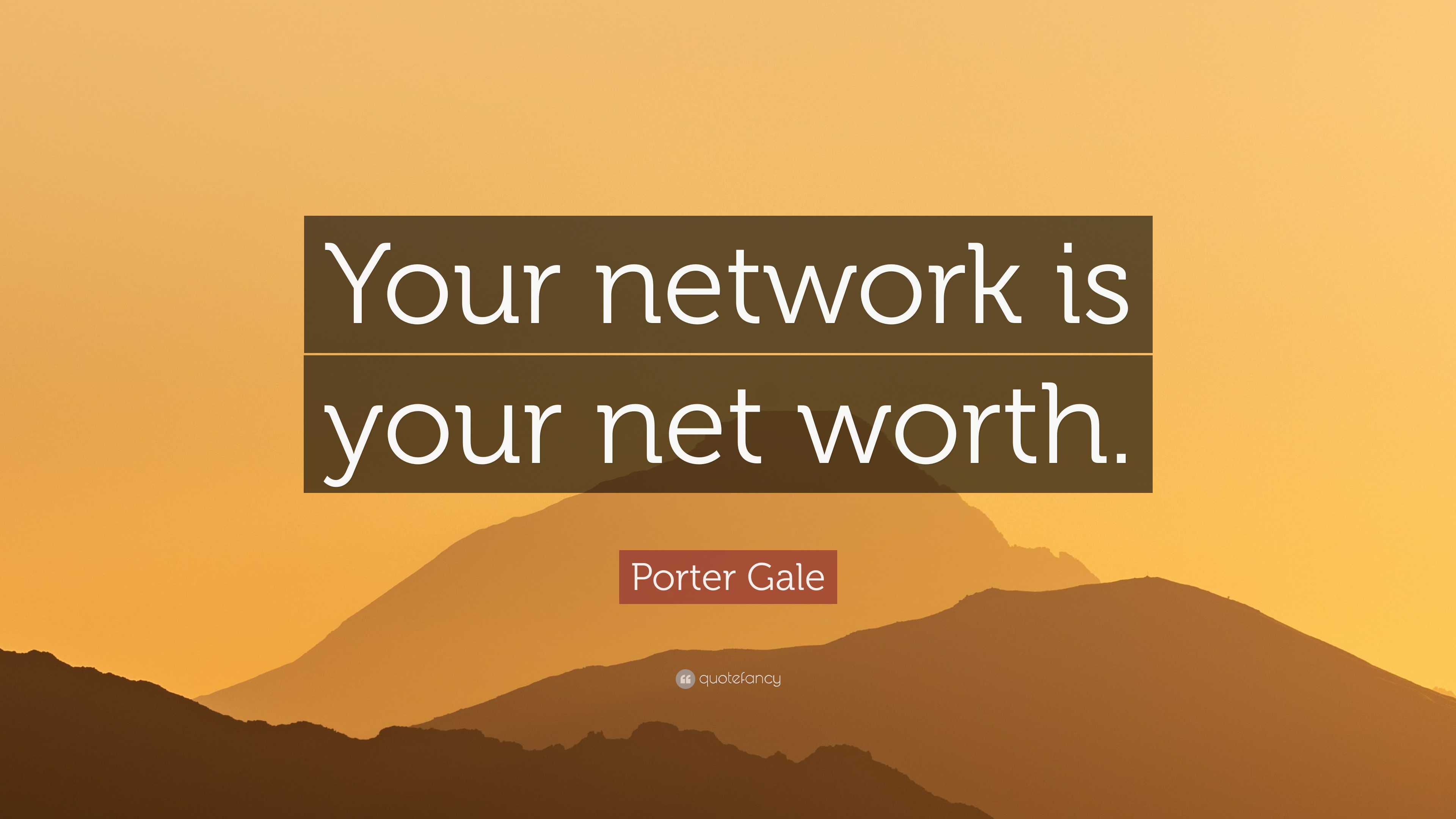
When she released Your Network Is Your Net Worth, she wasn't just talking about your bank account balance. She was talking about a fundamental shift in how we relate to each other in a world where "six degrees of separation" has basically shrunk to three. Gale, the former VP of Marketing at Virgin America, realized that your social capital—your ability to build authentic, value-based relationships—is actually the most reliable asset you own.
Finance can fail. Companies can go bust. But a network? That’s yours to keep.
The Death of the "Me" Mentality
Porter Gale makes one thing very clear: if you’re networking just to get something, you’re doing it wrong. People can smell an agenda from a mile away. In the book, she emphasizes shifting from a "me" focus to a "we" focus.
It sounds like a Hallmark card, but it’s actually savvy business.
Think about it. If you only reach out to people when you need a job or a favor, you aren't building a network; you’re just a nuisance. Gale advocates for "Give, Give, Get." You put value into the world first. You share your expertise. You introduce two people who could help each other. You do this without keeping a scorecard.
Eventually, that energy comes back. Usually, it doesn't come back from the person you gave it to, which is the weird magic of it. It comes from the "fields of creativity" you’ve been watering.
The Funnel Test: Finding Your Core
One of the coolest parts of Gale’s philosophy is the Funnel Test.
Most people try to be everything to everyone. They have a LinkedIn headline that looks like a word soup of corporate buzzwords. Gale suggests you strip that all away. She asks you to look at your passions, your purpose, and your skills, then boil them down.
How it works:
- Identify your three primary passions. These aren't just "marketing" or "sales." They should be things that actually make you tick—maybe it's sustainable living, documentary filmmaking, or urban gardening.
- Define your purpose. Why do you do what you do?
- Create your 20-word mission statement. This is your "north star."
When you know what you stand for, you stop wasting time at random mixers. You start seeking out "Hub Players"—people who share your values and can act as nodes in your network. You're not looking for "power" in the traditional sense; you're looking for alignment.
Technology as an Accelerator, Not a Crutch
We live in a world where a tweet can get you a meeting with a CEO. Gale talks about how technology has democratized access. You don't need to be in the "room where it happens" if you know how to navigate the digital space authentically.
She mentions real stories, like how a group of students from an underserved area in L.A. managed to meet Sir Richard Branson just by using clear messaging and digital savvy.
But there's a catch.
Digital tools make it easy to be lazy. Sending a canned "I'd like to join your network" request on LinkedIn is the modern equivalent of the "teeny canapés" business lunch. It’s sterile. Gale’s advice? Be personal. Mention a specific project they worked on. Show you’ve done the homework.
Why Your Network Is Your Net Worth Matters Right Now
Job security is a ghost.
In the 1950s, you stayed at a company for 40 years and got a gold watch. Today, you might have five different "careers" before you’re 40. In this environment, your "net worth" isn't just your 401(k). It’s the list of people who would take your call if you were laid off tomorrow.
Gale argues that a diverse network is a resilient one. If everyone you know works in the same office as you, you’re in trouble if that office closes. You need a "Value-Based Team" that spans different industries and backgrounds.
Actionable Steps to Build Your Net Worth:
- Audit your current circle. Are you hanging out with people who challenge you, or just people who are "just like you"? Diversity of thought is a competitive advantage.
- Schedule a "Networking Day." Porter suggests dedicating time every week to nurturing connections. If it’s not on the calendar, it won't happen.
- The "3-Word Mission." Distill what you’re about into three words. Use them to guide which events you attend and which people you reach out to.
- Be a "Connector." Try to make one introduction a week where both parties benefit. This is the fastest way to increase your value in any ecosystem.
- Listen more than you talk. Gale suggests a high listen-to-talk ratio. People love talking about themselves; if you're the one listening, you're the one learning.
True networking is transformational, not transactional. It’s about who you become through the people you choose to surround yourself with. Porter Gale’s framework reminds us that at the end of the day, business is just humans talking to humans. If you focus on the humanity, the "net worth" part usually takes care of itself.
Ready to put this into practice? Start by looking at your calendar for the next seven days. Find one person you haven't spoken to in six months—someone whose work you genuinely admire—and send them a short, no-strings-attached note about a specific thing they did that helped you. No "asks," just a "give" of genuine appreciation. That’s how you start building a network that actually lasts.