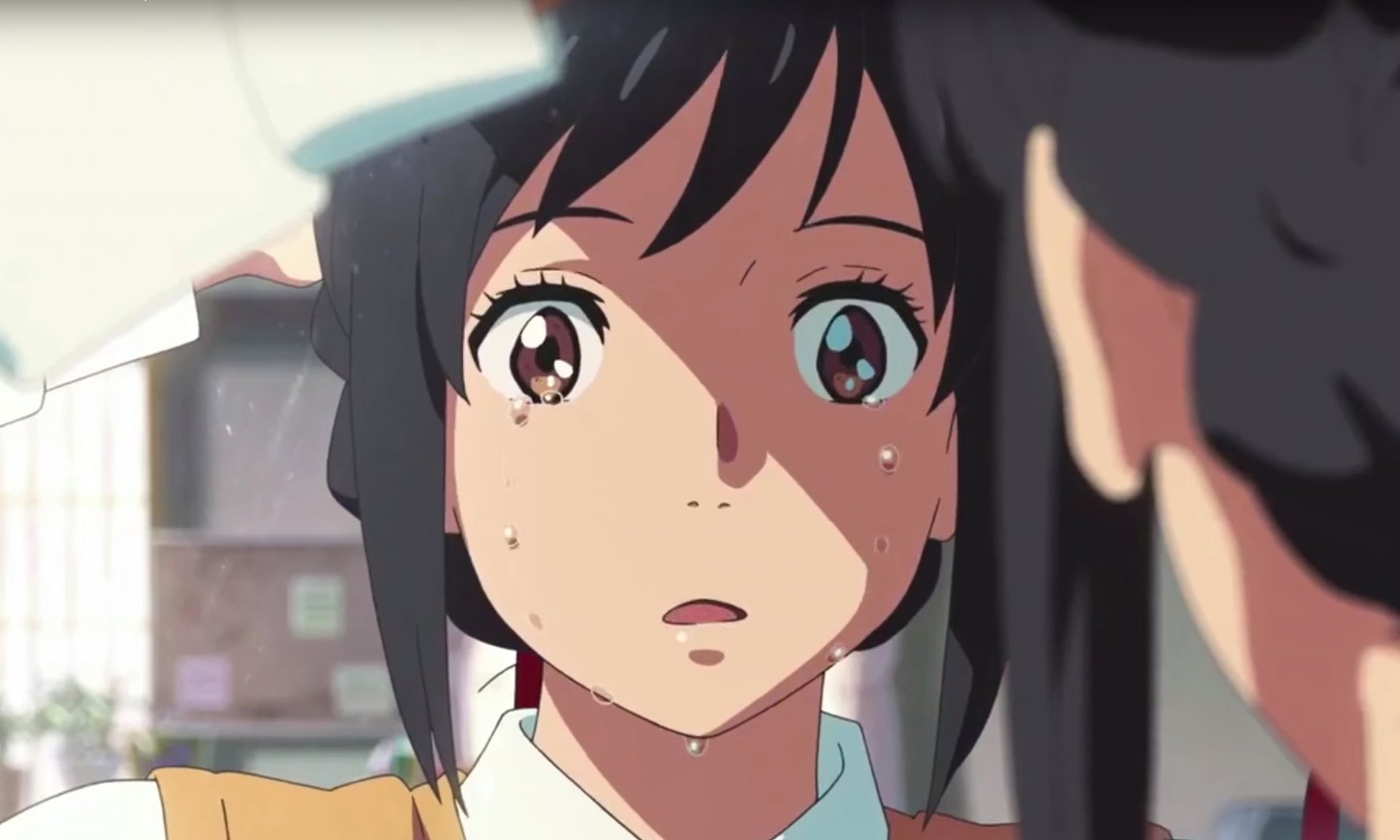
Taki and Mitsuha. If you’ve spent even five minutes in the anime community since 2016, you know those names. They are the heart of Your Name, or Kimi no Na wa, a film that basically broke the internet and the global box office simultaneously. It’s weird to think about now, but before this movie dropped, Makoto Shinkai was mostly known for being the "guy who makes pretty clouds and sad endings." He was a niche darling. Then this film happened, and suddenly, he was being hailed as the next Miyazaki. That’s a heavy crown to wear. Honestly, the comparison isn't even fair to either of them because Shinkai’s vibe is so distinctively modern, digital, and frankly, kind of obsessed with the logistics of teenage longing.
Most people think Your Name is just a body-swap rom-com. It’s not. Well, it starts that way. You get the classic gags—Taki waking up in Mitsuha’s body and being fascinated by her anatomy, Mitsuha in Taki’s body making him way more popular at his part-time job. It’s cute. It’s funny. But then Shinkai pulls the rug out from under you. He shifts the gears from a lighthearted comedy into a high-stakes supernatural thriller involving a comet, a vanished town, and the crushing weight of time. It’s that pivot that turned the Your Name Japanese movie into a cultural phenomenon.
The Complicated Reality of Itomori and the Comet Tiamat
The plot revolves around Mitsuha Miyamizu, a girl living in the rural, shrine-heavy town of Itomori, and Taki Tachibana, a city boy in Tokyo. They start swapping bodies across space and, as we later find out, time. The three-year gap is the "gotcha" moment. When Taki tries to visit Mitsuha, he finds out Itomori was wiped off the map by a fragment of the Comet Tiamat three years prior. Everyone died.
This isn't just a clever plot device. For a Japanese audience, this resonated on a visceral level. The imagery of the comet’s destruction mirrors the 2011 Tōhoku earthquake and tsunami. Shinkai has admitted in interviews, specifically with The Japan Times, that the disaster changed how he approached storytelling. He wanted to create a "what if" scenario where people could be warned, where the tragedy could be undone. It’s a form of collective healing through animation. The film captures that specific Japanese anxiety—the idea that the ground beneath your feet or the sky above your head could turn on you in an instant.
Why the Animation Still Holds Up (and Probably Always Will)
Let’s talk about the visuals. CoMix Wave Films didn't just animate a movie; they bottled lightning. Every frame of the Your Name Japanese movie looks like a desktop wallpaper. Why? Because Shinkai uses light as a character. He’s obsessed with how the sun hits a train window or how the purple twilight (the "magic hour") blurs the line between the world of the living and the dead.
The color palette is absurdly vibrant. When the comet splits in the sky, it’s beautiful and terrifying at once. This is the "Shinkai aesthetic." It’s hyper-realism. He takes mundane things—a smartphone screen, a sliding door, a can of coffee—and renders them with so much detail they feel more real than reality.
- Radwimps and the Power of Sound: You can't talk about this movie without mentioning the band Radwimps. Yojiro Noda, the lead singer, worked with Shinkai for over a year. The music wasn't just slapped on at the end; it was baked into the editing. The songs "Zenzenzense" and "Sparkle" aren't just background noise; they drive the rhythm of the film.
The Cultural nuances you might have missed
The movie is drenched in Shintoism. Mitsuha’s family runs the local shrine, and they practice Kumihimo (braid-weaving). This isn't just a hobby. The braids represent Musubi, the flow of time and the connection between people. "Threads twist, tangle, sometimes unravel, break, then connect again," says Mitsuha’s grandmother. That’s the entire movie's philosophy in a nutshell.
Then there’s the sake. Kuchikamizake. It’s an ancient form of sake made by chewing rice and spitting it out to ferment. Taki drinks Mitsuha’s sake to reconnect with her. To some Western viewers, it’s a bit "ew," but in the context of the film, it’s a profound act of intimacy. He’s literally consuming a part of her soul to cross the boundary of death. It’s heavy stuff for a "teen movie."
The "Your Name" Effect on Tourism
Life imitates art. After the movie became a massive hit, "pilgrimages" to real-life locations exploded. The famous red-railed stairs where the final scene takes place? Those are real. They’re at the Suga Shrine in Yotsuya, Tokyo. Before 2016, it was just a quiet neighborhood spot. Now, you’ll find a line of tourists trying to recreate the poster shot. Hida City in Gifu Prefecture also saw a massive spike in visitors because it served as the inspiration for Itomori.
This "Anime Tourism" is a billion-yen industry now. It’s not just about seeing a pretty place; it’s about standing where Taki stood. It’s about feeling that connection to a story that moved you. The Your Name Japanese movie proved that anime could drive real-world economic shifts, not just toy sales.
Common Misconceptions: Is It a "Perfect" Movie?
Look, I love this film, but it’s not without flaws. Some critics point out that the logic of the body-swapping is... shaky. Why didn't they notice the dates on their phones? If I woke up in someone else’s body, the first thing I’d do is check the year. Taki and Mitsuha just sort of roll with it.
There’s also the "Red Thread of Fate" trope. Some find it a bit cliché. The idea that two people are destined to be together regardless of time or space is a staple of East Asian folklore, but in a modern setting, it can feel a bit sugary. However, Shinkai balances this by making the characters work for it. They don't just "get" their happy ending; they have to fight through a literal apocalypse and years of forgetting each other’s names.
The movie’s ending is polarizing. Some people wanted a wedding. Some wanted them to pass each other on the stairs and keep walking (which is what Shinkai did in 5 Centimeters per Second, much to the heartbreak of fans everywhere). But the ending we got—the "What is your name?" moment—is a compromise. It’s hopeful without being overly saccharine. It suggests that even if we forget the details of our traumas or our triumphs, the feeling remains.
How to Experience Your Name Today
If you’re coming to the Your Name Japanese movie for the first time, or the tenth, there are a few things to keep in mind to get the most out of it.
- Watch the Sub first: The English dub is actually quite good (Michael Sinterniklaas and Stephanie Sheh do great work), but the Japanese voice acting by Ryunosuke Kamiki and Mone Kamishiraishi has a specific cadence that matches the animation perfectly.
- Look at the backgrounds: Seriously. Stop looking at the characters for a second and look at the sky, the puddles, and the architecture. The level of detail tells its own story about the environment.
- Check out the "Disaster Trilogy": Shinkai followed this up with Weathering With You and Suzume. They all deal with similar themes—nature, catastrophe, and young love. Watching them in order shows how he’s refined his message over the years.
The Actionable Takeaway for Fans and Creators
If you’re a storyteller or a creator, study the pacing of this film. It’s a masterclass in "The Midpoint Shift." It teaches us that you can start a story in one genre and end it in another as long as the emotional core remains consistent. For the casual viewer, the takeaway is simpler: don't take your "everyday" for granted. The mundane stuff—the commute, the coffee, the chores—is exactly what the characters in the movie miss most when it’s gone.
To truly appreciate the film's impact, you should:
- Research the 2011 Tohoku Earthquake: Understanding the collective trauma of Japan makes the "saving the town" subplot much more powerful.
- Explore Kumihimo: You can actually buy or learn to make these braided cords. They are a beautiful physical representation of the film’s themes.
- Listen to the full Radwimps soundtrack: There are orchestral versions that bring out the nuance of the score even more than the movie edits.
The movie isn't just a piece of media; it’s a landmark in animation history. It bridged the gap between "otaku" culture and the mainstream in a way few films ever have. Whether you're in it for the sci-fi, the romance, or the gorgeous clouds, it’s a journey worth taking. It reminds us that even when we lose our way, or even our names, the connections we make are never truly gone. They’re just waiting for the right moment to be remembered.



