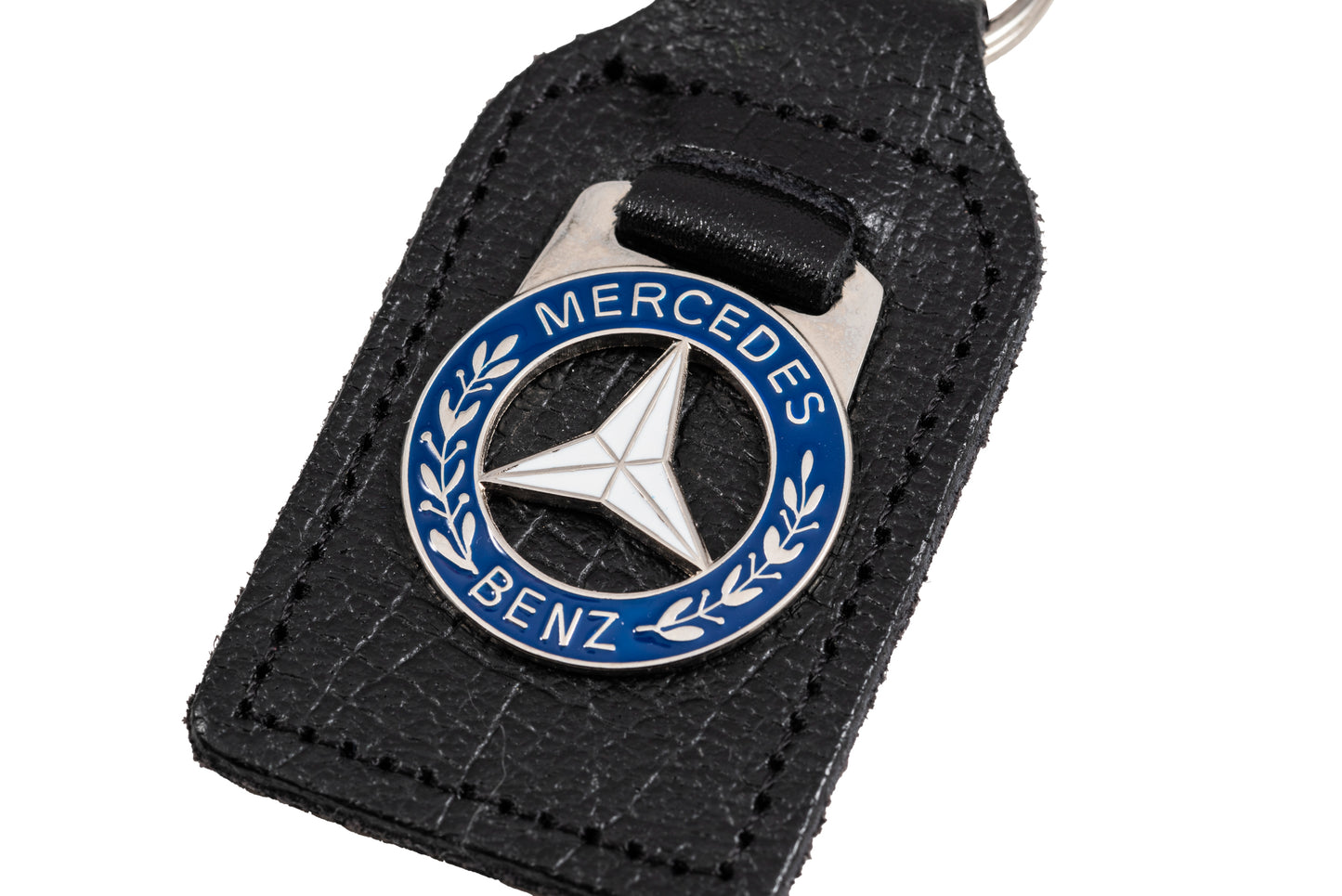
You’re standing in the grocery store parking lot, arms full of bags, and you press the button. Nothing happens. You press it again, harder this time, as if physical force could somehow jumpstart the radio frequency. Still nothing. It’s that specific, sinking feeling every owner of a luxury car eventually faces: the Mercedes Benz key fob has decided to retire without notice.
It’s just a piece of plastic, right? Wrong.
Inside that chrome-edged shell is a sophisticated piece of German engineering that communicates with your car’s Immobilizer System (EIS) using rolling codes that change every single time you click. It’s basically a tiny, encrypted computer. Most people think a dead fob means a $600 trip to the dealership and a three-hour wait in a sterile lounge drinking mediocre espresso. Sometimes that’s true. But often, it's a simple fix that you can handle in your driveway with a five-dollar battery and a little bit of patience. Honestly, the "luxury" aspect of these cars often makes owners afraid to touch anything electronic, but the key fob shouldn't be a mystery.
The Evolution of the Chrome and Black Plastic
Mercedes didn't always use these "SmartKeys." If you go back far enough, to the W124 or W126 eras, you were looking at a metal blade. Simple. Reliable. Then came the flip keys, and finally, the infra-red and radio frequency monsters we use today.
The design has shifted through three main generations. You’ve got the "Big Black" fob from the early 2000s, which felt like a brick in your pocket. Then came the sleek "Chrome" fobs (versions 2 and 3) that most C-Class and E-Class owners recognize. Now, the newest models—the W223 S-Class and the EQS—feature a teardrop-shaped fob that is almost entirely touch-sensitive and gloss black. Each generation handles security differently. The older ones rely heavily on an infra-red (IR) eye at the tip, while the new ones use Ultra-Wideband (UWB) technology to prevent "relay attacks" where thieves intercept your signal.
Why does this matter to you? Because the way you troubleshoot a 2010 GLK fob is fundamentally different from a 2024 GLE.
When the Battery Isn't Actually the Problem
So, you replaced the CR2025 or CR2032 battery and the little red light flashes, but the doors still won't unlock. This is where most people give up and call a tow truck. Don't do that yet.
Check the "Keyless Go" function specifically. Sometimes the car forgets the fob's proximity, but the physical ignition still works. Mercedes keys have a "transponder chip" that doesn't actually need battery power to start the car. It uses induction. If you have a push-to-start button, try popping it out with your fingernail (it’s just a plastic cap on many models like the W204 or W212). Insert the nose of the fob into the slot and turn it. If the car starts, your fob is alive; the issue is likely the antenna module in your car or a de-synced rolling code.
Also, check for "Sleep Mode." On newer Mercedes Benz key fob models, double-clicking the lock button quickly will disable the proximity sensor to save battery. It’s a theft-prevention feature too. If you accidentally did this, the car won't recognize you're there until you press a button manually.
Why the Dealership Charges a Small Fortune
Let’s talk about the elephant in the room: the price. When you lose a key, the dealer doesn't just grab one off a shelf. They have to order a "theft-relevant part" (TRP) from a central warehouse, often in Texas or Germany, coded specifically to your VIN.
The security architecture is called FBS3 or FBS4 (Fahrberechtigungssystem).
- FBS3: These are the older keys. Local high-end locksmiths can often clone these or program new ones because the encryption has been cracked by the aftermarket community.
- FBS4: This is the current nightmare. Since roughly 2014/2015, Mercedes locked down the servers. Almost nobody except an authorized dealer can program these.
This monopoly is why you’ll see quotes for $500, $700, or even $1,000. You aren't just paying for the plastic; you’re paying for the secure handshake between the Mercedes-Benz corporate servers and your car’s ECU. It’s annoying. It feels like a cash grab. But from a security standpoint, it’s why Mercedes vehicles are significantly harder to steal via "key cloning" than many other brands.
The Mystery of the Infrared Eye
Ever notice that little dark square on your driver’s side door handle? That’s the IR receiver. If your remote’s radio frequency (RF) isn't working—maybe you’re near a cell tower or a high-interference area—you can point the tip of the Mercedes Benz key fob directly at that handle and hold the button.
This is also how you perform the "Summer Opening" feature.
- Walk up to the car.
- Aim the fob at the door handle sensor.
- Press and hold the unlock button.
- Watch as all the windows and the sunroof slide open simultaneously.
It’s a lifesaver in July. If this works but the radio buttons don't work from 20 feet away, your fob's internal RF transmitter is shot, but the IR board is still healthy. You can live with this, but it’s a sign the fob is on its last legs.
Water Damage and the Rice Myth
If you dropped your fob in a puddle or, heaven forbid, it went through the wash in your jeans, stop. Do not press the buttons. Pressing a button on a wet fob completes a circuit and fries the board.
Forget the bowl of rice; it doesn't do anything but get dust inside the casing. Instead, take the mechanical key out. Pop the back cover off. Remove the batteries. If you're feeling brave, use a small pick to separate the internal circuit board from the plastic housing. Clean it with 90% Isopropyl alcohol and a soft toothbrush. Water doesn't kill electronics; the minerals in the water and the resulting corrosion do. If you clean it before the corrosion sets in, you have a 70% chance of saving that $600.
Finding a Locksmith vs. The Dealer
If you need a spare Mercedes Benz key fob, the "Buy a used one on eBay" trick almost never works. These keys are OTP (One-Time Programmable). Once they are synced to a VIN, they are married for life. You cannot "reprogram" a key from a salvaged C300 to work on your E350.
However, specialized automotive locksmiths—the ones with kits like the VVDI MB Tool—can sometimes work magic on pre-2015 models. They can read the data from your Ignition Switch and write it to a "virgin" aftermarket key. This usually costs half of what the dealer asks. If your car is 2016 or newer, though, don't waste your time calling around. You’re going to have to bite the bullet and head to the dealership with your registration and ID in hand.
Real-World Troubleshooting Steps
If your fob is acting up, follow this specific order before spending money.
Start by checking the battery voltage. Even "new" batteries from a junk drawer can be low. These fobs are incredibly sensitive to voltage drops; a battery at 2.8V might light the LED but won't have the juice to send a signal to the car. Use a fresh Energizer or Duracell. Cheap generic batteries often have slightly different thicknesses and won't make a solid contact with the metal tabs inside the fob.
Next, inspect the metal contact points. If you see a green or white crust, that’s corrosion. Scrape it off gently with a flathead screwdriver.
Look at the "Keyless Go" button in your car. If the car starts when the key is in the dash but won't start with the button, your fob's proximity chip is likely the culprit, or your car's auxiliary battery (the small one, not the main starter battery) is failing. Mercedes-Benz vehicles use that small secondary battery to power the security modules when the car is off. If that battery is weak, the car "sleeps" too deeply to hear the fob's wake-up call.
A Quick Note on Shell Replacements
Is your key just ugly? Scratched up? Buttons worn through? You don't need a new key. You can buy a "shell kit" online. You just transplant the green circuit board from your old, beat-up fob into the new housing. It takes five minutes and makes the key feel brand new. Just be careful not to lose the tiny transponder chip if you have an older "Big Black" style key—it's a small carbon piece that sometimes sits loose. Without it, the car will never start.
Protecting Your Signal
Relay theft is a real thing. High-tech thieves use boosters to "grab" the signal from your Mercedes Benz key fob while it's sitting on your kitchen counter and relay it to the car in the driveway.
If you have a newer Mercedes, remember the double-click trick to put the key to sleep. If you have an older model, consider a Faraday pouch. Or, honestly, just don't leave your keys right next to the front door. Placing them just fifteen feet further into the house is usually enough to break the link that these signal boosters rely on.
The Physical Blade: Don't Forget It Exists
Inside every fob is a mechanical metal key. Most people forget it’s there until the car battery dies. If your car is totally unresponsive, pull the small release tab on the fob and slide out the blade. On many Mercedes models, the keyhole is hidden under a plastic cap on the driver’s door handle. You have to pop that cap off to see the manual lock. This won't start the engine, but it gets you out of the rain and allows you to pop the hood to jump-start the battery.
Actionable Steps for the Road
- Verify your year: If it’s 2015 or later, you likely have an FBS4 system. Only the dealer can give you a brand-new, programmed key. Stop searching for "cheap" alternatives; they don't exist for this specific architecture.
- Carry a spare battery: Keep a CR2025 in your glove box or wallet. It's the cheapest insurance policy you'll ever buy.
- Clean the IR eye: If the remote is flaky, wipe the tip of the key and the door handle sensor with a clean cloth. Dirt blocks the signal.
- Test the induction: If the fob buttons fail, always try inserting the key into the ignition slot or the "emergency start" backup slot (usually located in the center console or at the bottom of the steering column).
- Check the Aux Battery: If "Keyless Go" stops working but the buttons on the fob still work, look for an "Auxiliary Battery Malfunction" message on your dash. That’s usually the real culprit, not the key.
Ownership of a Mercedes comes with these little technical hurdles. Understanding that the fob is a two-way communication device rather than a simple remote helps you diagnose issues without panic. It’s about knowing the difference between a software desync and a hardware failure. Most of the time, your key just needs a fresh battery and a clear line of sight._