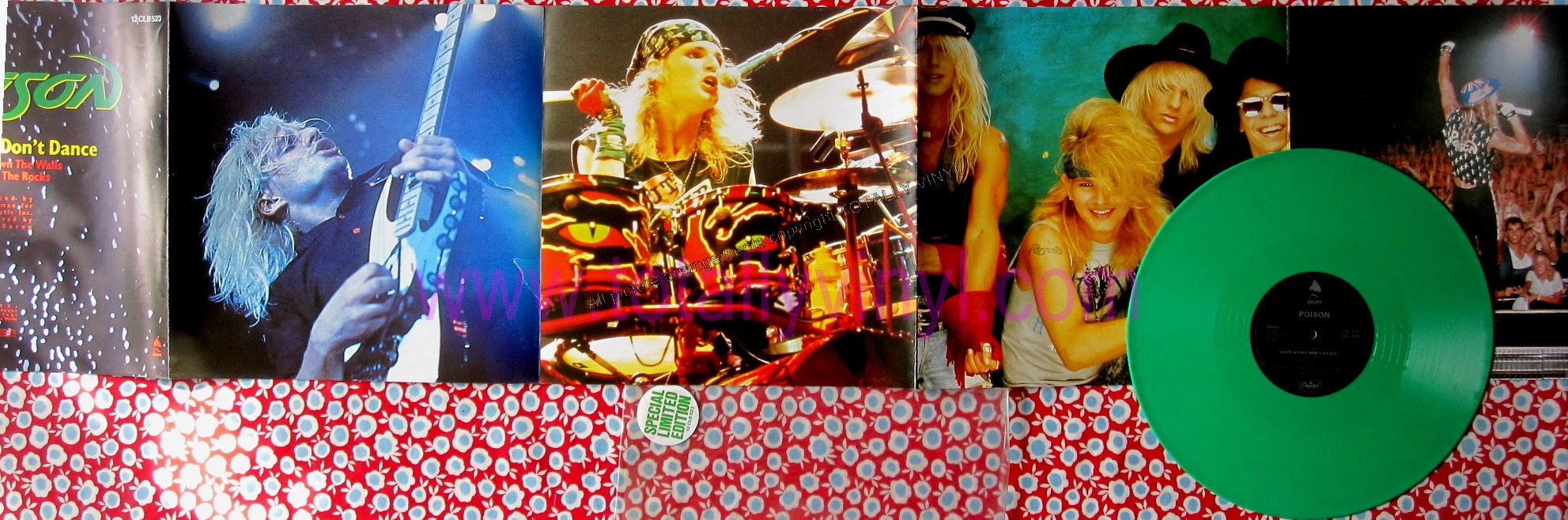
Rock and roll is basically built on the back of rebellion. It's about that specific, itchy friction between kids who want to crank the volume and parents who just want some peace and quiet. In 1988, a bunch of guys from Pennsylvania via the Sunset Strip decided to take a song from the early seventies and turn it into a neon-drenched anthem for a new generation. We're talking about the Your Mama Don't Dance Poison cover, a track that arguably did more for the band's longevity than almost any other song on their sophomore record.
Honestly, it shouldn't have worked.
The original version of "Your Mama Don't Dance" was a 1972 smash hit by Loggins and Messina. It was breezy. It had a bit of a shuffle. It was folk-rock royalty. When Poison decided to tackle it for their second album, Open Up and Say... Ahh!, the purists were skeptical. How does a band known for "Talk Dirty to Me" find common ground with Jim Loggins? Well, they didn't try to play it like a folk song. They turned it into a stomp.
The Risky Move of Covering Loggins and Messina
Covering a classic is a gamble. You've got two options: you can copy it note-for-note, which is boring, or you can strip it down and rebuild it in your own image. Poison chose the latter. By 1988, Bret Michaels, C.C. DeVille, Bobby Dall, and Rikki Rockett were the undisputed kings of the glam metal scene, but they needed to prove they weren't just a flash in the pan.
The production on the Poison version is pure eighties excess in the best way possible. Produced by Tom Werman—the man behind hits for Mötley Crüe and Twisted Sister—the track replaced the acoustic piano and light percussion of the original with C.C. DeVille's jagged, bluesy guitar riffs and a drum beat that felt like a sledgehammer. It wasn't just a cover; it was an appropriation. They made the song feel like it belonged in a sticky-floored club in Hollywood rather than a campfire setting.
Why Your Mama Don't Dance Poison Version Hit Different
Structure matters. In the original, there’s a certain politeness. In the Your Mama Don't Dance Poison rendition, Bret Michaels brings a snarl to the lyrics. When he sings about the "old man" catching you in the backseat of a car, it feels a lot more scandalous than it did in 1972.
The song peaked at number 10 on the Billboard Hot 100. That’s huge. It's actually one of the band's highest-charting singles ever. Most people forget that. They think of "Every Rose Has Its Thorn" first, obviously, but this cover was the engine that kept the album sales moving. It bridged the gap between the older generation who recognized the tune and the teenagers who just wanted to see C.C. DeVille shred.
Breaking Down the Sound
If you listen closely to the solo, C.C. DeVille isn't just playing scales. He’s leaning into a very specific type of rock-and-roll chaotic energy. It’s messy. It’s loud. It’s fun. That was the whole point of Poison. They weren't trying to be the most technical musicians in the world—though C.C. is often underrated—they were trying to be the most entertaining.
The music video helped too. It was on constant rotation on MTV. It featured the band doing what they did best: looking like they were having the time of their lives while wearing more hairspray than a local pageant. The visuals reinforced the song’s theme of youthful defiance.
The Cultural Impact of the 1988 Release
It's easy to look back now and call it "cheese." But in the late eighties, this was the soundtrack to every Friday night. The Your Mama Don't Dance Poison cover happened at the absolute peak of the MTV era. It helped Open Up and Say... Ahh! go five-times platinum.
Think about that for a second. Five million copies.
The song acted as a gateway. It showed that Poison had a sense of humor and an appreciation for the roots of rock. They weren't just "hair" and "makeup." They understood the hook-driven nature of pop-rock. Jim Loggins himself has been quoted over the years acknowledging the royalties from the Poison version were a nice "thank you" from the metal world. It’s a rare case where a cover version breathes such intense new life into a track that a whole new demographic claims it as their own.
The Recording Process and the Tom Werman Touch
Tom Werman is a legend for a reason. He knew how to capture the "live" feeling in a studio environment. When they tracked Your Mama Don't Dance, the goal was to make it sound like a party. You can hear the "hey!" shouts and the background noise that makes the listener feel like they're in the room.
Rikki Rockett’s drumming on this track is particularly driving. He moves away from the more complex fills seen on "Nothin' But a Good Time" and sticks to a heavy, four-on-the-floor feel that keeps the groove locked in. Bobby Dall’s bass line provides the necessary "chunk" to ground the high-frequency screech of the guitars.
Dealing With the Critics
Critics at the time were often brutal toward Poison. They called them "poseurs." They said they were style over substance. Using a cover song as a lead single is often seen as a sign of creative exhaustion. But for Poison, it was a strategic masterstroke. It proved they could take a melody everyone knew and make it "dangerous" for the 1988 landscape.
The lyrics about the "movie show" and the "backseat" are timeless. They resonate because the generational gap is a permanent fixture of human society. Whether it’s 1972, 1988, or 2026, parents are always going to find their kids' music too loud, and kids are always going to find their parents too restrictive.
The Live Legacy
If you go to a Poison show today, decades after the song was released, the crowd still loses their minds when those first few chords hit. It’s a staple of their setlist. It’s the moment in the show where everyone—from the fifty-year-olds who bought the cassette to the twenty-somethings who found them on streaming—sings along.
Technical Nuances in the Poison Arrangement
Poison changed the key slightly to fit Bret's vocal range, giving it a grittier, more mid-range punch. They also added a heavy emphasis on the "and your daddy don't rock and roll" line, making it the focal point of the chorus. This shift moved the song from a lighthearted observation to a defiant anthem.
Interestingly, the guitar solo in the Poison version is significantly more aggressive than anything in the original. C.C. DeVille uses a lot of "flash" techniques—fast runs, pinch harmonics, and heavy vibrato—which were the hallmarks of the era. It turned a transition piece into a highlight.
What This Means for Rock History
We often categorize bands into neat little boxes. "Glam," "Grunge," "Classic Rock." The Your Mama Don't Dance Poison cover blurred those lines. It was a classic rock song delivered with a glam metal aesthetic. It showed that the DNA of rock and roll is consistent, regardless of how much spandex or leather the band is wearing.
It also signaled the beginning of the end of the "purist" era. By the late eighties, sampling and covering were becoming more commonplace across all genres. Poison was just ahead of the curve in realizing that nostalgia is a powerful tool when packaged correctly.
Practical Takeaways for Rock Fans and Musicians
If you're a musician or a fan of rock history, there are a few things to learn from the success of this specific cover.
- Don't be afraid of the "uncool" source material. Poison took a folk-rock song and made it metal. If the melody is strong, you can adapt it to any genre.
- Production is everything. The "party" atmosphere of the Poison version was intentional. Use room mics and gang vocals to create energy in a recording.
- Focus on the hook. Poison stripped away the flute and the softer elements of the original to ensure the chorus was the loudest part of the song.
- Visuals matter. The music video for "Your Mama Don't Dance" cemented the band's image during their most successful period.
To truly appreciate the Your Mama Don't Dance Poison version, you have to listen to it in the context of the 1988 rock scene. It was a time of transition, a time of excess, and a time when a simple three-chord song about annoyed parents could still conquer the world.
Next time you're building a classic rock or eighties playlist, put the Loggins and Messina version right next to the Poison version. The contrast is fascinating. It’s the same story, told by two different generations, with two very different sets of priorities. One wants to dance in the kitchen; the other wants to burn the house down. Both are essential to the story of rock and roll.
To dig deeper into the Poison discography, start with the rest of the Open Up and Say... Ahh! album. It provides the necessary context for why this cover worked so well within their broader sound. Pay close attention to "Look But You Can't Touch" for a similar high-energy vibe. For a different perspective, compare Poison’s cover style to Great White’s "Once Bitten, Twice Shy" or Quiet Riot’s "Cum On Feel the Noize." These bands all mastered the art of the "hard rock makeover," but Poison's take on Loggins and Messina remains one of the most commercially successful and culturally enduring examples of the craft.



