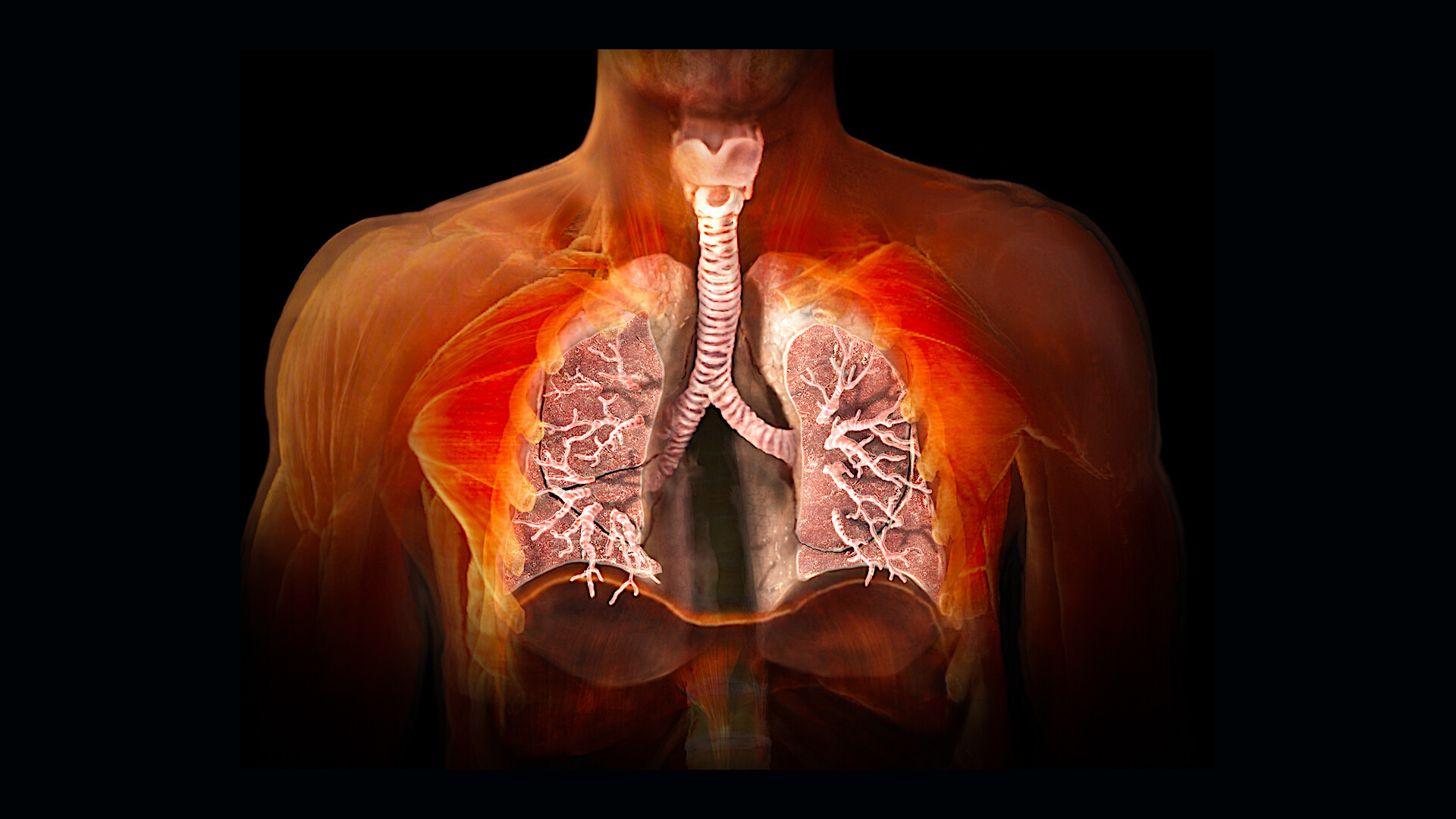
You probably don’t think about breathing. It just happens. Right now, as you’re reading this, your diaphragm is contracting, pulling air into two spongy, pinkish-grey organs that occupy most of your chest cavity. But here’s the thing: the human body lungs system isn't just a pair of bellows. It’s a massive, fractal-like interface—a border crossing where the outside world literally enters your bloodstream.
If you were to take your lungs and stretch them out flat, they’d cover roughly the surface area of a tennis court. That’s a lot of real estate packed into your ribcage. It’s efficient. It's delicate. And honestly, it’s constantly under siege from every pollutant, virus, and dust mite you encounter.
The Anatomy Most People Get Wrong
We usually picture the lungs as two identical bags. They aren't. Your right lung is shorter and wider because it has to make room for your liver. It has three lobes. Your left lung is narrower and only has two lobes because it has to share space with your heart. There’s actually a little indentation called the cardiac notch where the heart nestles in.
The journey of air starts at the trachea. It's a stiff tube held open by C-shaped rings of cartilage. Think of it like a vacuum cleaner hose. If it were soft, it would collapse every time you took a deep breath. From there, it splits into the primary bronchi, then into smaller bronchioles, and finally into about 300 to 500 million tiny air sacs called alveoli.
This is where the magic—the gas exchange—happens. Each alveolus is wrapped in a web of capillaries so thin that red blood cells have to line up in single file to squeeze through. It’s at this microscopic level that the human body lungs system does its heavy lifting. Oxygen hops onto hemoglobin, and carbon dioxide (the waste product of your cells) hops off to be exhaled.
The Alveoli: Life at the Micro-Scale
If your alveoli lose their elasticity, you’re in trouble. This is what happens in conditions like emphysema. The walls of those tiny sacs break down, creating fewer, larger sacs. Imagine the difference between a bowl of grapes and a large balloon. The grapes have way more surface area. More surface area means more oxygen in your blood. When those walls fail, you’re basically gasping for air while having a chest full of it. It’s a terrifying paradox.
Why "Deep Breathing" is Often Misunderstood
You’ve heard it a million times: "Take a deep breath." Most people respond by shrugging their shoulders up toward their ears. That’s actually terrible advice. That’s "chest breathing," and it uses the secondary muscles of the neck and upper back. It triggers the sympathetic nervous system—your fight-or-flight response.
The real engine of the human body lungs system is the diaphragm. It’s a dome-shaped muscle sitting at the base of your ribs. When it contracts, it flattens out, creating a vacuum that pulls air deep into the lower lobes of the lungs where the most blood flow is. This is why "belly breathing" feels so much more relaxing; it stimulates the vagus nerve and lowers your heart rate.
The Defense Mechanisms You Never Notice
Your lungs are essentially an open door to the environment. To keep you from dying of an infection every time you go to the grocery store, the system has layers of defense.
- Mucus and Cilia: Your airways are lined with a sticky layer of "goo" that traps dust and bacteria. Beneath that are millions of tiny hair-like structures called cilia. They beat in a rhythmic wave—about 10 to 12 times per second—moving that mucus up toward your throat so you can swallow it (yeah, it's gross, but it works).
- Alveolar Macrophages: These are the "Pac-Man" cells of your immune system. If a piece of coal dust or a bacteria makes it past the mucus, these cells literally eat the invaders.
- The Cough Reflex: This is a violent, high-speed blast of air meant to clear the "pipes." A cough can move air at speeds up to 50 miles per hour.
The Lung-Brain Connection
Interestingly, the lungs are one of the few autonomic systems we can consciously control. You can’t tell your stomach to digest faster or your kidneys to filter more blood, but you can hold your breath or speed it up.
This is a biological "hack." By changing how the human body lungs system operates, you can change your brain chemistry. Rapid, shallow breathing (hyperventilation) dumps too much CO2, which actually makes it harder for oxygen to detach from your blood and enter your brain. This leads to lightheadedness. Conversely, slow, rhythmic breathing can lower cortisol levels almost instantly.
Common Myths and Realities
There's a lot of bad info out there. Let's clear some of it up.
Myth: Lungs can "self-clean" after decades of smoking in just a week. Reality: While the cilia start working again within days of quitting, the structural damage (like scarring or emphysema) is often permanent. However, the risk of lung cancer drops significantly over ten years.
Myth: You only use a small percentage of your lung capacity. Reality: You use what you need. At rest, you’re moving about half a liter of air (tidal volume). During intense exercise, you can move up to 3 or 4 liters per breath. The "unused" space is a reserve for when you need to run for your life or climb a mountain.
Myth: Hold your breath to get more oxygen. Reality: Holding your breath actually increases CO2 levels in the blood. The "urge" to breathe isn't caused by a lack of oxygen; it's caused by the buildup of carbon dioxide. Your brain is much more sensitive to CO2 levels than oxygen levels.
Keeping the System Healthy
The human body lungs system is resilient but not invincible. Air quality is the biggest external factor. Recent studies, including those published in The Lancet Planetary Health, show a direct correlation between fine particulate matter (PM2.5) and chronic obstructive pulmonary disease (COPD), even in non-smokers. These tiny particles are small enough to pass through the lung lining and enter the bloodstream, causing systemic inflammation.
Vaping is another modern concern. While often marketed as a "safer" alternative to cigarettes, the aerosol contains flavoring chemicals like diacetyl, which has been linked to "popcorn lung" (bronchiolitis obliterans), a condition that scars the smallest airways.
Actionable Insights for Lung Longevity
If you want to keep your respiratory system in top shape, "detox" teas aren't going to do it. You need physiological changes.
- Check the AQI: Before you go for a long run, check the Air Quality Index. If it’s over 100, your lungs are taking a hit. Exercise increases your ventilation rate, meaning you're pulling more pollutants deeper into those delicate alveoli.
- Practice Resistance Breathing: You can actually strengthen your diaphragm. Using devices that restrict airflow during exercise or simply practicing "pursed-lip breathing" (inhale through the nose, exhale slowly through puckered lips) improves lung efficiency.
- Humidity Matters: Lungs like it moist. Air that is too dry (common in heated homes during winter) can dry out the mucus membranes, making it easier for viruses to take hold. Aim for indoor humidity between 30% and 50%.
- Radon Testing: This is the one nobody talks about. Radon is a colorless, odorless gas that seeps out of the ground and is the second leading cause of lung cancer. If you live in a basement or a ground-floor apartment, get a $20 test kit. It’s a simple fix that saves lives.
Your lungs are the only internal organs that are constantly exposed to the outside world. Treat them like the high-performance filters they are. Stay active, watch the air you breathe, and don't take that next inhale for granted. It’s doing a lot more work than you think.
/i.s3.glbimg.com/v1/AUTH_08fbf48bc0524877943fe86e43087e7a/internal_photos/bs/2025/H/e/ewwgKCQCSopdUJUwy6DA/imagem-2025-04-27-114802986.png)


