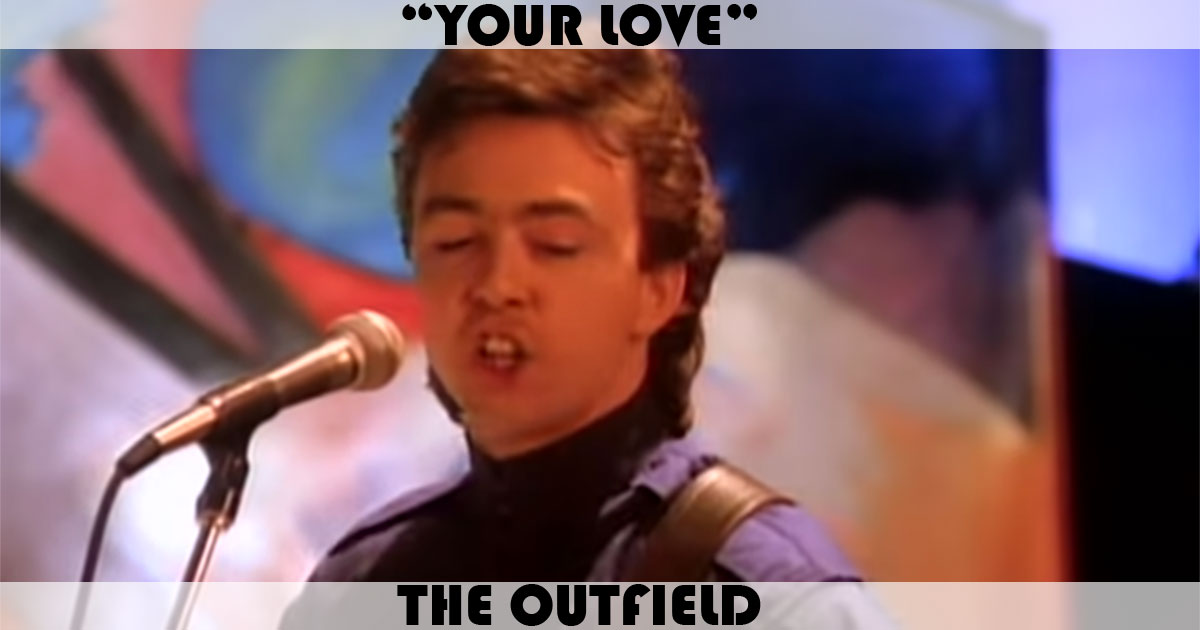
You know that opening drum fill. It’s snappy, slightly gated, and immediately followed by a guitar riff that feels like 1985 distilled into a single chord. Then comes Tony Lewis. He launches into "Josie’s on a vacation far away," and suddenly, every person in the bar or at the baseball stadium is trying—and mostly failing—to hit those skyscraper-high notes. It’s a strange phenomenon. Your Love by The Outfield isn't just a song anymore; it’s a cultural reflex.
But here’s the thing about "Your Love" that most people sort of gloss over: it’s actually a pretty dark song. We treat it like this upbeat, feel-good anthem of the summer, but if you actually listen to what John Spinks wrote, it’s a story about infidelity and using someone as a temporary fix while a girlfriend is out of town. It’s messy. It’s human. Maybe that’s why it stuck.
The Weird History of Your Love by The Outfield
The Outfield weren’t actually American, which surprises a lot of people because they sound like the quintessential "Big 80s" US rock band. They were from London. Originally called The Baseball Boys—a nod to the cult classic film The Warriors—they eventually landed on The Outfield. When they released their debut album, Play Deep, in 1985, they were essentially unknown.
John Spinks, the band's guitarist and primary songwriter, wrote the track in about twenty minutes. He wasn't trying to change the world. He was just trying to write a catchy tune. According to various interviews Spinks gave before his passing in 2014, the lyrics weren't even based on a real person. Josie wasn't a real girl. She was just a name that fit the meter of the line.
The song climbed the Billboard Hot 100, eventually peaking at number 6 in 1986. It’s funny how time works in the music industry. Usually, a Top 10 hit from forty years ago fades into the background noise of "lite rock" stations. Yet, "Your Love" has actually grown in stature. It has this weird, enduring vitality that tracks by much bigger bands from that era seem to have lost.
Why the Production Works (Even Now)
If you pull the track apart, it’s a masterclass in power-pop efficiency. Produced by William Wittman, who also worked with Cyndi Lauper, the sound is incredibly lean. There’s no synth-heavy bloat. It’s just guitar, bass, drums, and those soaring vocals.
The vocal performance by Tony Lewis is the real anchor. He had this naturally high tenor that sounded effortless, even though he was pushing his range to the limit. Most singers lose their power when they go that high. Lewis didn’t. He sounded urgent. That urgency is what makes the song feel like it’s happening right now, regardless of whether you're listening to it on a Walkman or a pair of AirPods.
The "Josie" Mystery and the Lyrics
Honestly, the lyrics are kind of problematic if you look at them under a 21st-century microscope. "I just want to use your love tonight." It’s blunt. There’s no romanticizing the situation. The narrator is lonely, his girlfriend is gone, and he’s making a move on someone else.
- It’s a song about a one-night stand.
- The stakes feel high because of the minor chords in the verse.
- The "use your love" hook is arguably one of the most honest lines in pop history.
Despite the sketchy ethics of the narrator, the song doesn't feel predatory; it feels desperate. That’s a subtle distinction, but it’s why it works. It’s the sound of a 2 a.m. phone call.
The Sports Connection and the Second Life
You can't talk about Your Love by The Outfield without talking about sports. It’s the ultimate walk-up song. Charlie Blackmon of the Colorado Rockies famously used it, leading to entire stadiums screaming the lyrics in unison. It’s become a staple for the New England Patriots and the Chicago White Sox.
Why sports? It’s the communal aspect. The song has a very specific "shout-ability" factor. When that chorus hits, it’s impossible not to participate. It’s built for 40,000 people to sing together. This second life in stadiums has kept the song's streaming numbers through the roof, long after other 80s hits have flatlined. On Spotify, it’s sitting at hundreds of millions of plays, outperforming many Hall of Fame acts.
The Technical Difficulty of "The Note"
Musicians often talk about the "money note" in a song. In "Your Love," it’s the word "tonight" at the end of the chorus. Lewis hits a high B4, which is deep into the "tenor scream" territory. For most male vocalists, that’s right at the breaking point of their chest voice and head voice.
If you’re trying to cover this song in a basement band, you realize quickly how hard it is. You can’t just "sing" it. You have to attack it. The guitar work is deceptively simple, too. Spinks used a lot of open strings and ringing chords that create a "wall of sound" effect without needing ten layers of overdubs. It’s just smart songwriting.
Misconceptions About the Band
A lot of people think The Outfield were one-hit wonders. They weren't. "All the Love in the World" and "Say It Isn't So" were also hits, but they just didn't have the same cultural "sticky" factor as "Your Love." They had a very specific niche—basically being the British version of The Cars or Journey—and they filled it perfectly for a few years.
Sadly, the band’s story is marked by loss. John Spinks died of liver cancer in 2014, and Tony Lewis passed away unexpectedly in 2020. It’s a bit tragic that the men who created this indestructible, immortal piece of pop culture are no longer here to see its continued growth. But their legacy is essentially played every hour of every day on some radio station or in some stadium across the globe.
How to Appreciate the Track Today
If you want to actually "hear" the song again for the first time, stop listening to the radio edit. Go find the original Play Deep album version. Listen to the way the bass interacts with the kick drum. Tony Lewis was actually the bass player as well as the singer, which is insane considering the vocal gymnastics he was doing. Playing those rhythmic bass lines while hitting those notes is a level of coordination most musicians never achieve.
Your Love by The Outfield succeeds because it doesn't try to be "art." It tries to be a moment. It’s a snapshot of a specific feeling—that messy, complicated, high-energy late-night vibe.
Actionable Takeaways for Music Fans
- Listen for the Bass: Next time you hear it, ignore the vocals for a second. The bass line is driving the entire track and is much more complex than the "80s pop" label suggests.
- Check out the Rest of Play Deep: "Every Little Time" and "Say It Isn't So" are top-tier power-pop tracks that share the same DNA as the big hit.
- Vocal Technique: If you're a singer, study Lewis's vowel shapes on the high notes. He rounds out his "i" sounds to avoid straining, which is how he kept that tone so consistent.
- Support the Legacy: Both Spinks and Lewis have estates that continue to release archival material. If the "The Outfield sound" resonates with you, there’s a surprisingly deep well of b-sides and solo work (like Tony Lewis's Out of the Darkness) that keeps that 80s spirit alive without feeling like a parody.



