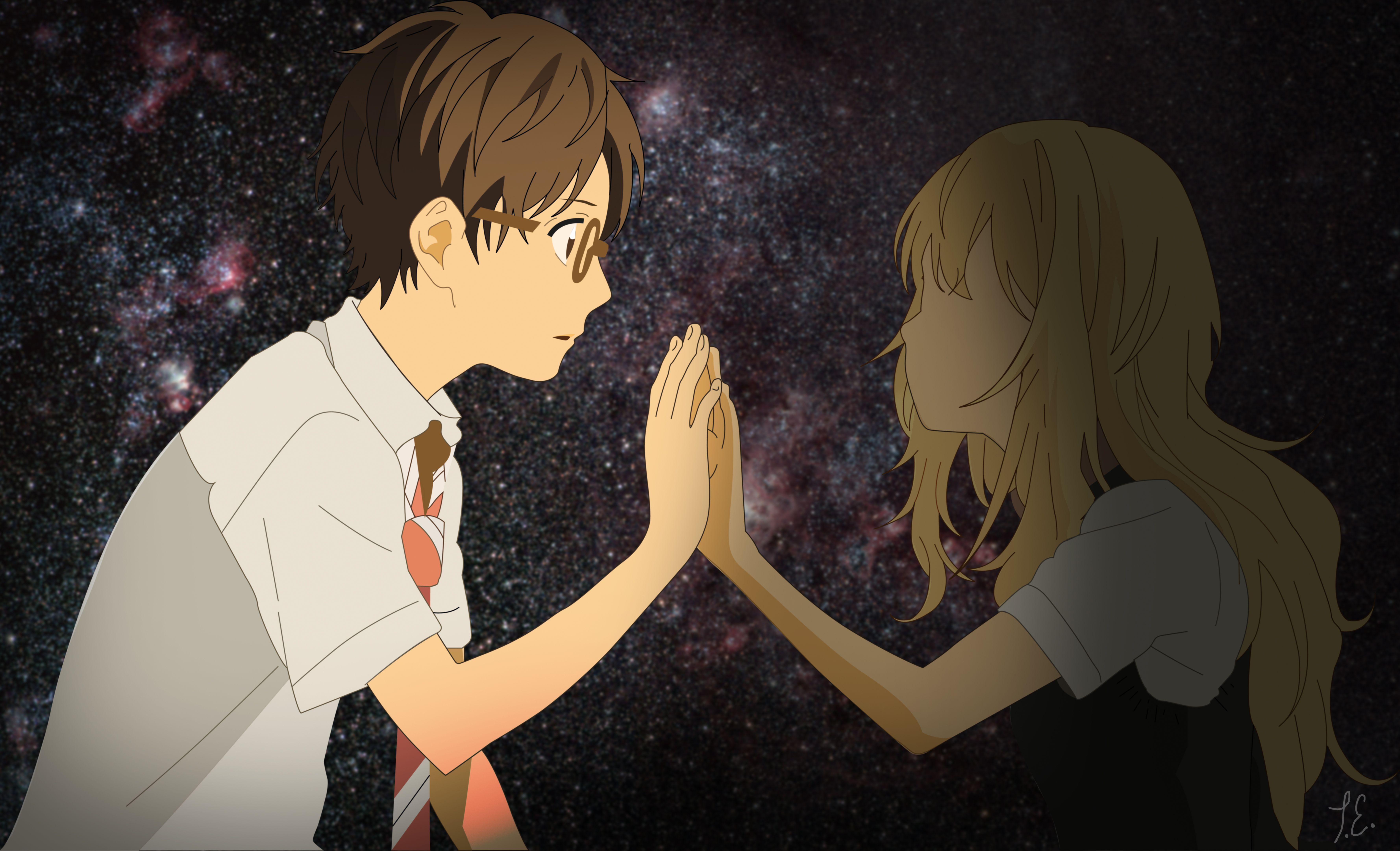
Music shouldn't be about suffering. But for Kousei Arima, the protagonist of Your Lie in April (Shigatsu wa Kimi no Uso), every single note was a ghost. People usually get into this anime expecting a cute romance between a pianist and a violinist. They walk away with emotional trauma and a newfound fear of cherry blossoms.
It's been years since Naoshi Arakawa finished the manga and A-1 Pictures wrapped up the adaptation, yet the discussions haven't stopped. Why? Because it isn't just about "sadness." It’s about the crushing weight of expectation and the weird, messy way we use other people to fix our own broken parts.
The Mechanical Pianist and the Trauma of Perfection
Kousei Arima was a prodigy. He was "The Human Metronome." If you’ve ever played a competitive instrument, you know the type—the kid who never misses a beat, never flubs a fingering, and plays exactly what's on the page with zero soul.
His mother, Saki, wasn't just a teacher; she was an architect of his misery. This is where the story gets uncomfortable. It’s not just "strict parenting." It’s borderline abuse fueled by her own terminal illness and a desperate need to secure her son’s future. When she died, Kousei didn't just lose a mother. He lost his hearing. Not his physical hearing—he could hear the world just fine—but he couldn't hear the sound of the piano.
Imagine being world-class at the one thing that reminds you of your biggest regret.
That's the baseline. He’s fourteen, living in a monochrome world, literally unable to hear the music he plays. Most stories would give him a magical cure. Your Lie in April gives him Kaori Miyazono instead.
Kaori Miyazono Was Never the "Manic Pixie Dream Girl"
On the surface, Kaori is a trope. She’s loud, she’s quirky, she plays the violin like a manic bird, and she’s determined to "save" the brooding boy.
But if you look closer, she’s incredibly selfish. Honestly, that’s what makes her a great character. She knows her time is running out. She has Friedreich’s ataxia or something similar (the anime never names the specific illness, though fans have speculated based on the symptoms of bone marrow failure or neurological decline). She doesn't have time for Kousei's moping.
She drags him back to the stage. She forces him to accompany her. She lies. She lies a lot.
The title of the show isn't a metaphor; it’s a literal reference to the massive deception she orchestrated just to get close to him. She wasn't some saintly figure descending from heaven. She was a scared girl who didn't want to die without being remembered. She used Kousei as her legacy. It’s beautiful, sure, but it’s also kind of messed up if you really think about it.
The Visual Language of A-1 Pictures
Let’s talk about the colors. Director Kyōhei Ishiguro did something brilliant here. When Kousei is alone or depressed, the saturation drops. The world looks like a dusty old photograph. Then Kaori enters, and the screen explodes.
It’s almost too much. The lens flares, the swirling petals, the way the light hits the floor of the concert hall. It’s meant to be overwhelming because that’s how Kousei feels. Music is a sensory overload.
The performance scenes are the peak. They aren't just still frames with music playing over them. The animators used motion capture of real musicians to get the fingerings right. When Kaori plays the Kreutzer Sonata, her body language tells you everything about her health that the dialogue hides. She’s straining. She’s fighting the violin.
Why the Ending Still Sparks Arguments
People still argue about whether Kaori should have survived. Some think the "tragedy for the sake of tragedy" trope is overplayed in anime.
I disagree.
If Kaori lives, the "lie" loses its weight. The story is a coming-of-age journey that requires Kousei to face loss without crumbling. In the beginning, his mother’s death broke him. At the end, Kaori’s death completes him. It sounds harsh, but that’s the narrative arc. He learns that you can carry someone’s memory without being haunted by their ghost.
The final letter—the one that explains everything—is the most famous scene in the series for a reason. It recontextualizes every single interaction they had. It turns a romance into a tragedy of missed timing.
What Most People Miss About Tsubaki and Watari
We focus so much on the central duo that we forget Tsubaki. Tsubaki is the most "human" person in the show. She’s the childhood friend who is watching the person she loves change into someone she doesn't recognize.
She hates music. Why? Because music is the thing that takes Kousei away from her. It’s a very grounded, teenage jealousy. She’s not a villain; she’s just a girl who wants things to stay the same when the world is demanding they grow up.
And Watari? He’s the "cool guy" who actually has a heart of gold. He knew. He probably knew the whole time that Kaori didn't really love him the way she claimed. He stepped aside because he’s a better friend than most people give him credit for.
The Real-World Impact of the Soundtrack
You can’t talk about Your Lie in April without the music. It’s the backbone.
- Chopin’s Ballade No. 1 in G Minor, Op. 23: This is the soul of the finale. It’s technically demanding and emotionally exhausting.
- Saint-Saëns’ Introduction and Rondo Capriccioso: This is Kaori’s anthem. It’s flashy, difficult, and unapologetic.
- Kreisler’s Love’s Sorrow: This is the turning point for Kousei. It’s where he stops playing for his mother and starts playing with her memory.
Because of this show, a whole generation of kids started picking up classical music. It stripped away the "boring" reputation of the genre and showed it as something raw and violent and beautiful.
Moving Forward: How to Experience the Story Now
If you’ve only seen the anime, you’re missing out on the nuance of the manga’s art, which has a much grittier feel to the line work. If you’ve only read the manga, you’re missing the literal sound that makes the story work.
Here is how to actually engage with this series if you want the full experience:
- Listen to the "Shigatsu wa Kimi no Uso: Vocal Collection." These are songs inspired by the characters that give a bit more insight into their internal monologues.
- Watch the Live-Action Film (with caution). It’s not as good as the anime—nothing is—but Suzu Hirose’s performance as Kaori captures that desperate energy quite well.
- Re-watch Episode 13. It’s the bridge between the two halves of the show and often overlooked. It’s the moment Kousei realizes he can’t go back to being the "Human Metronome."
Your Lie in April isn't a story about winning a competition. Kousei doesn't even "win" in the traditional sense. It’s a story about learning to breathe again when the air feels like lead. It’s about the fact that even a life that ends early can be a masterpiece.
Take a moment to listen to Chopin today. Really listen. Notice the pauses between the notes. That’s where the story lives.



